

What Is Ghee? A Complete Guide to A2 Ghee, the Bilona Tradition, Uses, and History

Share
By the Faimly Farm Team · Last updated June 17, 2026 · The complete Faimly Farm guide to ghee
Ghee is one of the oldest and most respected foods in Indian culture. For thousands of years it has featured in cooking, tradition, religious ceremony, and daily life. Known for its rich aroma, golden colour, and unique flavour, ghee remains a staple in millions of households. This guide explains what ghee is, how traditional bilona ghee is made, its history and cultural significance, its culinary uses, and how to identify and store pure ghee. It describes culinary and cultural heritage, not medical advice.
What Is Ghee?
Ghee is a form of clarified butter made by slowly heating butter until the water evaporates and the milk solids separate from the pure butterfat. The result is a golden, aromatic fat with a rich, nutty flavour and a high smoke point, which makes it ideal for Indian cooking. Unlike ordinary butter, ghee contains minimal moisture and, when properly sealed, stores well for long periods.
The Meaning and Origin of the Word
The word “ghee” comes from the Sanskrit ghrita, meaning clarified butter. Over centuries the term evolved through India's regional languages and is today recognised worldwide as a premium cooking fat tied to Indian culinary tradition.
The History of Ghee in India
The history of ghee stretches back thousands of years. References to ghee appear throughout India's ancient literature, where it was regarded as a sacred substance used in rituals, offerings, and everyday life. For centuries, Indian families made ghee at home from cultured butter obtained from curd — a process that became known as the bilona method, still among the most respected ways of making premium ghee. Read more in our guide on why ghee has been part of Indian culture for thousands of years.
Why Ghee Is Important in Indian Culture
Ghee carries deep cultural and spiritual significance in India. Its traditional uses include:
- Havan and yajna fire offerings
- Temple offerings and prasad
- Lighting diyas during festivals
- Panchamrit preparation
- Weddings and sacred ceremonies
- Festivals such as Diwali, Janmashtami, and Maha Shivratri
For generations, pure cow ghee has symbolised prosperity, purity, nourishment, and devotion. Explore this further in our hub on Indian festivals, rituals, and the importance of A2 ghee.
How Traditional Bilona Ghee Is Made
The traditional bilona process follows several careful steps:
- Step 1 — Fresh A2 milk: milk is collected from indigenous Indian cows.
- Step 2 — Curd formation: the milk is cultured into curd using traditional fermentation.
- Step 3 — Churning: the curd is churned to separate butter from buttermilk.
- Step 4 — Slow heating: the butter is slowly heated until moisture evaporates and milk solids separate.
- Step 5 — Filtration: the pure golden ghee is filtered and stored.
This slow, curd-first process is what develops the rich aroma and flavour of authentic bilona ghee. See our deeper look at the journey of A2 ghee from farm to family.
Different Methods of Making Ghee
- Traditional bilona method: made from cultured curd and churned butter.
- Cream butter method: cream is separated from milk, churned into butter, then clarified.
- Direct cream method: fresh cream is heated directly to produce ghee.
- Industrial method: large-scale production from commercially sourced butter.
Of these, the traditional bilona preparation is widely considered the most authentic.
A2 Ghee vs Regular Ghee
| A2 Ghee | Regular Ghee |
|---|---|
| Made from indigenous-cow milk | Often from mixed milk sources |
| Traditionally prepared by the bilona process | Frequently made at large scale |
| Rich aroma and grainy texture | May not follow traditional fermentation |
| Preferred by those seeking traditional dairy | Mass-market product |
Learn more about the source breeds in our guide on the heritage of indigenous Indian cow breeds.
Why Ghee Has Such a Unique Flavour
The distinctive flavour of ghee develops during slow heating. As the butter cooks, natural compounds create its nutty aroma, rich buttery taste, golden colour, and smooth texture. The temperature and duration of preparation significantly shape the final flavour — which is why slow, traditional methods are prized.
Why Ghee Is Used for Cooking
One of ghee's biggest advantages is its high smoke point, which makes it stable at the high heats Indian cooking demands. Benefits include:
- Suitable for tempering (tadka) and sauteing
- Stable for deep frying
- Ideal for traditional Indian dishes
- Enhances aroma and flavour naturally
Its smoke point is notably higher than many common cooking oils and butter.
Popular Indian Foods Made with Ghee
Ghee is used across India in countless dishes — dal tadka, khichdi, biryani, paratha, roti, dosa, kesari bhath, mysore pak, ladoo, halwa, and temple prasadam, to name a few. Each region has its own way of using ghee. Explore recipes in our complete guide to cooking with A2 ghee.
Regional Importance of Ghee in India
- Maharashtra: puran poli and traditional sweets
- Rajasthan: dal baati churma
- Punjab: parathas and rich curries
- Gujarat: khichdi and kadhi
- Bengal: rice and traditional desserts
- South India: dosa, rice dishes, and sweets
- Odisha: temple cuisine and sacred food preparations
Ghee and Clarified Butter: The Difference
Although often used interchangeably, they are not exactly the same. Clarified butter has its water removed and milk solids separated. Ghee is simmered further, which develops a deeper aroma, richer flavour, and the characteristic nutty notes. That extra cooking stage gives traditional ghee its unique identity.
How to Identify Pure Ghee
High-quality ghee typically has a natural golden colour, a rich nutty aroma, a grainy texture, a pleasant flavour, and no artificial additives. Always buy from trusted brands that prioritise transparency, lab testing, and traditional production.
Storage and Shelf Life
- Store in an airtight container
- Keep away from direct sunlight
- Always use a clean, dry spoon
- Avoid moisture contamination
- Prefer glass packaging for long-term quality
Proper storage helps preserve ghee's flavour and aroma.
A Note on Ghee in the Diet
Ghee is a concentrated fat and a traditional part of Indian cooking. As with any rich food, it is generally enjoyed in moderation as part of a balanced diet. This is general culinary information, not dietary or medical advice; for personal dietary needs, consult a qualified professional.
Why Choose Faimly Farm A2 Bilona Ghee?
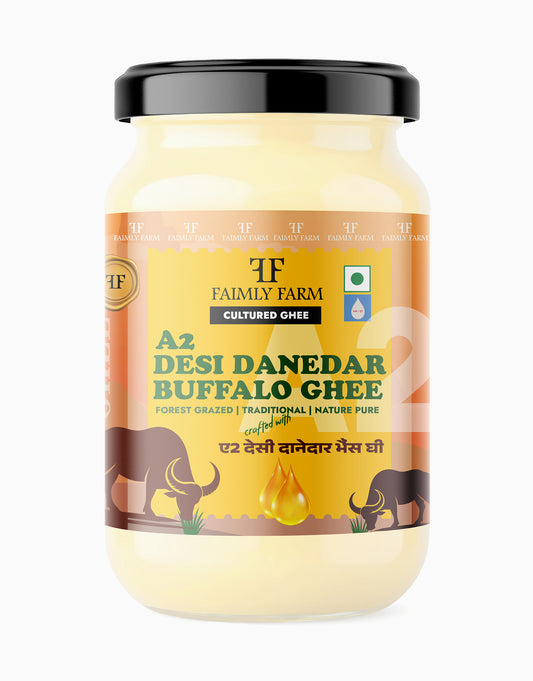
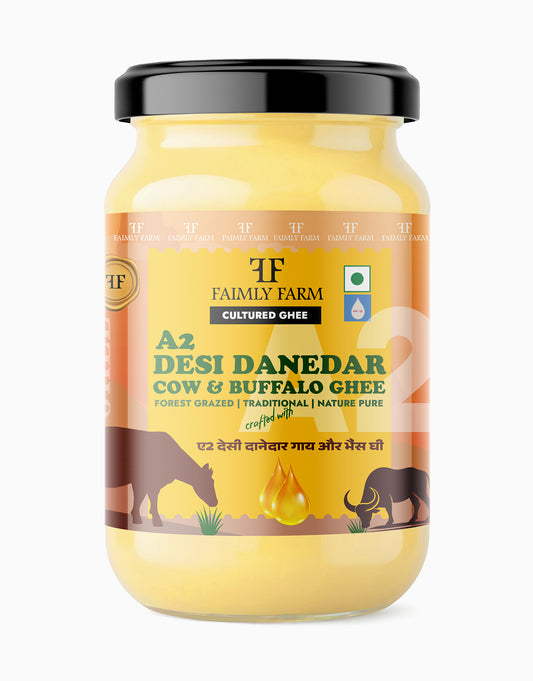
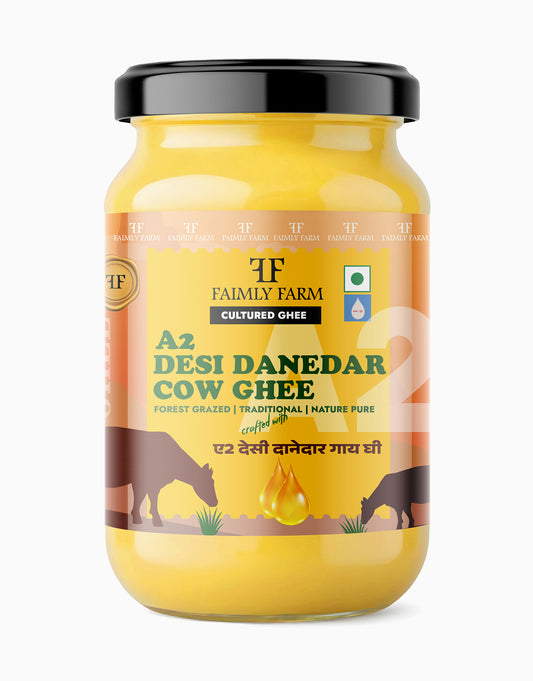
At Faimly Farm, we are committed to preserving traditional dairy heritage through carefully crafted A2 bilona ghee. Our focus is on traditional bilona preparation, small-batch production, authentic flavour, and farm-to-family purity — made in lab-tested batches under our FSSAI licence. Explore our A2 Bilona Cow Ghee or the full A2 Ghee collection.
Frequently Asked Questions
What is A2 ghee?
A2 ghee is traditionally prepared from the milk of indigenous Indian cows that produce A2 beta-casein protein, usually made by the bilona method.
Is bilona ghee different from regular ghee?
Yes. Bilona ghee is traditionally made from cultured curd that is churned to butter and then slowly clarified, rather than from cream or at industrial scale.
Why is ghee popular in Indian cooking?
Its rich aroma, deep flavour, cultural significance, and high smoke point make ghee a preferred cooking fat across Indian cuisine.
Can ghee be used for deep frying?
Yes. Ghee is stable at high temperatures thanks to its high smoke point, which makes it suitable for sauteing and deep frying.
Why is ghee used in religious rituals?
For centuries ghee has symbolised purity and auspiciousness, and it is used in sacred ceremonies, fire offerings, lamps, and temple offerings.
What does the word ghee mean?
The word ghee comes from the Sanskrit ghrita, meaning clarified butter.
How do I identify pure ghee?
Look for a natural golden colour, rich nutty aroma, grainy texture, and no artificial additives, ideally lab-tested and made under an FSSAI licence.
Conclusion
Ghee is more than a cooking ingredient — it is a symbol of India's culinary heritage, cultural traditions, and centuries-old wisdom. From ancient rituals and temple offerings to modern kitchens, ghee continues to hold a special place in everyday life. By choosing traditionally prepared A2 bilona ghee, you experience the rich flavour, heritage, and craftsmanship that have defined Indian dairy traditions for generations.
Experience authentic bilona ghee. Explore our A2 Ghee collection and try A2 Bilona Cow Ghee. New customers can use code FIRST10 for 10% off their first order.
This article is general culinary and cultural information, not medical or nutritional advice. Faimly Farm: indigenous A2 milk, traditional bilona batches, lab-tested purity under our FSSAI licence. Learn more about Faimly Farm or contact us.