

Why Ghee Has Been a Part of Indian Culture for Thousands of Years
Share
Share
By the Faimly Farm Team · Last updated June 17, 2026 · Reading time: about 6 minutes
Few foods are as woven into Indian life as ghee. For thousands of years it has been part of our kitchens, our temples, our festivals, and our stories. Long before it was a wellness trend, ghee was simply central to how India cooked, worshipped, and celebrated. Here is a look at why ghee has held such an enduring place in Indian culture.
A Presence Across the Ages
References to ghee appear throughout India's oldest texts and traditions, where it features in cooking, in sacred offerings, and in everyday nourishment. Across centuries and regions, the same golden fat has remained a constant — a thread connecting ancient kitchens to modern ones. Its staying power says a great deal about how deeply it is valued.
Why Ghee Endured
Several practical and cultural reasons help explain ghee's lasting place in Indian homes:
- It keeps well: clarified butter stores far longer than butter, a real advantage before refrigeration.
- It carries flavour: ghee transforms simple food, making everyday meals richer and more aromatic.
- It is sacred: ghee features in lamps, offerings, and rituals across Indian traditions.
- It is local: made from the milk of India's own cattle, it was always within reach of village households.
Ghee in the Indian Kitchen
In the kitchen, ghee became the foundation of countless dishes — tempering dals, enriching sweets, and finishing rice and rotis. Its high smoke point suited India's high-heat cooking, and its aroma defined the taste of home. Generations learned to cook with ghee as a matter of course, passing the practice from grandmother to grandchild.
Ghee in Ritual and Celebration
Beyond food, ghee held a sacred place. Ghee lamps (diyas) lit homes and temples, ghee fed the sacred fire in ceremonies, and ghee-rich sweets marked every festival and celebration. To use ghee was to honour an occasion — a tradition that continues in Indian homes today.
The A2 Connection
Traditionally, this ghee came from India's indigenous (desi) cow breeds, whose milk is the source of what is today called A2 ghee. The bilona method — curd churned to butter, then slowly clarified — was the time-honoured way of making it. This heritage is exactly what brands like ours work to preserve.
The Faimly Farm Connection
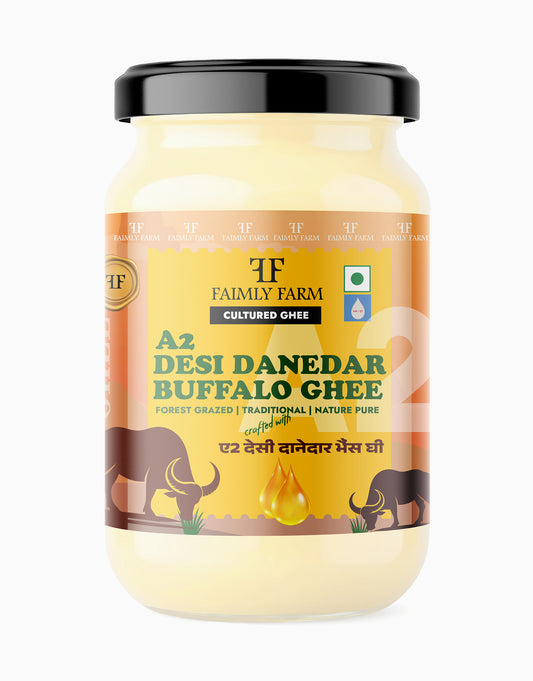
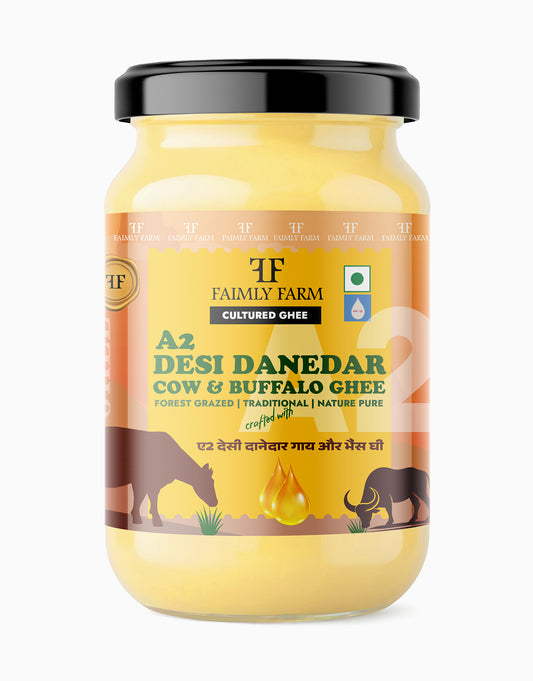
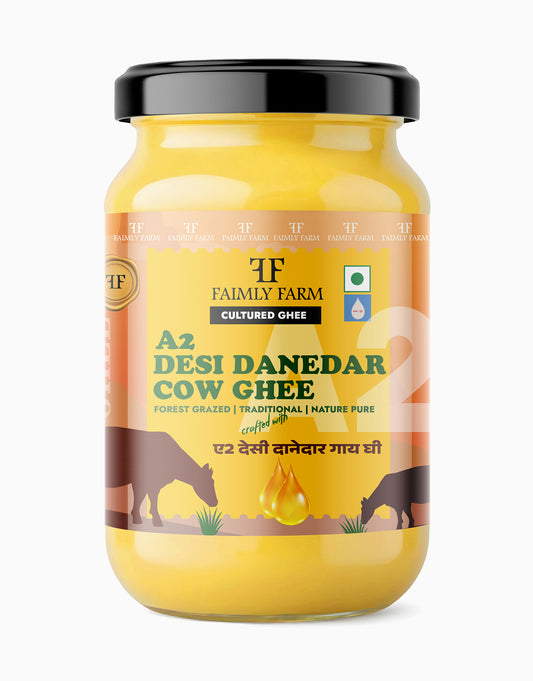
At Faimly Farm, we see our work as carrying this long tradition forward. Our A2 ghee is made from indigenous-cow milk by the traditional bilona method, in small lab-tested batches under our FSSAI licence — the same heritage, made for the modern home. Explore our A2 Bilona Cow Ghee or the full A2 Ghee collection.
Key Takeaways
- Ghee has been central to Indian cooking, ritual, and celebration for millennia.
- It endured because it keeps well, carries flavour, is sacred, and is locally made.
- Traditional ghee came from indigenous cows via the bilona method — today's A2 ghee.
- Using ghee remains a way of honouring food and occasion in Indian homes.
Frequently Asked Questions
How long has ghee been part of Indian culture?
Ghee has been part of Indian cooking, ritual, and tradition for thousands of years, appearing throughout India's oldest texts and practices.
Why was ghee so important in traditional India?
It stored well without refrigeration, transformed the flavour of food, held a sacred role in rituals, and was made locally from indigenous-cow milk.
What is the link between traditional ghee and A2 ghee?
Traditional Indian ghee was made from indigenous (desi) cow milk, which is the source of what is today called A2 ghee.
Why is ghee used in Indian rituals?
Ghee has long been considered sacred and pure, used in lamps, fire ceremonies, and offerings across Indian traditions.
Is ghee still important in modern Indian homes?
Yes. Ghee remains central to Indian cooking and celebration, and the tradition of using it continues across generations.
Conclusion
Ghee's place in Indian culture is not an accident of taste alone — it is the result of thousands of years in which one golden fat proved indispensable in the kitchen, the temple, and the festival. To cook with pure ghee today is to take part in one of India's oldest living traditions, carried forward in every fragrant spoonful.
Carry the tradition forward. Explore our A2 Ghee collection, try A2 Bilona Cow Ghee, and read our guide on the traditional bilona method. New customers can use code FIRST10 for 10% off their first order.
Faimly Farm: indigenous A2 milk, traditional bilona batches, lab-tested purity under our FSSAI licence. Learn more about Faimly Farm or contact us.