

The Farm-to-Table Journey of A2 Ghee

Share
By the Faimly Farm Team · From farm to your table
Every jar of genuine A2 ghee carries a journey — from indigenous cows grazing on the farm, through curd and slow fire, to the sealed jar on your table. Understanding that farm-to-table path is part of appreciating what good ghee is. Here is the journey, stage by stage.
1. The Farm and the Cows
It begins with indigenous (desi) cows — breeds like Gir and Sahiwal — whose milk is the source of A2 ghee. Well-cared-for cows and good grazing set the foundation, because the quality of the milk shapes everything that follows.
2. The Milk
Fresh A2 milk is collected from the indigenous cows. This milk, carrying the A2 beta-casein variant, is the raw material for traditional ghee — and freshness at this stage matters for the final aroma and quality.
3. Curd and Churning (the Bilona Way)
In the traditional bilona method, the milk is cultured into curd, and the curd is churned to separate butter (makkhan). This curd-first path — rather than separating cream directly — is what defines bilona ghee and builds its characteristic aroma.
4. Slow Cooking
The butter is slow-cooked over gentle heat until the moisture evaporates and the milk solids turn golden and fragrant. This careful, watchful cooking is where butter becomes ghee, and where much of the flavour develops.
5. Testing and Packaging
Good producers make ghee in small batches and test for purity. The finished ghee is then sealed — ideally in glass, which preserves aroma and freshness — ready to travel to the customer.
6. To Your Table
Finally, the jar reaches your kitchen, where the whole journey pays off in a spoon of fragrant, golden ghee over hot food. Knowing the path behind it makes that spoon all the more meaningful.
A Note
This article describes the production and sourcing journey of A2 ghee. It does not make health or medical claims; the focus is on process, sourcing, and quality.
The Faimly Farm Connection
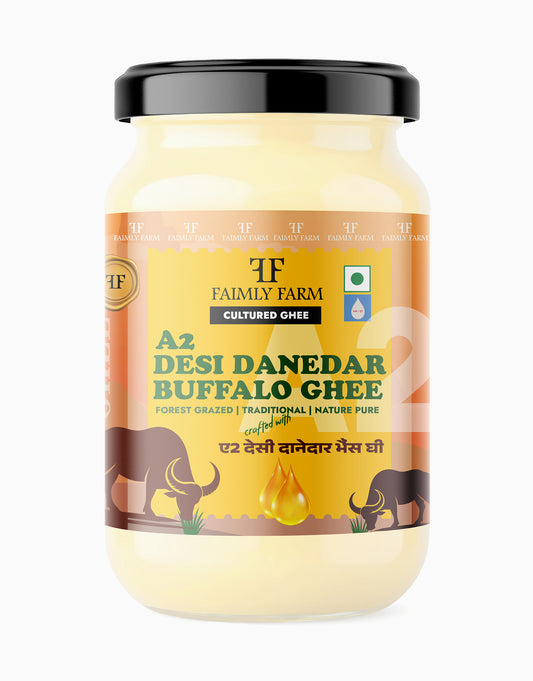
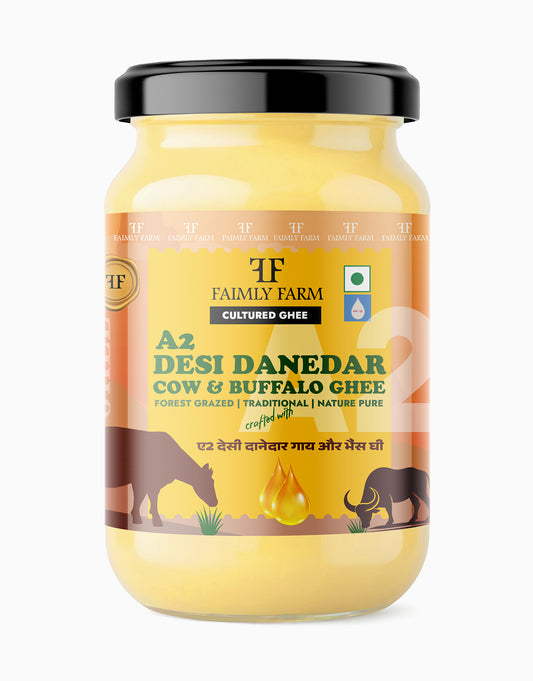
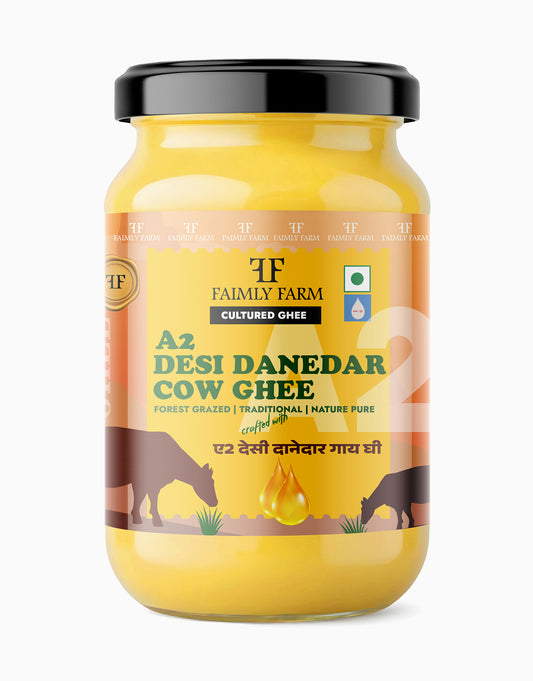
This farm-to-table path is exactly how we work — A2 ghee from indigenous-cow milk, made the traditional bilona way, in small lab-tested batches under our FSSAI licence, sealed in glass. Explore our A2 Bilona Cow Ghee or the full A2 Ghee collection, and read our farm-to-jar process guide.
Frequently Asked Questions
What is the farm-to-table journey of A2 ghee?
It is the path from indigenous cows and their A2 milk, through curd and churning, slow cooking, testing, and packaging, to the finished jar on your table.
Why does the farm and cow matter?
The quality of the milk — from well-cared-for indigenous cows — sets the foundation for the quality of the ghee.
What makes it bilona ghee?
The milk is cultured into curd and the curd is churned into butter before cooking, rather than separating cream directly.
Why is packaging part of the journey?
Sealing the ghee well, ideally in glass, preserves its aroma and freshness on the way to the customer.
Which ghee does Faimly Farm make?
A2 ghee from indigenous-cow milk, made the traditional bilona way in small lab-tested batches, sealed in glass.
Conclusion
From farm to table, genuine A2 ghee is the product of good cows, fresh milk, curd and churn, slow fire, and careful packaging. Understanding that journey is part of appreciating — and choosing — ghee made the right way.
Taste the journey. Explore our A2 Ghee collection, try A2 Bilona Cow Ghee, and read our bilona vs cream method guide. New customers can use code FIRST10 for 10% off their first order.
Faimly Farm: indigenous A2 milk, traditional bilona batches, lab-tested purity under our FSSAI licence. Learn more about Faimly Farm or contact us.