

Bilona vs Direct Cream Method: How A2 Ghee Is Made

Share
By the Faimly Farm Team · A guide to how A2 ghee is made
Not all ghee is made the same way, and the method matters — it shapes the aroma, texture, and character of the final ghee. The two main approaches are the traditional bilona method and the modern direct cream method. Here is how they differ, and why the bilona way is prized.
The Two Methods at a Glance
| Step | Bilona Method (Traditional) | Direct Cream Method (Commercial) |
|---|---|---|
| Starting point | Whole milk set into curd | Cream separated from milk |
| Key stage | Curd churned into butter (makkhan) | Cream churned/processed into butter |
| Fermentation | Yes — milk is cultured into curd first | Usually none |
| Scale | Small batches, slow | Large batches, fast |
| Aroma & grain | Rich aroma, traditional grainy texture | Milder, varies |
The Bilona Method, Step by Step
The bilona (or “bilona churning”) method follows the path described in traditional Indian practice:
1. Milk to curd: whole milk — ideally from indigenous A2 cows — is set with a culture into curd (dahi). This fermentation step is central to the bilona method.
2. Curd to butter: the curd is churned (traditionally with a wooden churner, the bilona) to separate butter (makkhan) from buttermilk.
3. Butter to ghee: the butter is slow-cooked over gentle heat until the moisture evaporates and the milk solids turn golden and fragrant, leaving pure ghee.
The Direct Cream Method
In the modern commercial approach, cream is separated directly from milk and processed into butter, which is then cooked into ghee. It skips the curd-fermentation step and is built for speed and volume. It is efficient, but it is a different process — and many feel the result lacks the depth of curd-churned bilona ghee.
Why the Difference Matters
Because the bilona method begins with cultured curd and works in small, slow batches, it is associated with a richer aroma and the traditional grainy (danedar) texture that many look for in good ghee. It is more time- and labour-intensive — which is part of why genuine bilona ghee is rarer and more premium. The method is a craft choice, not just a production detail.
The Faimly Farm Way
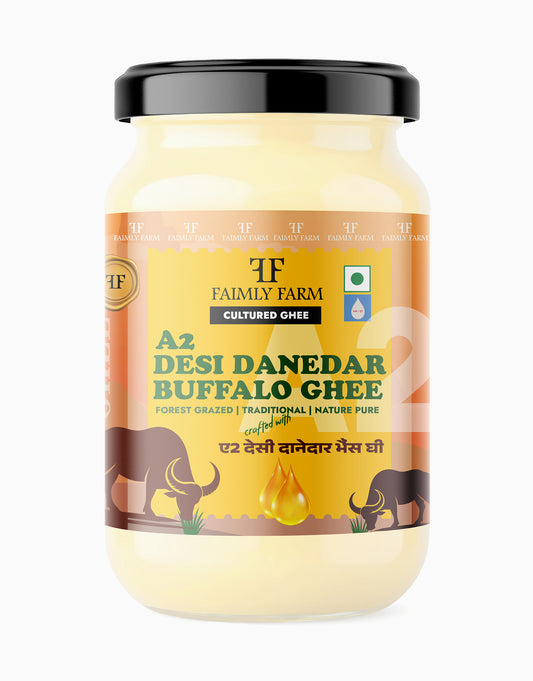
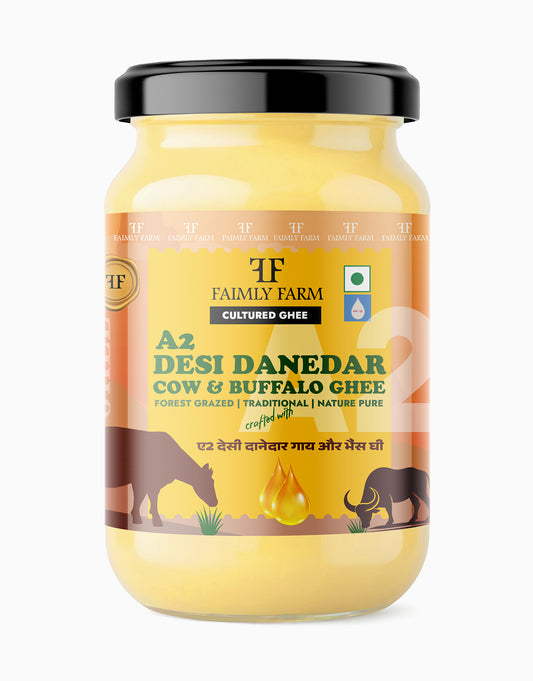
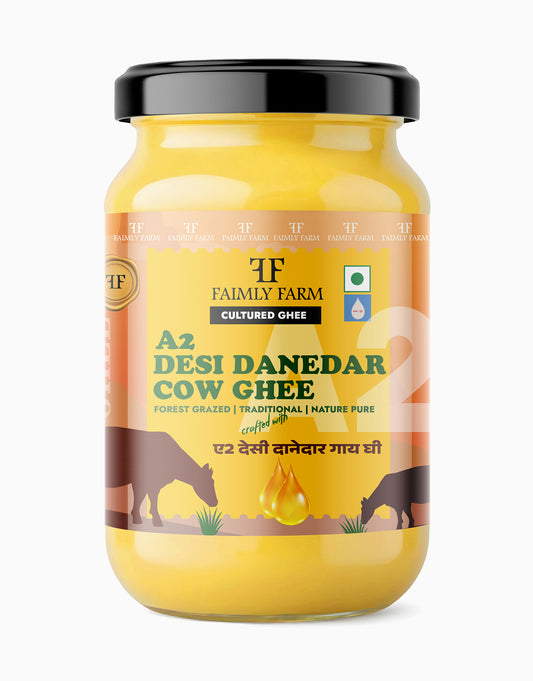
At Faimly Farm we make our ghee the traditional bilona way — curd-churned, in small lab-tested batches, from indigenous-cow A2 milk, under our FSSAI licence. Explore our A2 Bilona Cow Ghee or the full A2 Ghee collection.
Frequently Asked Questions
What is the bilona method?
The bilona method makes ghee by first setting milk into curd, churning the curd into butter, then slow-cooking the butter into ghee. The curd-fermentation step is what distinguishes it.
What is the direct cream method?
The direct cream method separates cream from milk and processes it into butter, then ghee, skipping the curd step. It is faster and built for large-scale production.
Why is bilona ghee considered premium?
It is made in small, slow batches from cultured curd, which is associated with richer aroma and the traditional grainy texture, and it is more labour-intensive to produce.
Does bilona ghee have a grainy texture?
Often yes — the traditional danedar (grainy) texture is commonly associated with well-made bilona ghee, though texture also depends on how it is cooked and set.
Is A2 milk part of the bilona method?
The bilona method is about the process; using indigenous-cow A2 milk as the starting point is a separate quality choice that many traditional makers, including Faimly Farm, combine with it.
Conclusion
Bilona and direct-cream are two routes to ghee. The bilona method — milk to curd, curd to butter, butter to ghee — is slower and more traditional, and it is what gives genuine bilona ghee its prized aroma and grain. When you choose curd-churned A2 ghee, you are choosing the craft method behind the jar.
Taste the traditional method. Explore our A2 Ghee collection, try A2 Bilona Cow Ghee, and read our complete guide to A2 ghee. New customers can use code FIRST10 for 10% off their first order.
Faimly Farm: indigenous A2 milk, traditional bilona batches, lab-tested purity under our FSSAI licence. Learn more about Faimly Farm or contact us.