
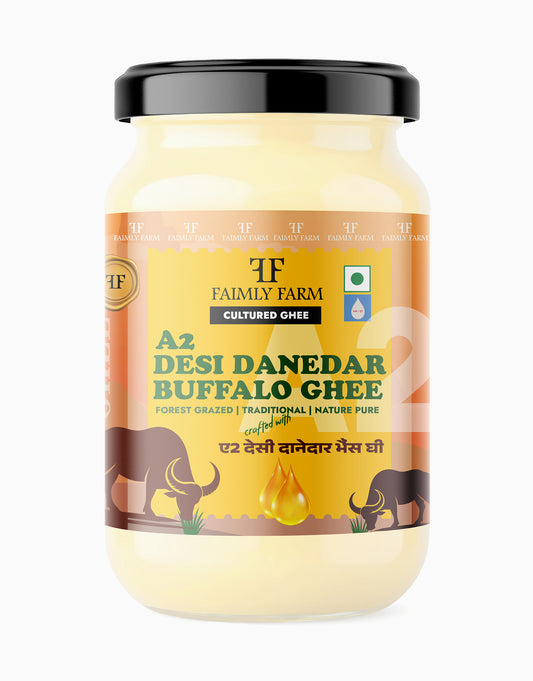
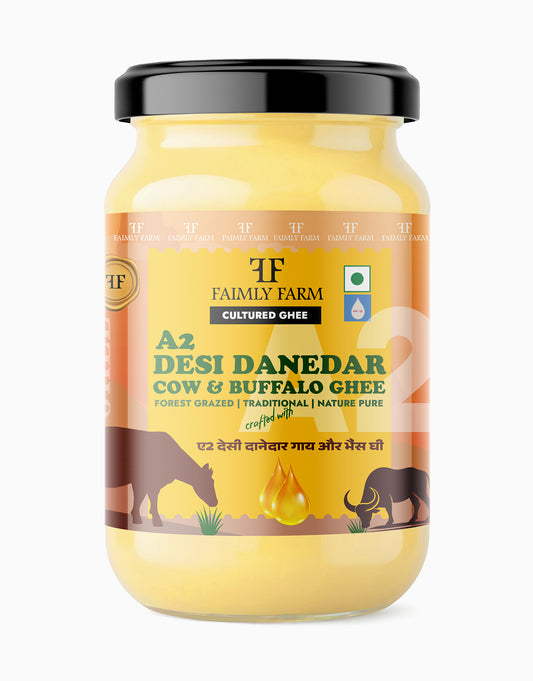
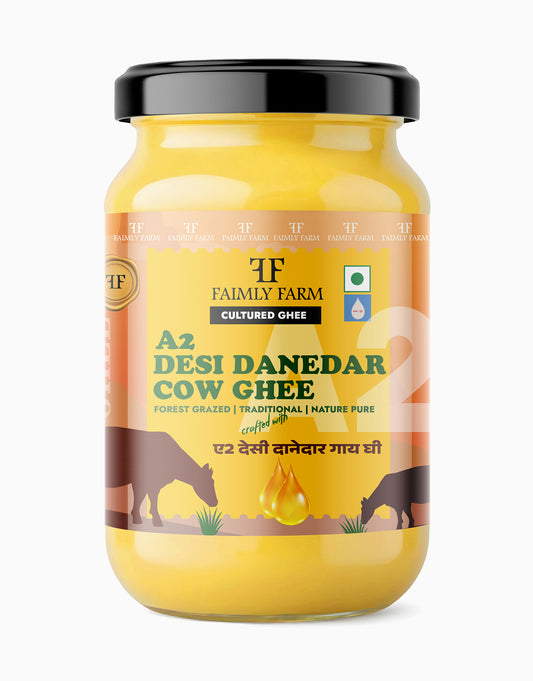

A1 vs A2 Ghee: What Is the Difference?

Share
By the Faimly Farm Team · A factual guide to A1 and A2
When people shop for ghee, they often see the terms “A1” and “A2.” These refer to a difference in the milk the ghee is made from — specifically a type of protein. Here is a clear, factual explanation of what A1 and A2 mean, without the marketing noise.
It Starts With the Milk Protein
Cow's milk contains proteins called caseins, and one of them is beta-casein. Beta-casein comes in different genetic variants, two of which are called A1 and A2. Which variant a cow produces depends on its genetics and breed. A2 refers to milk that contains the A2 type of beta-casein.
Breed Is the Key Difference
Indigenous Indian cow breeds — such as Gir, Sahiwal, and Red Sindhi — are associated with A2-type milk. Many high-yield crossbred and exotic dairy breeds are associated with A1 or mixed milk. So when ghee is described as “A2,” it is pointing to the milk source: indigenous-cow milk carrying the A2 beta-casein variant.
A1 vs A2 at a Glance
| Aspect | A2 Ghee | A1 / Mixed Ghee |
|---|---|---|
| Milk source | Indigenous (desi) breeds like Gir, Sahiwal | Often crossbred/exotic high-yield breeds |
| Beta-casein type | A2 variant | A1 or mixed |
| Association | Traditional, heritage breeds | Commercial high-yield dairy |
| Typical method | Often traditional bilona | Often commercial cream method |
What This Means When You Buy
The A1/A2 distinction is fundamentally about the milk source and breed, not about how the ghee is cooked. A genuine A2 ghee should come from indigenous-cow milk. This is why the breed and milk source are worth asking about when you buy ghee labelled A2.
A Note
This article explains the A1/A2 distinction factually in terms of milk protein and breed. It does not make health or medical claims; the difference described here is about milk source and tradition.
The Faimly Farm Connection
Our ghee is made from indigenous-cow A2 milk by the traditional bilona method, in small lab-tested batches under our FSSAI licence. Explore our A2 Bilona Cow Ghee or the full A2 Ghee collection, and read our guide to why indigenous cows matter.
Frequently Asked Questions
What does A2 mean in ghee?
A2 refers to ghee made from milk containing the A2 type of beta-casein protein, which is associated with indigenous Indian cow breeds.
What is the difference between A1 and A2?
A1 and A2 are genetic variants of the beta-casein protein in cow's milk. The variant depends on the cow's breed and genetics; indigenous breeds are associated with A2.
Is A2 about how the ghee is made?
No — the A1/A2 distinction is about the milk source and breed, not the cooking method, though A2 ghee is often also made by the traditional bilona method.
Which breeds give A2 milk?
Indigenous Indian breeds such as Gir, Sahiwal, and Red Sindhi are associated with A2-type milk.
How do I know ghee is genuinely A2?
Genuine A2 ghee comes from indigenous-cow milk, so the breed and milk source are worth asking about when you buy.
Conclusion
The A1 vs A2 question comes down to milk protein and breed: A2 ghee is made from indigenous-cow milk carrying the A2 beta-casein variant. Understanding this helps you read ghee labels and ask the right questions when you buy.
Choose genuine A2. Explore our A2 Ghee collection, try A2 Bilona Cow Ghee, and read our complete guide to A2 ghee. New customers can use code FIRST10 for 10% off their first order.
Faimly Farm: indigenous A2 milk, traditional bilona batches, lab-tested purity under our FSSAI licence. Learn more about Faimly Farm or contact us.