

Traditional Kitchari Recipe with A2 Ghee

Share
By the Faimly Farm Team · Last updated June 17, 2026 · Prep 10 min · Cook 25 min · Serves 4
In Ayurveda, food is nourishment for body and mind, and few preparations embody this better than kitchari — a gentle, balancing dish of rice, moong dal, ghee, and warming spices. Considered tridoshic (suitable for all constitutions) and easy to digest, kitchari is the classic Ayurvedic comfort meal. Here is a traditional Ayurvedic kitchari made with pure A2 ghee.
An Honest Note on Ayurveda
Ayurveda is a traditional system with deep cultural roots, and recipes like kitchari are valued for being gentle and nourishing. We share this in that spirit — as wholesome traditional food, not as medical treatment. For specific health conditions, please consult a qualified professional.
Why Ghee Is Central in Ayurvedic Cooking
Ghee holds a revered place in Ayurveda, valued as nourishing and used in countless preparations. In kitchari, ghee carries the warming spices, aids digestion of the dish, and gives it a comforting richness. Pure A2 cow ghee, ideally bilona-made, is the traditional choice.
Ingredients
- 1/2 cup white basmati rice
- 1/2 cup split yellow moong dal
- 4 cups water
- 2 tbsp A2 cow ghee
- 1 tsp cumin seeds
- 1/2 tsp turmeric
- 1/2 tsp grated ginger
- 1/4 tsp asafoetida (hing)
- 1/2 tsp coriander powder
- 1 pinch fennel seeds
- Salt or rock salt to taste
- Fresh coriander to garnish
Method
- Rinse: Wash the rice and moong dal together until the water runs clear.
- Temper in ghee: Heat the A2 ghee, add cumin and fennel seeds, ginger, hing, turmeric, and coriander powder; let them turn fragrant.
- Add rice and dal: Stir in the rice and dal, coating them in the spiced ghee.
- Cook: Add water and salt. Simmer gently (or pressure cook) until soft and porridge-like.
- Adjust: Add hot water to reach a soft, soupy consistency, as kitchari is meant to be easy to digest.
- Finish: Garnish with fresh coriander and an optional spoon of fresh ghee.
- Serve: Serve warm, on its own or with steamed vegetables.
Tips for Traditional Kitchari
- Keep it soft: kitchari is meant to be soft and easy to digest, not dry.
- Use gentle spices: cumin, fennel, ginger, and hing are warming and soothing.
- Finish with ghee: a spoon of fresh ghee at the end is traditional.
- Add vegetables: soft vegetables like carrot or bottle gourd can be added.
The Faimly Farm Tip
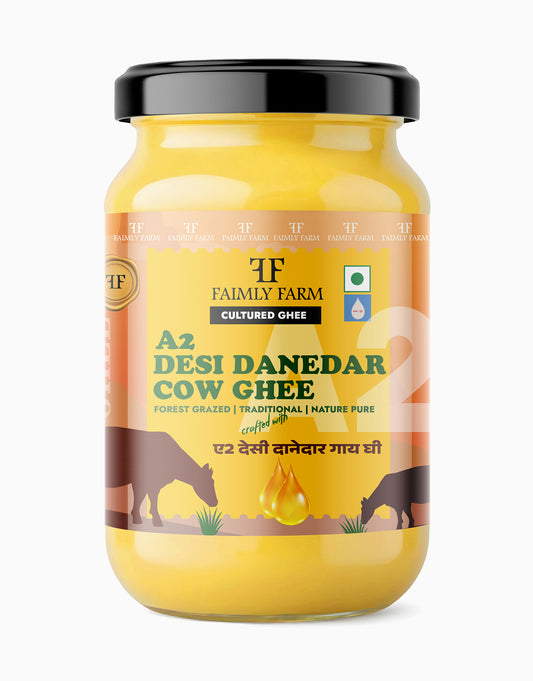
In Ayurvedic cooking, ghee quality is paramount. Our A2 cow ghee is made by the traditional bilona method from indigenous-cow milk, in small lab-tested batches under our FSSAI licence. Try our Cultural Heritage Satvik A2 Cow Ghee or explore the full A2 Ghee collection.
Frequently Asked Questions
What is kitchari?
Kitchari is a traditional Ayurvedic dish of rice, moong dal, ghee, and gentle spices, valued for being soft, nourishing, and easy to digest.
Why is ghee used in Ayurvedic recipes?
Ghee is revered in Ayurveda as nourishing and is used to carry spices and add richness. Pure A2 cow ghee is the traditional choice.
Is kitchari healthy?
It is a light, balanced, easy-to-digest meal of rice, dal, and ghee. As with any food, balance and overall diet matter; consult a professional for specific needs.
Which ghee is best for Ayurvedic cooking?
Pure A2 cow ghee, ideally bilona-made from indigenous cows, is the traditional and preferred choice.
Can I add vegetables to kitchari?
Yes. Soft, easy-to-digest vegetables like carrot, bottle gourd, or spinach are commonly added.
Conclusion
Kitchari shows why ghee and Ayurveda are so deeply linked — a simple, soft, nourishing meal where pure A2 ghee carries the gentle spices and brings comforting richness. Enjoy it as wholesome traditional food, made with genuine ghee, and you have a dish that has nourished Indian households for centuries. For any health concern, consult a professional.
Cook nourishing kitchari. Explore our A2 Ghee collection, try Cultural Heritage Satvik A2 Cow Ghee, and read our guide on the bilona method. New customers can use code FIRST10 for 10% off their first order.
This article is general information about traditional food, not medical advice. For any health concern, consult a qualified professional. Faimly Farm: indigenous A2 milk, traditional bilona batches, lab-tested purity under our FSSAI licence. Learn more about Faimly Farm or contact us.