

A2 Ghee vs Mustard Oil: A Cooking Comparison

Share
By the Faimly Farm Team · Last updated June 17, 2026 · Reading time: about 5 minutes
Mustard oil and ghee are two pillars of the Indian kitchen, each beloved in its own region and dishes. This guide compares A2 ghee and mustard oil purely on cooking properties — flavour, smoke point, and best uses — so you can choose the right one for the dish. (This is a culinary comparison, not dietary advice.)
A Tale of Two Indian Kitchens
Mustard oil (sarson ka tel) is a defining flavour of eastern and northern Indian cooking — think Bengali, Bihari, and Punjabi pickles and curries — prized for its sharp, pungent character. Ghee, meanwhile, is the all-India fat for tempering, sweets, and finishing. They are less rivals than specialists, each suited to particular dishes.
A2 Ghee vs Mustard Oil: At a Glance
| Property | A2 Ghee | Mustard Oil |
|---|---|---|
| Source | Indigenous-cow butter | Mustard seeds |
| Flavour | Rich, nutty, aromatic | Sharp, pungent |
| Smoke point | High (around 250°C) | High (around 250°C) |
| Best for | Tempering, sweets, finishing, all-round cooking | Pickles, Bengali/Bihari dishes, deep frying |
| Type | Dairy | Plant-based (vegan) |
Flavour: The Deciding Factor
This comparison is mostly about flavour. Mustard oil's pungency is essential to certain dishes — a Bengali fish curry or a mango pickle would not taste right without it. Ghee's rich, nutty aroma defines others — dal tadka, halwa, and ghee rice. Using the wrong one does not ruin the food, but it changes its character.
Smoke Point: Both Handle High Heat
Both ghee and mustard oil have high smoke points (around 250°C), so both are suitable for deep frying and high-heat cooking. This is one reason mustard oil is favoured for frying in many Indian homes, and why ghee works so well for high-heat tempering.
When to Choose Each
- Choose A2 ghee for: tempering dal, Indian sweets, finishing rice and khichdi, and dishes wanting a rich, nutty aroma.
- Choose mustard oil for: pickles, Bengali and Bihari cooking, and dishes where its signature pungency is part of the identity.
- Vegan cooking: mustard oil is plant-based; ghee is dairy.
The Faimly Farm Experience
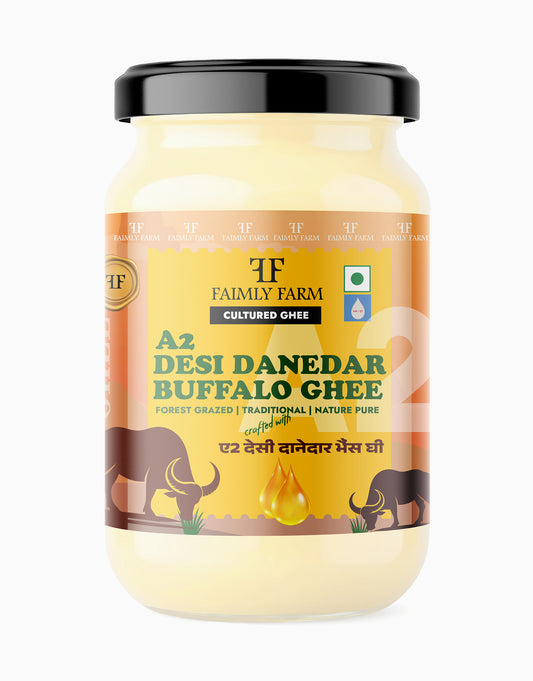
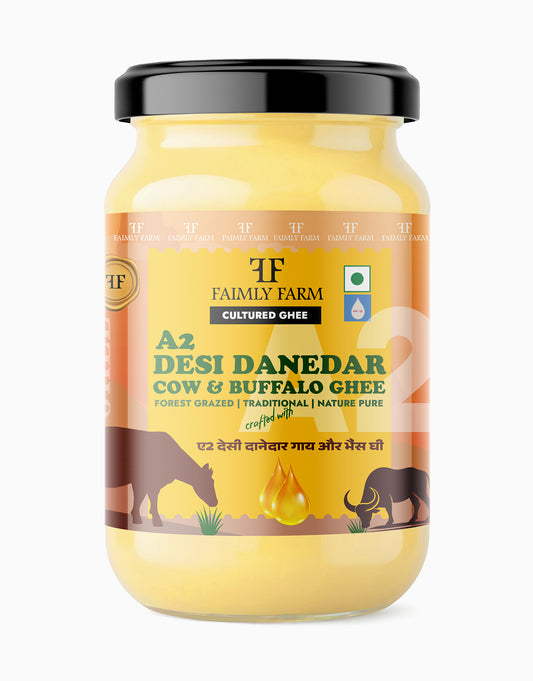
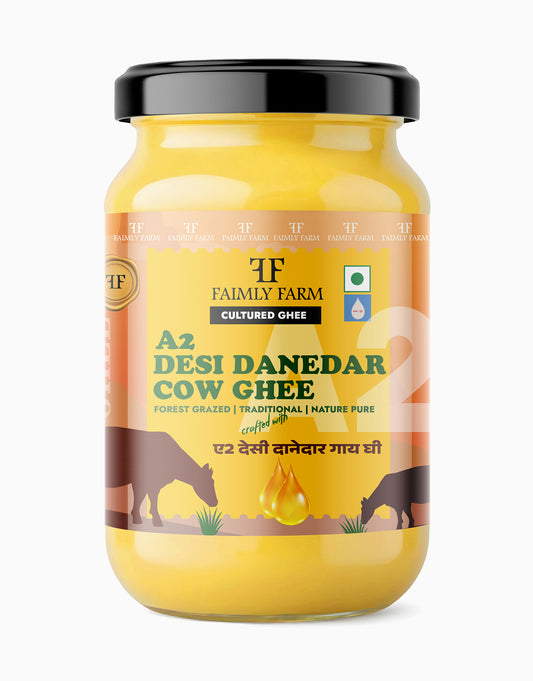
For tempering, sweets, and all-round Indian cooking, genuine ghee is essential. Our A2 ghee is made from indigenous-cow milk by the traditional bilona method, in small lab-tested batches under our FSSAI licence. Explore our A2 Bilona Cow Ghee or the full A2 Ghee collection.
Frequently Asked Questions
Is ghee or mustard oil better for cooking?
Neither is universally better — they suit different dishes. Ghee is the all-round choice for tempering, sweets, and finishing; mustard oil is essential for pickles and many Bengali and Bihari dishes.
Do ghee and mustard oil have similar smoke points?
Yes, both are around 250°C, so both handle deep frying and high-heat cooking well.
Can I use ghee instead of mustard oil?
For many dishes yes, but where mustard oil's pungency is essential — like pickles or certain fish curries — it cannot be fully replaced.
Which is better for pickles?
Mustard oil, whose sharp flavour and preservative qualities are traditional in Indian pickles.
Which is better for Indian sweets?
A2 ghee, whose rich, nutty aroma is essential to halwa, ladoo, and most mithai.
Conclusion
A2 ghee and mustard oil are specialists, not rivals. Ghee brings its nutty richness to tempering, sweets, and finishing; mustard oil brings its unmistakable pungency to pickles and regional classics. A well-stocked Indian kitchen often keeps both — and reaches for the right one by dish.
Keep genuine ghee on hand. Explore our A2 Ghee collection, try A2 Bilona Cow Ghee, and read our complete guide to cooking with A2 ghee. New customers can use code FIRST10 for 10% off their first order.
This article is a general culinary comparison, not dietary or medical advice. Faimly Farm: indigenous A2 milk, traditional bilona batches, lab-tested purity under our FSSAI licence. Learn more about Faimly Farm or contact us.