

Ghee vs Butter vs Refined Oil: Which Cooking Fat Is Best?
Ghee vs butter vs refined oil compared on smoke point, composition, flavour, and best use — with a full comparison table, myths, buying guide, and 8-question FAQ. Choose the right cooking fat, from Faimly Farm.
By the Faimly Farm Team · Last updated June 17, 2026 · Reading time: about 7 minutes
Why Trust This Article
We make traditional bilona ghee at Faimly Farm and cook with it daily, so we compare these fats from real kitchen use as well as established nutrition basics. Where the science is genuinely debated — as it is with saturated fat — we present it honestly rather than picking a side to sell a product.
Ghee, butter, and refined oil are the three fats most Indian kitchens reach for, and choosing between them affects flavour, cooking performance, and how a dish fits your diet. This guide compares all three on the things that actually matter — smoke point, composition, taste, and best use — so you can choose with confidence rather than habit.
The Problem: Choosing Fat by Habit, Not Fit
Most people use whichever fat they grew up with, or whatever is cheapest, without matching it to the cooking task. The result is butter smoking in a hot pan, or a delicate dish drowned in a heavy oil. A little understanding of each fat's strengths lets you use the right one at the right time.
Quick Answer: Which Is Best?
There is no single winner — each fat suits different needs. Ghee is best for high-heat Indian cooking, tempering, and flavour, with the highest smoke point. Butter is best for low-heat cooking, baking, and spreading, but burns easily. Refined oil is best for neutral, high-volume, low-cost frying, but is highly processed. For traditional Indian cooking, ghee is usually the most versatile and stable choice.
What Each Fat Actually Is
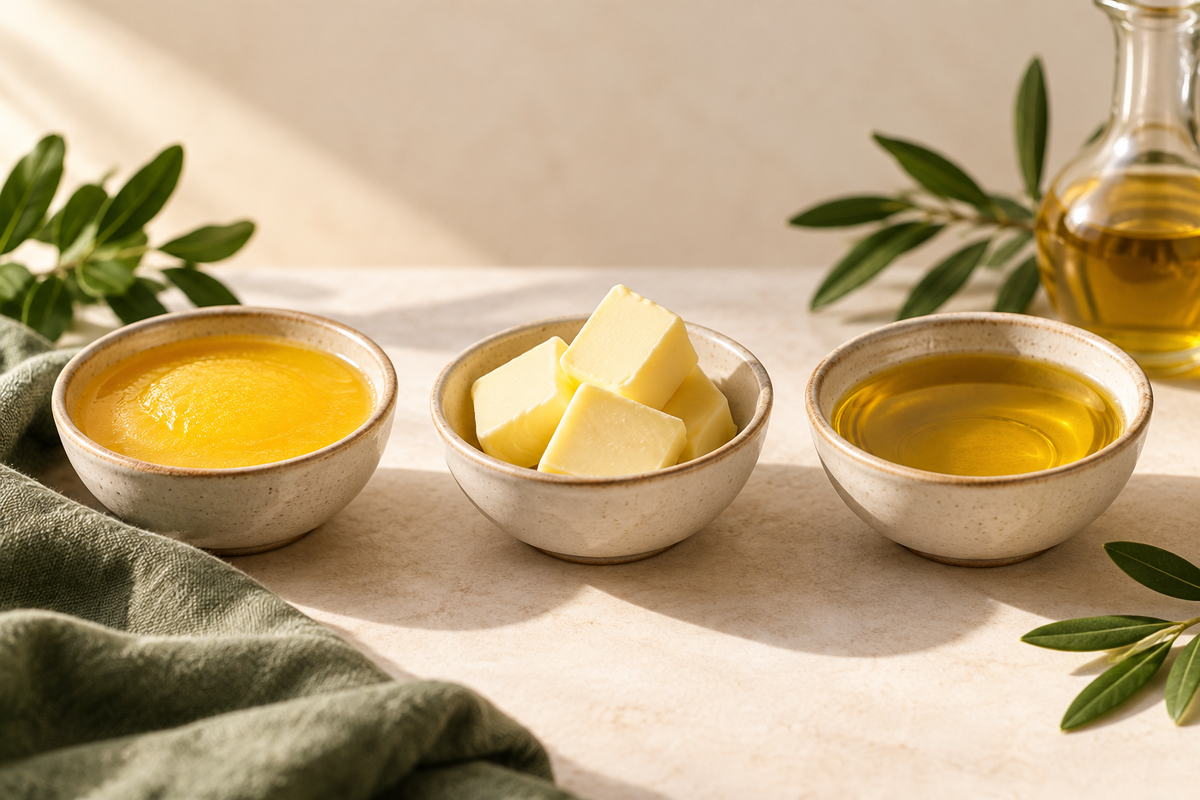
Ghee is clarified butter — butterfat with water and milk solids removed, giving a high smoke point and long shelf life. Butter is churned cream containing butterfat, water, and milk solids, which is why it browns and burns at lower temperatures. Refined oil is vegetable oil that has been industrially extracted and processed (bleached, deodorised) for a neutral taste and cheap, high-volume cooking.
Ghee vs Butter vs Refined Oil: Full Comparison
| Factor | Ghee | Butter | Refined Oil |
|---|---|---|---|
| Smoke point | High (~250°C) | Low (~150°C) | Medium-high (~200-230°C) |
| Milk solids | Removed | Present | None |
| Lactose/casein | Negligible | Present | None |
| Flavour | Rich, nutty | Creamy | Neutral |
| Processing | Traditional clarification | Minimal | Highly processed |
| Shelf life | Long, room temp | Short, needs chilling | Long |
| Best for | High-heat, tempering, flavour | Baking, low heat, spreading | Neutral high-volume frying |
Smoke Point: Why It Matters
The smoke point is where a fat starts to break down, smoke, and form undesirable compounds. Ghee's high smoke point (~250°C) makes it stable for the high-heat cooking common in Indian kitchens — deep-frying, tempering, roasting. Butter's low smoke point means it burns quickly at high heat. Refined oils sit in between, but their heavy processing is a trade-off many prefer to avoid.
Composition and Digestibility
Because ghee has milk solids removed, it is virtually free of lactose and casein, so many people who react to butter tolerate ghee. Butter retains those milk components. Refined oils contain no dairy but are industrially processed and often high in certain polyunsaturated fats. Ghee also carries fat-soluble vitamins A, E, and K2 and butyric acid.
Benefits and Best Uses
- Ghee: tempering (tadka), deep-frying, roasting, finishing dal and rice, traditional cooking, baking for a nutty depth.
- Butter: baking, low-heat sauces, spreading, finishing where a creamy dairy note is wanted.
- Refined oil: large-batch neutral frying, recipes needing no added flavour, lowest-cost cooking.
Common Myths and Misconceptions
Myth: All fats are equally unhealthy. Source, processing, and quantity matter; not all fats behave the same in the body or the pan.
Myth: Refined oil is always healthier than ghee. Refined oils are heavily processed; in moderation, pure ghee is a stable, traditional fat. Overall diet and quantity matter most.
Myth: Ghee and butter are interchangeable in cooking. Their smoke points differ greatly — ghee handles high heat that would burn butter.
Buying Guide and Quality Factors
Whatever fat you choose, quality matters. For ghee, look for the bilona method, A2 milk from named indigenous breeds, lab testing, and a valid FSSAI licence — and avoid products cut with hydrogenated oils. For oils, prefer minimally processed options where possible. The most common quality pitfall across the category is adulteration, so buy from transparent sources.
The Faimly Farm Experience
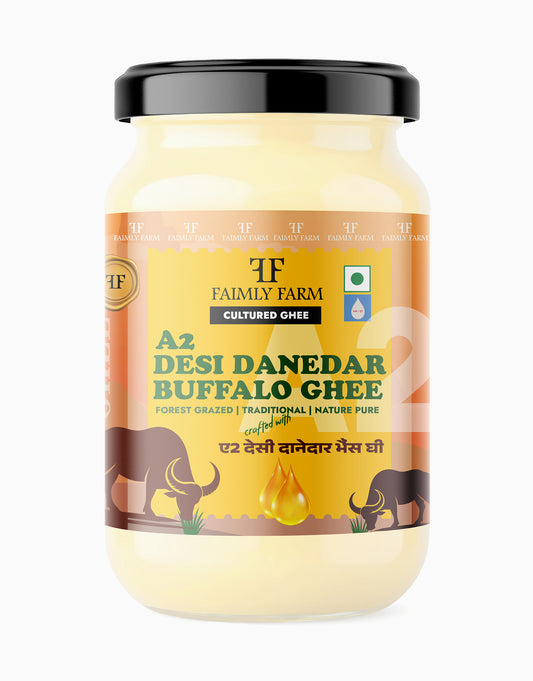
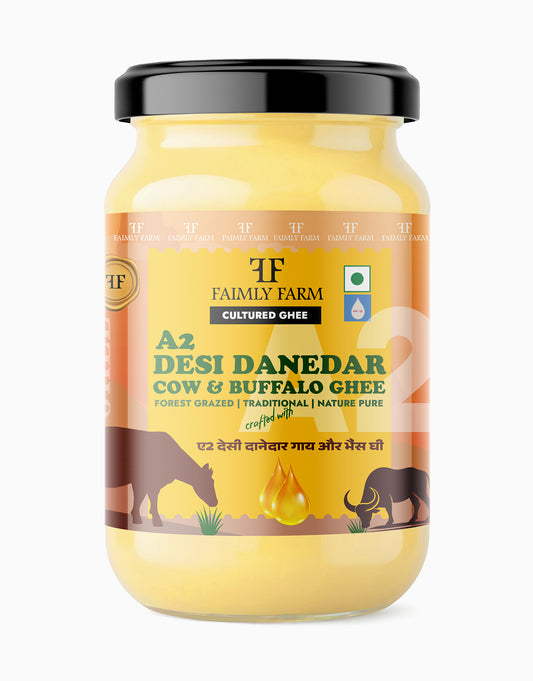
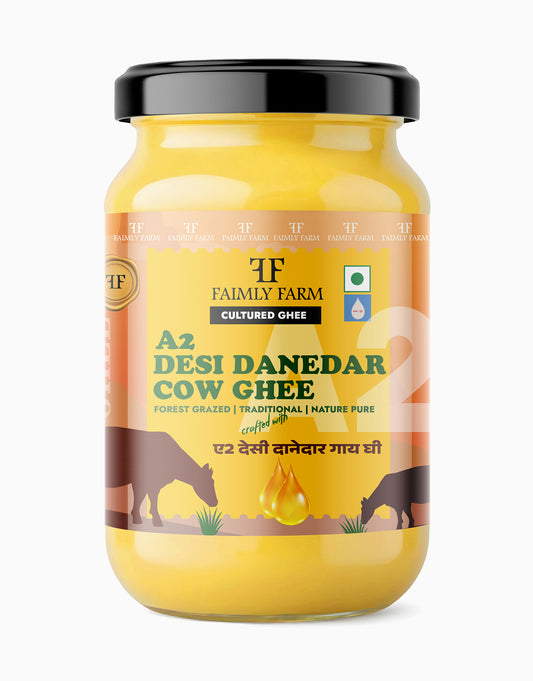
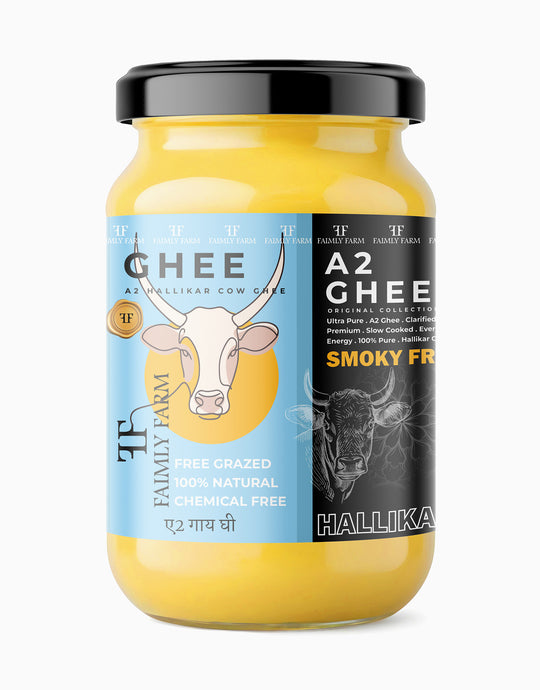
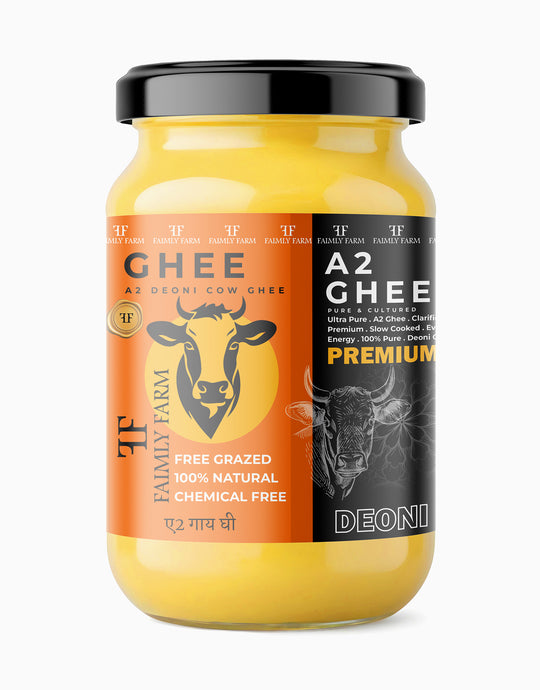
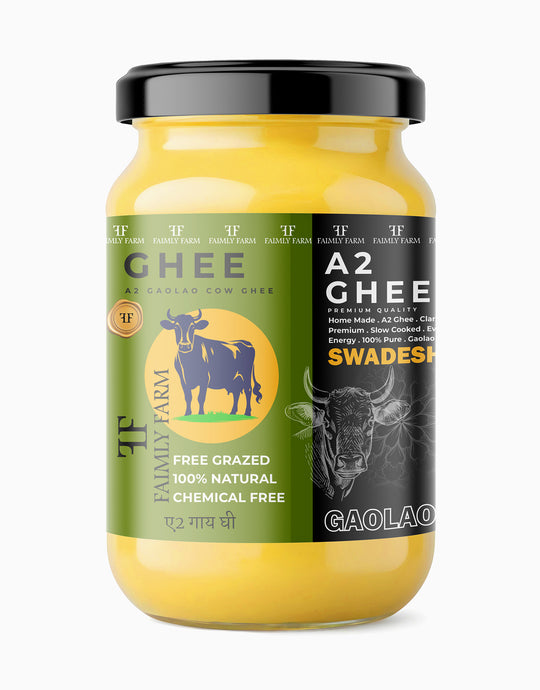
In our own kitchen, ghee does the most jobs well: it tempers, fries, roasts, and finishes, all from one jar. Our ghee is made from A2 milk of indigenous cows via the bilona method, in small lab-tested batches under our FSSAI licence. Explore our A2 Ghee collection or try the everyday Green Grass-Fed A2 Cow Ghee.
Expert Insight
Nutrition science has moved away from blanket "all saturated fat is bad" messaging toward a more nuanced view that weighs food quality, processing, and overall dietary pattern. In that context, pure ghee used in moderation is widely regarded as a reasonable, stable cooking fat — especially for the high-heat cooking where it outperforms butter.
Why Choose Faimly Farm
Indigenous A2 milk, the bilona method, small batches, and documented lab testing under our FSSAI licence — source, method, and transparency you can verify. See our FAQ or find us via our store locator.
Key Takeaways
- Ghee has the highest smoke point — best for high-heat Indian cooking and tempering.
- Butter burns easily; best for baking, low heat, and spreading.
- Refined oil is neutral and cheap but heavily processed.
- Ghee is low in lactose/casein and the most versatile of the three.
Frequently Asked Questions
Is ghee healthier than butter?
Ghee has milk solids removed, a higher smoke point, and negligible lactose and casein, which many find easier to digest. In moderation, pure ghee is a stable cooking fat; quantity and overall diet matter most.
Is ghee better than refined oil?
For high-heat cooking and flavour, ghee is excellent and far less processed than refined oil. For neutral, very high-volume frying, refined oil may be more economical.
Can I replace butter with ghee in recipes?
Often yes, especially for cooking and many bakes, where ghee adds a nutty richness and handles higher heat. Texture in some delicate bakes may differ slightly.
Which fat has the highest smoke point?
Ghee, at around 250°C, higher than butter and most refined oils, making it ideal for frying and tempering.
Is ghee good for deep-frying?
Yes. Its high smoke point and stability make it suitable for deep-frying, though many reserve it for dishes where its flavour adds value.
Which is best for weight management?
No fat is a weight-loss food; all are calorie-dense. Portion control and overall diet matter more than the choice between them.
Is butter or ghee better for baking?
Butter is traditional for many bakes due to its water content and creaminess; ghee works well where a nutty flavour and higher heat tolerance help. It depends on the recipe.
Why is ghee more expensive than refined oil?
Ghee, especially bilona A2 ghee, is made from milk through a slower, lower-yield traditional process, while refined oil is produced cheaply at industrial scale.
Conclusion
Ghee, butter, and refined oil each have a place, but they are not interchangeable. For the high-heat, flavour-forward cooking at the heart of Indian kitchens, pure ghee is usually the most versatile and stable choice — handling tasks that would burn butter, with far less processing than refined oil. Match the fat to the task, prioritise quality and moderation, and your cooking will be the better for it.
Cook with the most versatile fat. Explore our A2 Ghee collection, try the Green Grass-Fed A2 Cow Ghee, and read our related guides on cooking with ghee and the health benefits of ghee. New customers can use code FIRST10 for 10% off their first order.
Faimly Farm: indigenous A2 milk, traditional bilona batches, lab-tested purity under our FSSAI licence. Learn more about Faimly Farm or contact us.
Continue reading
View all stories
Is Cultured Ghee Probiotic? What the Finished Product Must Show
Cultured does not automatically mean probiotic. Learn what live-culture, strain, amount and finished-product evidence a ghee probiotic claim needs.
Read the story
Cooking for a Guest with Milk Allergy: Check Ghee Before Tempering
Hosting someone with milk allergy? Check ghee in tempering, utensils and serving. A practical preparation checklist with FARE and NIDDK sources.
Read the story
Ghee in a Shared Dish: Estimate Its Contribution to Each Portion
Estimate ghee's contribution to a mixed dish using label values, total additions and portion weights. Understand uneven serving, leftovers and calculati...
Read the storyExplore Faimly Farm ghee
Join the conversation