

Ghee for Cooking: Best Uses, Smoke Point, and Everyday Recipes
How to cook with ghee: its 250C smoke point, the best uses from tempering to baking, a comparison with common oils, myths, and everyday tips — a practical cooking guide from Faimly Farm.
By the Faimly Farm Team · Last updated June 17, 2026
Ghee is one of the most versatile fats in any kitchen, yet most households use it for only a fraction of what it can do. From tempering spices to baking and high-heat frying, understanding how ghee behaves on the stove helps you cook better and waste less. This guide covers ghee's smoke point, its best cooking uses, and simple everyday ways to bring it into more of your meals.
The Problem: Underusing a Premium Ingredient
Many people buy good A2 ghee, then reserve it only for dal or a festive sweet, defaulting to refined oil for everyday cooking. The result is an expensive jar that lasts a year while less stable oils do the daily work. Knowing where ghee genuinely outperforms other fats lets you use it with intention rather than hesitation.
Why Ghee's Smoke Point Matters
The smoke point is the temperature at which a fat starts to break down and smoke, producing off-flavours and undesirable compounds. Ghee has a high smoke point of around 250°C (482°F), notably higher than butter and many refined oils. Because the milk solids are removed during clarification, ghee can handle high-heat cooking — deep-frying, searing, roasting — without degrading the way butter does. This stability is one of ghee's biggest practical advantages.
Our First-Hand Experience in the Kitchen
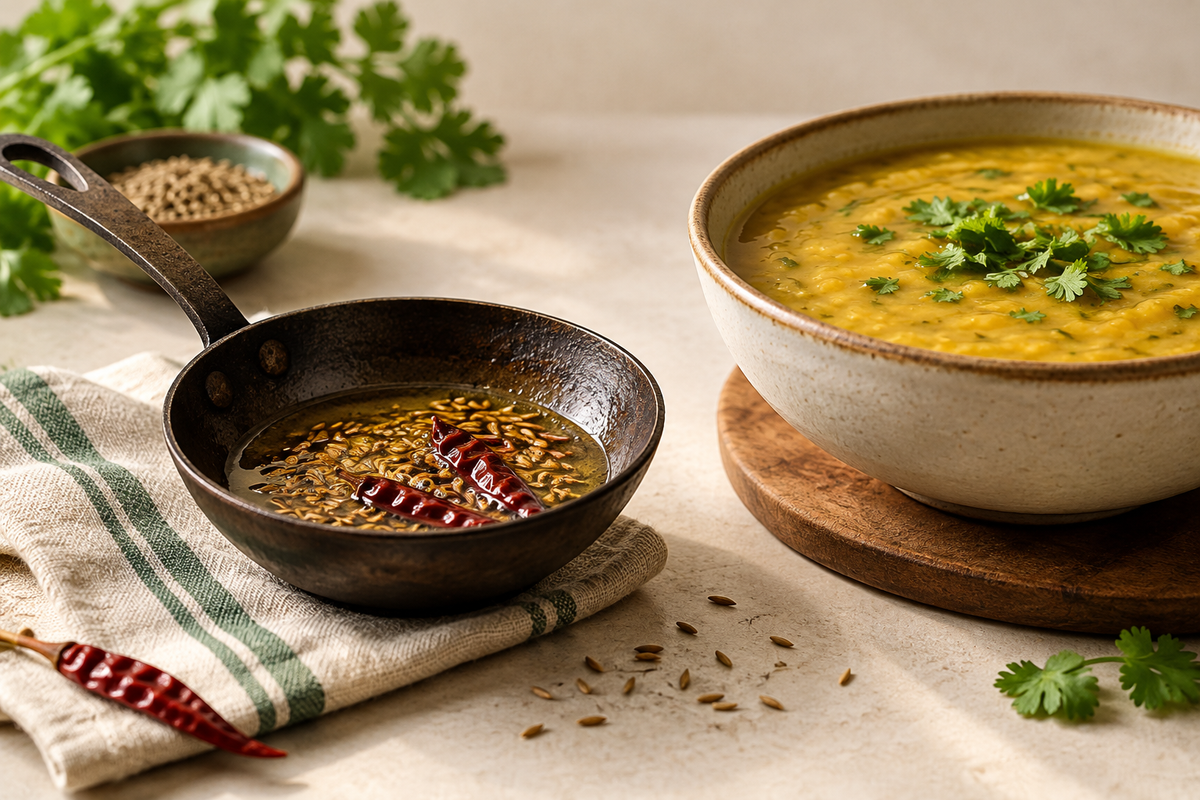
In our own test kitchen, the difference is most obvious in tempering. A spoon of A2 bilona ghee heated until it shimmers, then bloomed with cumin or mustard seeds, releases an aroma that refined oil simply cannot match. The flavour carries through the whole dish. We have also found that a little ghee brushed on rotis or stirred into rice transforms simple food into something that tastes finished and complete.
Best Cooking Uses for Ghee
- Tempering (tadka): blooming whole spices in hot ghee is where it shines brightest.
- High-heat frying and searing: the high smoke point keeps it stable.
- Roasting vegetables: ghee gives a rich, even browning.
- Baking: swap ghee for butter or oil for a nutty depth.
- Finishing: a spoon over dal, khichdi, or rice just before serving.
- Sautéing: a clean, flavourful base for everyday cooking.
Ghee vs Common Cooking Oils
| Fat | Approx. Smoke Point | Best For |
|---|---|---|
| Ghee | ~250°C | Frying, tempering, roasting |
| Butter | ~150°C | Low-heat, finishing |
| Refined vegetable oil | ~200-230°C | Neutral frying |
| Cold-pressed oils | Lower, varies | Dressings, low heat |
Benefits Beyond Flavour
Ghee carries fat-soluble vitamins A, E, and K2 and contains butyric acid, a short-chain fatty acid associated with gut health. Because its flavour is concentrated, a smaller amount often delivers more taste than a larger quantity of neutral oil. Used in sensible amounts as part of a balanced diet, it is a flavourful and stable cooking fat.
Common Myths About Cooking with Ghee
Myth: Ghee burns easily like butter. The opposite — with milk solids removed, ghee is far more heat-stable than butter.
Myth: Ghee is only for Indian food. Its high smoke point and nutty flavour suit roasting, baking, and searing across many cuisines.
Myth: You must use a lot for flavour. A little goes a long way because the taste is concentrated.
Simple Everyday Ways to Use More Ghee
- Start your tadka in ghee instead of oil.
- Brush warm rotis or parathas with a thin layer.
- Stir a small spoon into hot rice or khichdi.
- Roast vegetables tossed in melted ghee.
- Replace butter with ghee in your next bake.
The Faimly Farm Experience
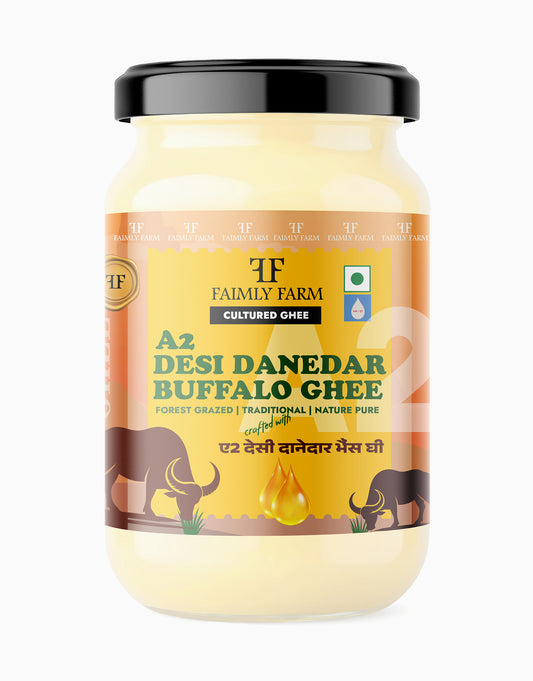
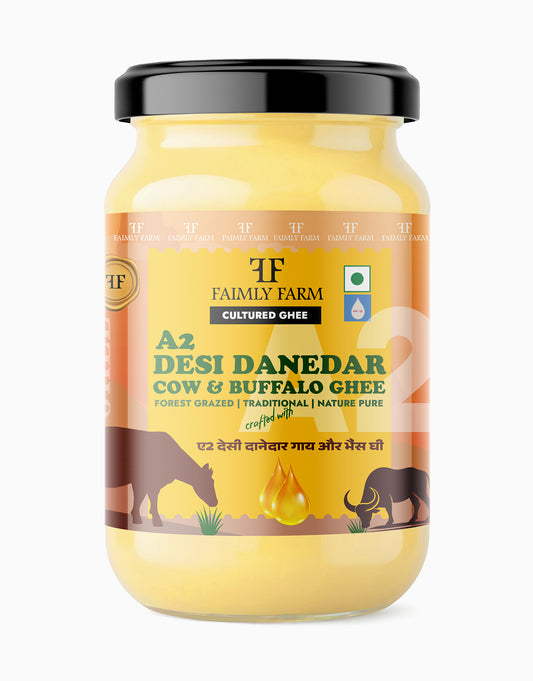
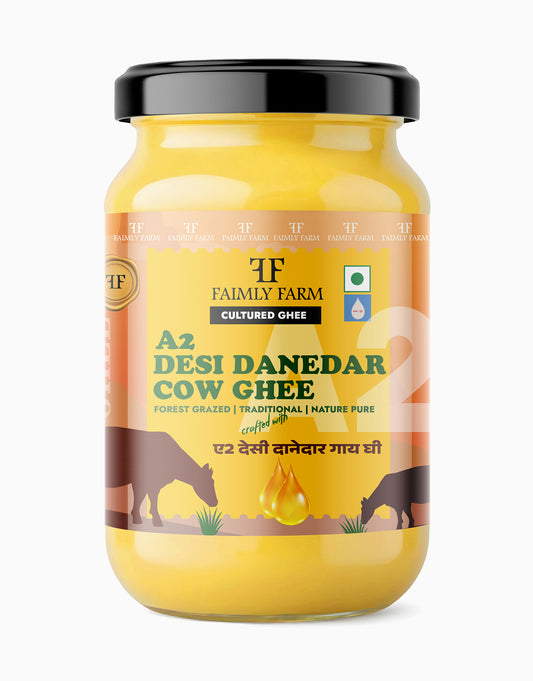
For everyday cooking, a clean, aromatic ghee makes the biggest difference. Our ghee is made from A2 milk of indigenous cows using the traditional bilona method, in small lab-tested batches under our FSSAI licence. Explore the range in our A2 Ghee collection, or pick up the everyday-friendly Farm Fresh A2 Cow Ghee.
Expert Insight
Culinary professionals value ghee precisely for its versatility and stability: one fat that can fry, roast, temper, and finish without breaking down. For home cooks, that means fewer specialised oils and more consistent results from a single trusted jar.
Key Takeaways
- Ghee's ~250°C smoke point makes it excellent for high-heat cooking.
- It outperforms butter for frying because milk solids are removed.
- Best uses: tempering, frying, roasting, baking, and finishing.
- A little goes a long way thanks to concentrated flavour.
Frequently Asked Questions
What is the smoke point of ghee?
Around 250°C (482°F), higher than butter and many cooking oils, which makes it well suited to high-heat cooking.
Can I deep-fry in ghee?
Yes. Its high smoke point and stability make it a good choice for frying, though many cooks reserve it for dishes where its flavour adds value.
Is ghee better than oil for cooking?
For high-heat and flavour, ghee is excellent. For neutral, very high-volume frying, a refined oil may be more economical. Many kitchens use both.
Can I bake with ghee?
Yes. Ghee can replace butter or oil in many recipes, adding a nutty richness.
Does ghee need refrigeration?
Pure ghee is shelf-stable at room temperature for weeks thanks to the removal of water and milk solids.
How much ghee should I use?
Because the flavour is concentrated, a small spoon is usually enough. Use it in sensible amounts as part of a balanced diet.
Conclusion
Ghee earns its place in the kitchen not as an occasional indulgence but as a dependable, high-performance cooking fat. Its high smoke point makes it ideal for the heat of Indian cooking and far beyond, while its concentrated flavour means a little delivers a lot. Bring it into your daily tadka, your roasting tray, and even your baking, and you will get more from every jar.
Cook with ghee worth using daily. Explore our A2 Ghee collection, try the Farm Fresh A2 Cow Ghee, and read our guides on A2 vs Regular Ghee and how to test ghee purity at home. New customers can use code FIRST10 for 10% off their first order.
Faimly Farm: indigenous A2 milk, traditional bilona batches, lab-tested purity under our FSSAI licence. Learn more about Faimly Farm or contact us.
Continue reading
View all stories
Is Cultured Ghee Probiotic? What the Finished Product Must Show
Cultured does not automatically mean probiotic. Learn what live-culture, strain, amount and finished-product evidence a ghee probiotic claim needs.
Read the story
Cooking for a Guest with Milk Allergy: Check Ghee Before Tempering
Hosting someone with milk allergy? Check ghee in tempering, utensils and serving. A practical preparation checklist with FARE and NIDDK sources.
Read the story
Ghee in a Shared Dish: Estimate Its Contribution to Each Portion
Estimate ghee's contribution to a mixed dish using label values, total additions and portion weights. Understand uneven serving, leftovers and calculati...
Read the storyExplore Faimly Farm ghee
Join the conversation