


Ghee in South Indian Temple Traditions

Share
By the Faimly Farm Team · A look at ghee in South Indian temple tradition
In the great temples of South India, ghee is sacred. It fuels the eternal lamps, anoints the deities, and enriches the prasadam offered to devotees — from the famous Tirupati laddu to temple pongal and kesari. Here is a look at ghee's revered place in South Indian temple traditions.
Ghee in Temple Lamps
The deepam (oil lamp) is central to South Indian worship, and pure ghee lamps hold special significance, their steady golden flame considered especially auspicious. In many temples and homes, lighting a ghee deepam before the deity is a daily act of devotion.
Ghee in Prasadam
Temple prasadam across South India is rich with ghee. The renowned Tirupati laddu, temple-style ven pongal, sakkarai pongal, and rava kesari are all made with generous pure ghee — part of what makes prasadam fragrant, rich, and sanctified. Ghee transforms simple ingredients into sacred food.
Ghee in Abhishekam
In abhishekam — the ritual bathing and anointing of the deity — ghee is one of the sacred substances offered, alongside milk, curd, honey, and more (the panchamrit tradition). This reflects ghee's status as a pure, auspicious offering.
A Note on Tradition
This article describes cultural and religious heritage, not health or dietary advice. Ghee's role here is one of devotion, ritual, and tradition.
The Faimly Farm Connection
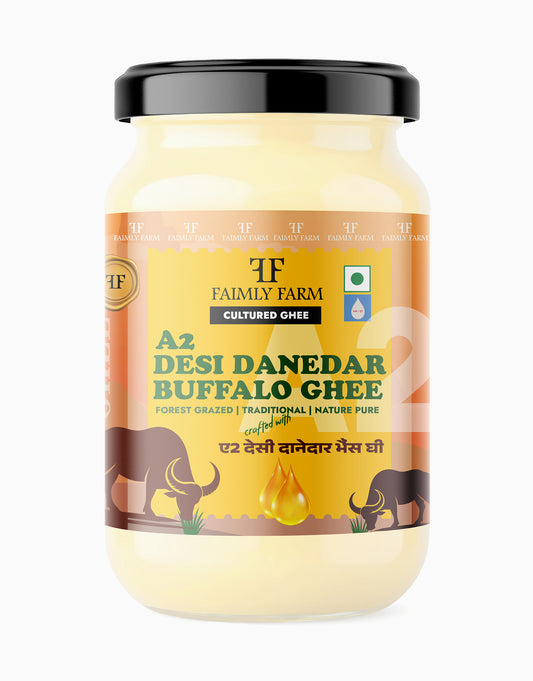
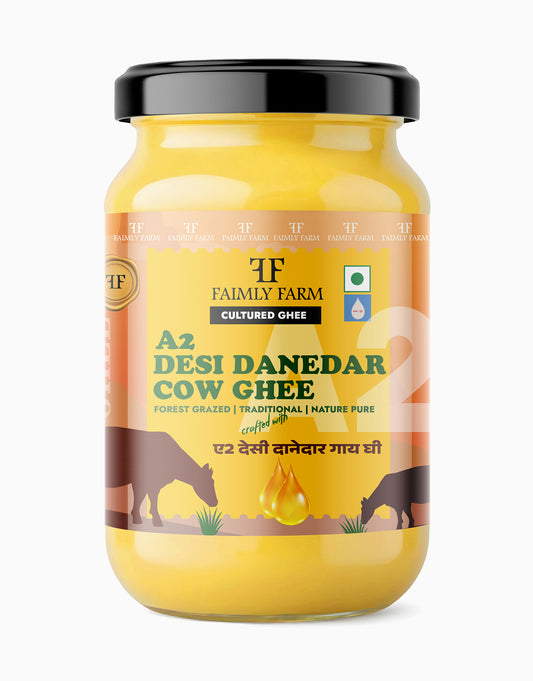
For sacred and prasadam cooking, purity matters most — our A2 ghee is made the traditional bilona way, in small lab-tested batches under our FSSAI licence. Explore our Cultural Heritage Satvik A2 Cow Ghee or the full A2 Ghee collection, and try temple-style ven pongal or sakkarai pongal.
Frequently Asked Questions
Why is ghee used in South Indian temples?
Ghee is considered pure and auspicious, so it is used in temple lamps, in abhishekam (anointing the deity), and in prasadam offered to devotees.
Which temple prasadam uses ghee?
The Tirupati laddu, ven pongal, sakkarai pongal, and rava kesari are all made with generous pure ghee.
Why are ghee lamps significant?
A pure ghee deepam's steady golden flame is considered especially auspicious and is central to daily worship.
What is abhishekam?
Abhishekam is the ritual bathing and anointing of a deity, in which ghee is one of the sacred substances offered, alongside milk, curd, and honey.
Which ghee is best for prasadam?
Pure A2 cow ghee, ideally bilona-made, is the traditional and most fitting choice for sacred cooking.
Conclusion
In South Indian temples, ghee is devotion made tangible — burning in the lamps, anointing the divine, and enriching the prasadam that carries blessings to devotees. Pure A2 ghee honours that sacred tradition in your own kitchen.
Honour the tradition. Explore our A2 Ghee collection, try Cultural Heritage Satvik A2 Cow Ghee, and read our guide to ghee in yajna and havan. New customers can use code FIRST10 for 10% off their first order.
Faimly Farm: indigenous A2 milk, traditional bilona batches, lab-tested purity under our FSSAI licence. Learn more about Faimly Farm or contact us.