

Save a Family Ghee Recipe Recording: Audio, Notes and Backups
Keep an oral recipe recording understandable and accessible beyond the phone that captured it.
By Faimly Farm · 22 October 2026 · Prepared with AI assistance.
Save the original audio file, a short context note and a checked backup before relying on a family recipe recording. A voice message can preserve a cook's explanation of ghee quantities or a remembered technique, but the file needs a name, permission details and a way to find the useful passage later.
Agree what may be kept and shared
Ask before recording and explain who will receive the result. A private family copy and a public website are different uses. The Oral History Association recommends giving narrators a chance to review an interview or transcript before release. If someone wants a passage withheld, record that restriction with the files.
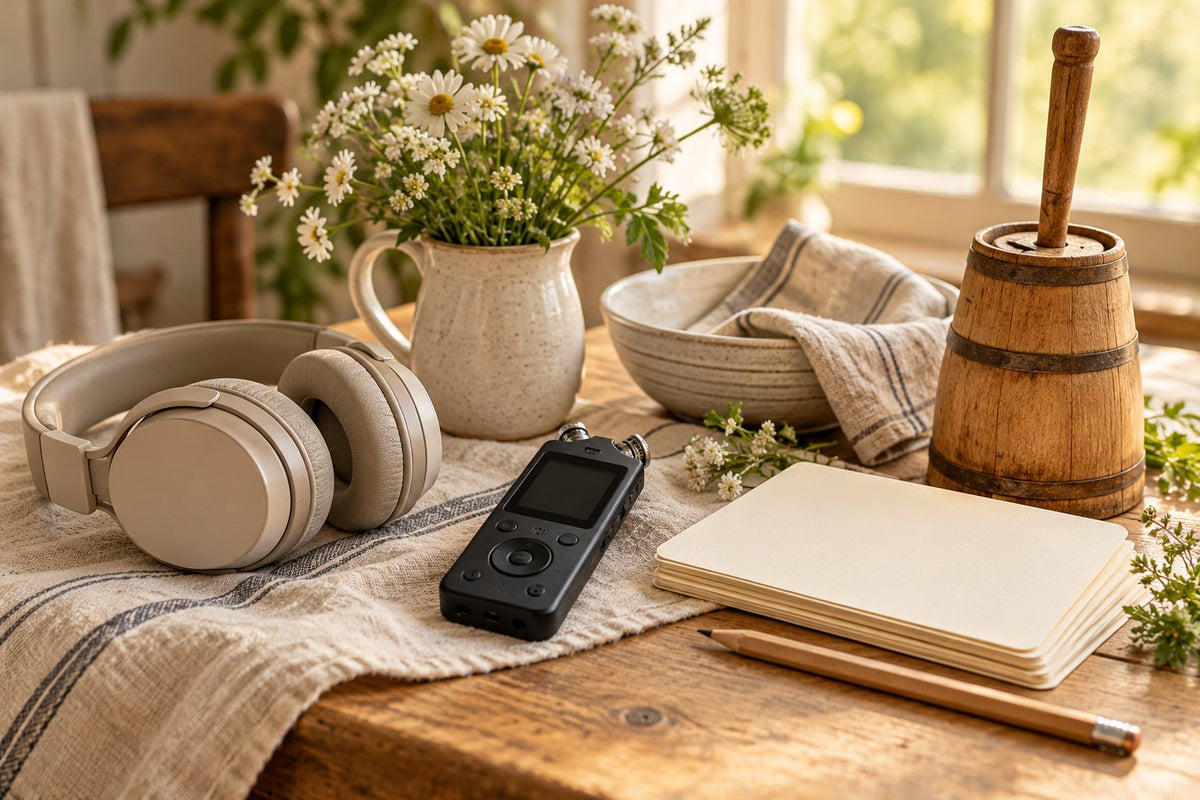
This is a preservation workflow for a recording you are authorised to keep. It is not a report of an interview carried out by Faimly Farm, and the illustration does not portray a real family archive.
Keep the original and a working copy
The Library of Congress's personal audio archiving guide recommends exporting important recordings, keeping descriptive names and metadata, using open formats where possible and storing copies in different places. It advises checking saved recordings at least annually.
Export the original recording from the phone or app using its available download or save function. Play the exported file from beginning to end once. Keep that file unchanged. If you trim pauses, adjust volume or make a smaller sharing copy, give the new version a different name. Merely changing an extension does not convert a recording or recover missing sound.
Give the recipe a small file record
Use a shared identifier, such as recipe-audio-012, for the audio and its notes. This is an example identifier, not an actual collection entry. In a plain-text note, include:
- Recipe name, narrator's agreed name or private code, and recording date.
- Language or languages used, and who made the recording.
- Whether the account describes a current practice or a remembered earlier version.
- Permission limits, review status and who keeps the original.
- File names and the location of the backup.
Add a timestamp index before a full transcript
A short index can make a long recording useful without pretending it is a complete transcript. For example, a blank template might have entries for “ghee quantity,” “pan and heat,” “meaning of a family term” and “serving.” Fill in the actual minutes and seconds after listening. Do not invent timestamps from memory.
If you create a transcript, mark unclear words instead of guessing. Keep comments by the editor separate from the speaker's words. A searchable transcript helps someone locate a passage, while the audio lets them check tone, pronunciation and context. Ask the narrator to review sensitive passages before sharing either version.
Keep current products out of historical claims
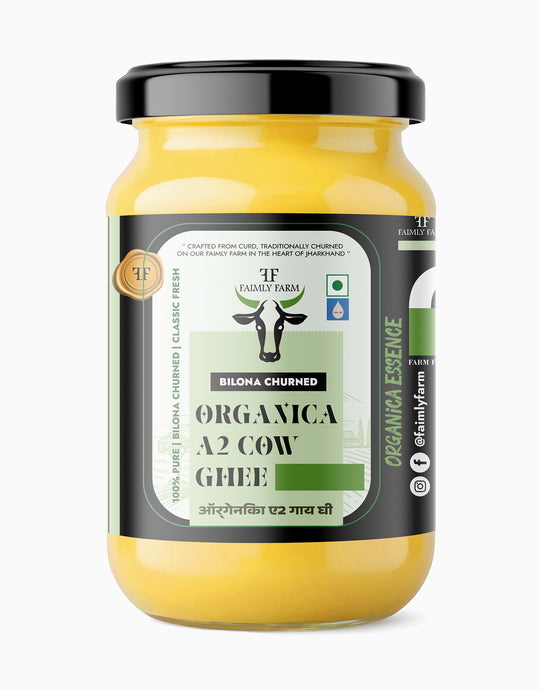
If a speaker says only “ghee,” do not expand that into “A2 ghee” in the transcript. In a separate, dated modern adaptation, you may identify Organica A2 Cow Ghee Bilona Churned as the edible A2 product chosen today. It provides no evidence about an older recipe's milk source or brand.
Quick questions
Is a voice message in a chat enough?
Keep an exported file and checked copy in another location, together with context and permissions, so the record does not depend solely on finding the conversation.
Should I delete the original after making a transcript?
Retain it within the permission agreed. A transcript is an interpretation of the recording, not its replacement.
For paper records, use our recipe-card digitisation guide. Browse Heritage & Society. Sources checked 22 October 2026.
Article prepared with AI assistance. Banner: AI-generated editorial illustration, not a photograph of a kitchen test, product pack or family archive. No firsthand testing is claimed. Visit the Faimly Farm Journal.
Continue reading
View all stories
Planning a Family Ghee Cooking Demonstration: Roles and Records
Organise a small consent-based cooking demonstration that preserves the cook's words and distinguishes adaptations.
Read the story
Reading an Old Festival Menu: What It Can Tell You about Ghee
Annotate a printed menu without inventing recipes, quantities or universal regional customs.
Read the story
Mapping Family Ghee Recipes: Places, People and Uncertain Origins
Create an attributed family recipe map without claiming one household represents a whole region.
Read the storyExplore Faimly Farm ghee
Join the conversation