

Reading an Old Festival Menu: What It Can Tell You about Ghee
Annotate a printed menu without inventing recipes, quantities or universal regional customs.
By Faimly Farm · 22 October 2026 · Prepared with AI assistance. No firsthand testing or expert review is claimed.
An old festival menu can document what was listed for an occasion. It does not, by itself, establish the recipe, amount of ghee used or what every attendee actually ate. Annotate the document within those limits before using it in a family or community food story.
Identify the document
Record the visible title, date, place, organiser and where the copy came from. Preserve the front and reverse if relevant. Mark uncertain readings rather than silently filling missing text. A handwritten date added later should be distinguished from a printed date.
Ask permission before sharing a privately held menu or identifiable family material. Keep an untouched image and put interpretation in a separate note. A cleaned-up reading copy should not be presented as an unchanged original.
Separate three questions
- What appears: copy the dish name as printed.
- What it may mean: explain a proposed translation or interpretation with its source.
- What remains unknown: ingredients, quantities, preparation and actual service unless other evidence supplies them.
A hypothetical annotation
A menu lists a sweet and a rice dish but does not mention ghee. Write that absence accurately. Do not add “made with A2 cow ghee” because a modern recipe uses it. If a separate dated kitchen notebook records ghee for that event, cite it as another document and explain the connection.
A stated menu price also needs context: what did it cover, for whom and on what date? Do not turn it into a current price comparison without appropriate economic research. This article supplies no historic price series or claims about a named festival.
Build a readable display
Present a short transcription beside the image, followed by two or three clearly labelled notes. Preserve original spellings in the transcription and put modern equivalents in the commentary. Invite knowledgeable participants to identify uncertainties while retaining attribution.
The Library of Congress primary-source guides encourage observation, reflection and questions. Applied here, that means letting the menu support a limited statement rather than forcing it to supply a complete cultural history.
Questions
Does a menu prove every dish was served?
It records the listing; actual service needs further evidence.
Can I reconstruct a recipe from the name alone?
Label any reconstruction as a modern interpretation.
Should unknown ingredients be guessed?
Keep them unknown until evidence supports an answer.
Source checked 22 October 2026: Library of Congress primary-source analysis guides.
Related practical guides
- Reading an Old Ghee Advertisement: Claim, Context and Evidence
- A Family Festival Menu: Linking a Sweet to Its Regional Story
- Digitise an Old Ghee Recipe Card Without Rewriting the Original
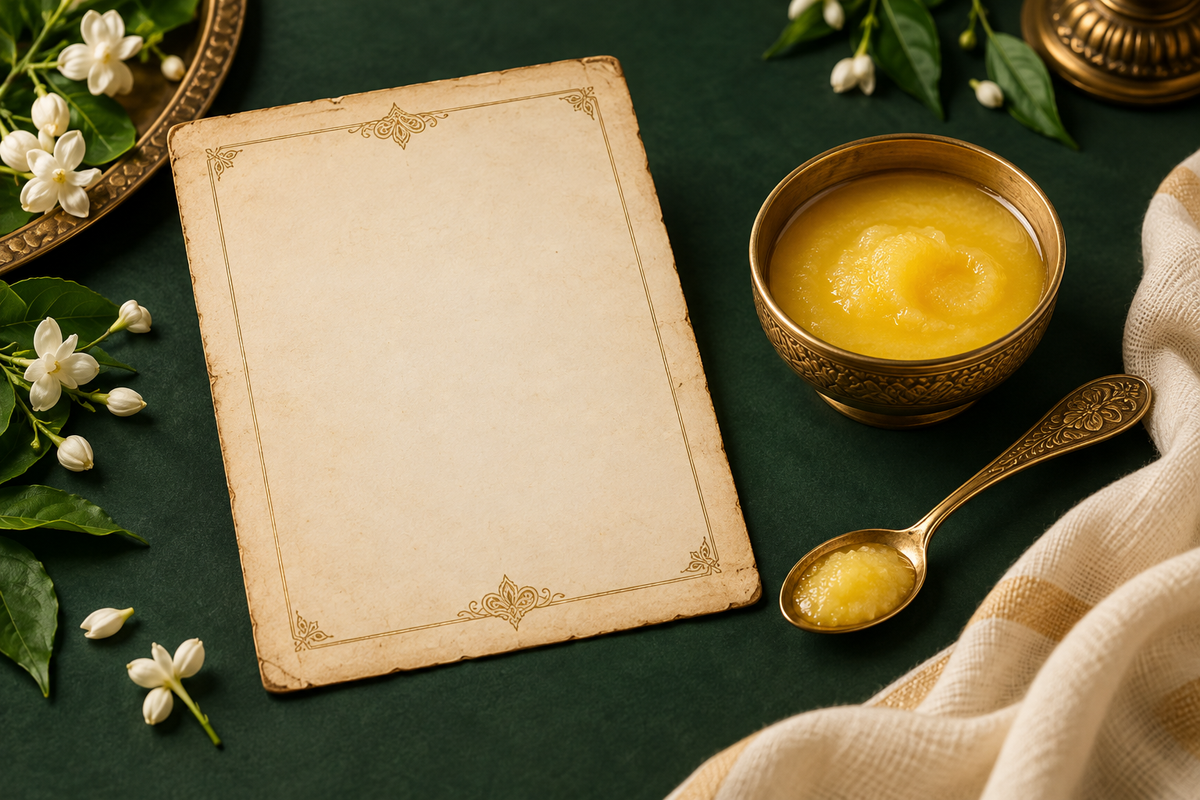
Sources, catalogue and related records checked 22 October 2026. Banner: AI-generated editorial illustration, not a photograph of an actual batch, farm, test or packaging. Visit the Faimly Farm Journal.
Continue reading
View all stories
Save a Family Ghee Recipe Recording: Audio, Notes and Backups
Keep an oral recipe recording understandable and accessible beyond the phone that captured it.
Read the story
Planning a Family Ghee Cooking Demonstration: Roles and Records
Organise a small consent-based cooking demonstration that preserves the cook's words and distinguishes adaptations.
Read the story
Mapping Family Ghee Recipes: Places, People and Uncertain Origins
Create an attributed family recipe map without claiming one household represents a whole region.
Read the story
Join the conversation