




Planning a Family Ghee Cooking Demonstration: Roles and Records
Organise a small consent-based cooking demonstration that preserves the cook's words and distinguishes adaptations.
By Faimly Farm · 22 October 2026 · Prepared with AI assistance. No firsthand testing or expert review is claimed.
A useful family cooking demonstration assigns separate roles for cooking, recording and audience questions. Agree what may be filmed and distinguish the cook's original method from changes made for the demonstration. This plan concerns a small household event, not a claim about a regional standard.
Agree the purpose and permissions
Choose one dish and one learning goal: a texture cue, sequence or measurement method. Ask the cook what they are comfortable showing and sharing. Agree whether faces, voices, hands, names and the finished recipe may be published; permission for one use should not be assumed for every use.
Prepare three roles
- Cook: leads the actual preparation and explains decisions.
- Recorder: notes quantities, sequence, equipment and changes without interrupting every step.
- Host: manages timing, questions and agreed photography boundaries.
One person can cover more than one role in a small group, but decide this in advance. A camera alone cannot ask why a little more ghee was added or identify which step was missed.
Rehearse the record, not a fictional performance
Check that the recording position captures the work with the cook's permission and does not obstruct it. Prepare a numbered ingredient sheet and note which ghee is actually used today. If a modern regular-ghee product replaces an older unspecified ingredient, label that as a demonstration adaptation.
Record the pan, batch size and heat source. If these differ from the family account, explain the change rather than claiming the demonstration recreates every historical detail. Use a separate cooking and food-handling plan appropriate to the chosen recipe; this event worksheet does not replace one.
Handle questions after important steps
Keep a question list so the cook can finish a time-sensitive action. Useful prompts include “What tells you this stage is ready?” and “What changes for a larger batch?” Avoid feeding an answer into the question or asking someone to endorse an unverified health claim.
Finish with a reviewed record
Let participants check their attributed wording. Mark missing quantities and uncertain memories. Keep an observed version separate from a later adaptation. This article describes a planning method; no real demonstration, participant interview or kitchen test is claimed.
Questions
Must the event be filmed?
No. Written notes may suit participants better.
Can I change the recipe quietly for convenience?
Record the change and its reason.
Does one demonstration establish a community custom?
No. Attribute it to the people and occasion involved.
Related practical guides
- Passing Down a Family Recipe: Recording Ghee Quantities
- A Community Ghee Recipe Book: Agree Credit and Permission
- Moving a Family Ghee Recipe to Induction: Keep a Change Log
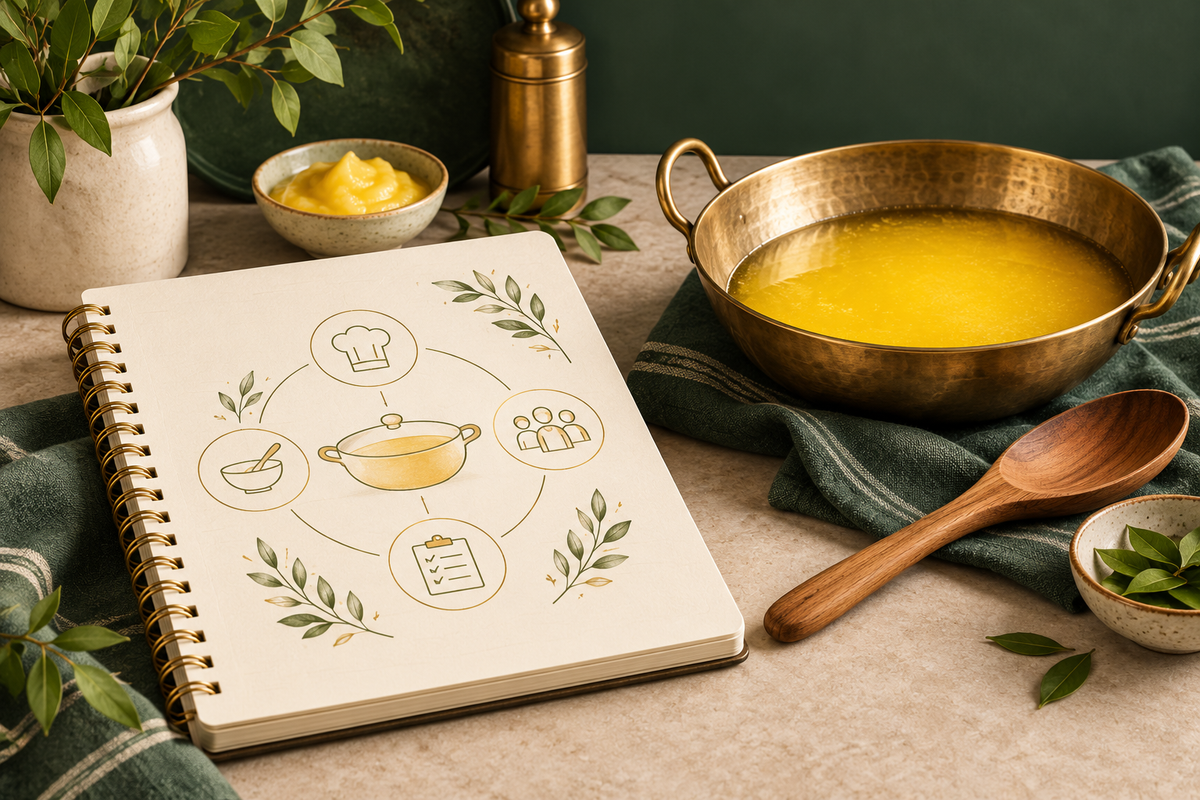
Sources, catalogue and related records checked 22 October 2026. Banner: AI-generated editorial illustration, not a photograph of an actual batch, farm, test or packaging. Visit the Faimly Farm Journal.
Continue reading
View all stories
Save a Family Ghee Recipe Recording: Audio, Notes and Backups
Keep an oral recipe recording understandable and accessible beyond the phone that captured it.
Read the story
Reading an Old Festival Menu: What It Can Tell You about Ghee
Annotate a printed menu without inventing recipes, quantities or universal regional customs.
Read the story
Mapping Family Ghee Recipes: Places, People and Uncertain Origins
Create an attributed family recipe map without claiming one household represents a whole region.
Read the story
Join the conversation