

Digitise an Old Ghee Recipe Card Without Rewriting the Original
A small home-archive workflow: assess the paper, capture the complete card, check legibility and save an untouched master alongside working copies.
By Faimly Farm · 22 October 2026 · Prepared with AI assistance.
Make a faithful image of the complete recipe card before typing, translating or correcting it. Capture the reverse side too, even if it seems to contain only a date or a small note. The digital copy preserves the evidence; your transcription and cooking adaptation are separate documents.
First decide whether the card can be handled
The Library of Congress recommends a clean, roomy work area, washed and dried hands and no food or drinks near paper materials. Its digitisation guidance cautions against forcing books flat, using feed scanners for fragile archival material or pressing glass onto delicate documents. Brittle, sticky, torn or flaking material can require a conservator's attention. See the Library's preservation guidelines for digitisation.
For a sound, loose card, choose a dry desk away from the cooking area. Do not try to remove an old ghee stain with a household cleaner. If you cannot open or support the item without stressing it, pause and obtain conservation advice. A photograph of the visible portion is preferable to damaging an irreplaceable original in pursuit of a perfect scan.
Capture a complete, readable record
- Assign a simple identifier, such as recipe-card-014, in your catalogue rather than writing it on the card.
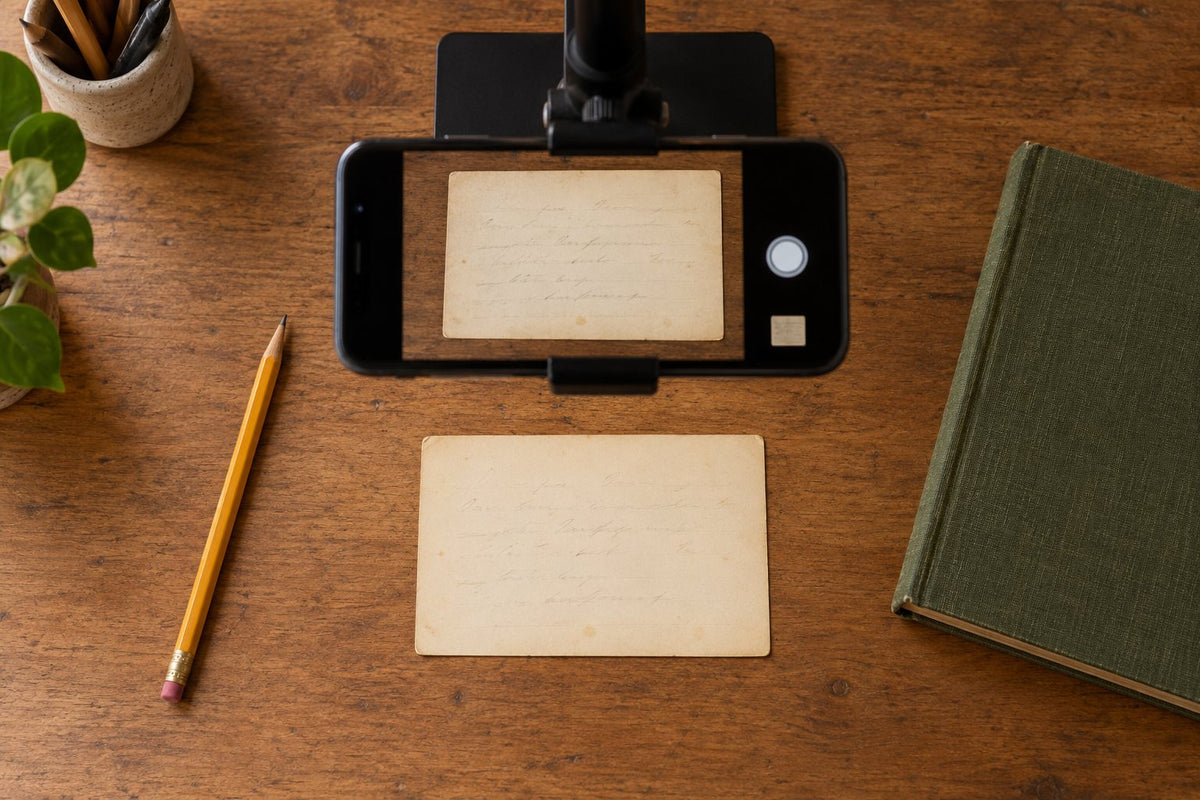
- Photograph or scan the front and back. Include the full edges and leave the original orientation evident.
- Keep the camera parallel to a flat card where feasible, use even light and check for glare, blur and shadows before moving the item.
- Open the saved image and zoom in. Can you distinguish a decimal point, a fraction and the word beside the ghee quantity?
- Save an untouched master. Make a separate copy for cropping, contrast adjustments or sharing.
For scanner users, the Library of Congress discusses keeping a TIFF master and a JPEG working copy in its scanning basics guide. If you use a phone, preserve its original captured file as well. Changing a small image's file extension does not restore detail that was never captured.
Give the files enough context
Use paired names such as recipe-card-014-front and recipe-card-014-back. In a separate note, record who holds the original, who supplied the recipe, the capture date, any known date on the card and who may receive a copy. Mark an estimated historical date as estimated.
Keep a second copy of the files in another storage location and check that it opens. A message attachment alone is a poor catalogue: it can become separated from the name, reverse image and permission note. The goal is for another family member to understand the record without relying on your memory.
Keep today's ingredient out of yesterday's handwriting
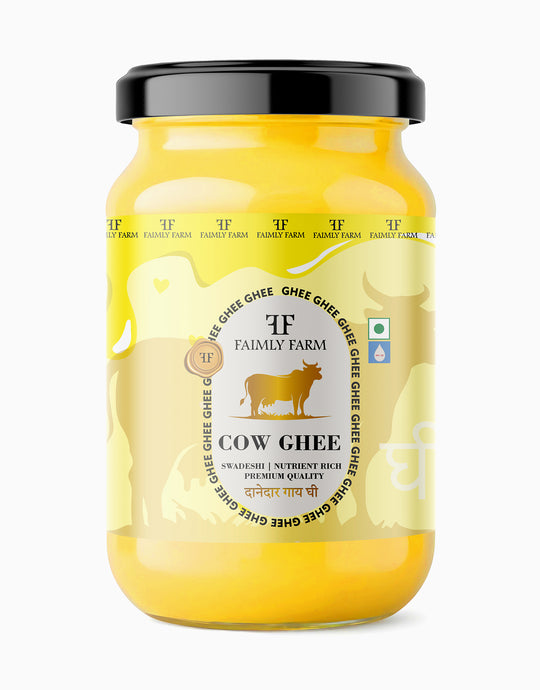
If the card says only “ghee,” transcribe that wording. Do not add a brand, milk source or A2 claim that the card does not establish. If you later cook a modern version with regular Danedar Cow Ghee, name it only in the dated adaptation. This current product option is not evidence about the historical recipe.
Quick questions
Should I type the recipe instead of saving the image?
Keep both. A transcription is easier to search, while the image allows readers to check your reading.
Can I erase a crossed-out quantity in the shared copy?
Retain the untouched master. Explain editorial changes in any reading copy rather than presenting it as an unchanged original.
Next, use our handwritten-recipe translation guide. Browse Heritage & Society. Sources checked 22 October 2026; no specific family archive is portrayed.
Banner: AI-generated editorial illustration. No firsthand product, kitchen or equipment testing is claimed. Visit the Faimly Farm Journal.
Continue reading
View all stories
Save a Family Ghee Recipe Recording: Audio, Notes and Backups
Keep an oral recipe recording understandable and accessible beyond the phone that captured it.
Read the story
Planning a Family Ghee Cooking Demonstration: Roles and Records
Organise a small consent-based cooking demonstration that preserves the cook's words and distinguishes adaptations.
Read the story
Reading an Old Festival Menu: What It Can Tell You about Ghee
Annotate a printed menu without inventing recipes, quantities or universal regional customs.
Read the storyExplore Faimly Farm ghee
Join the conversation