


Mapping Family Ghee Recipes: Places, People and Uncertain Origins
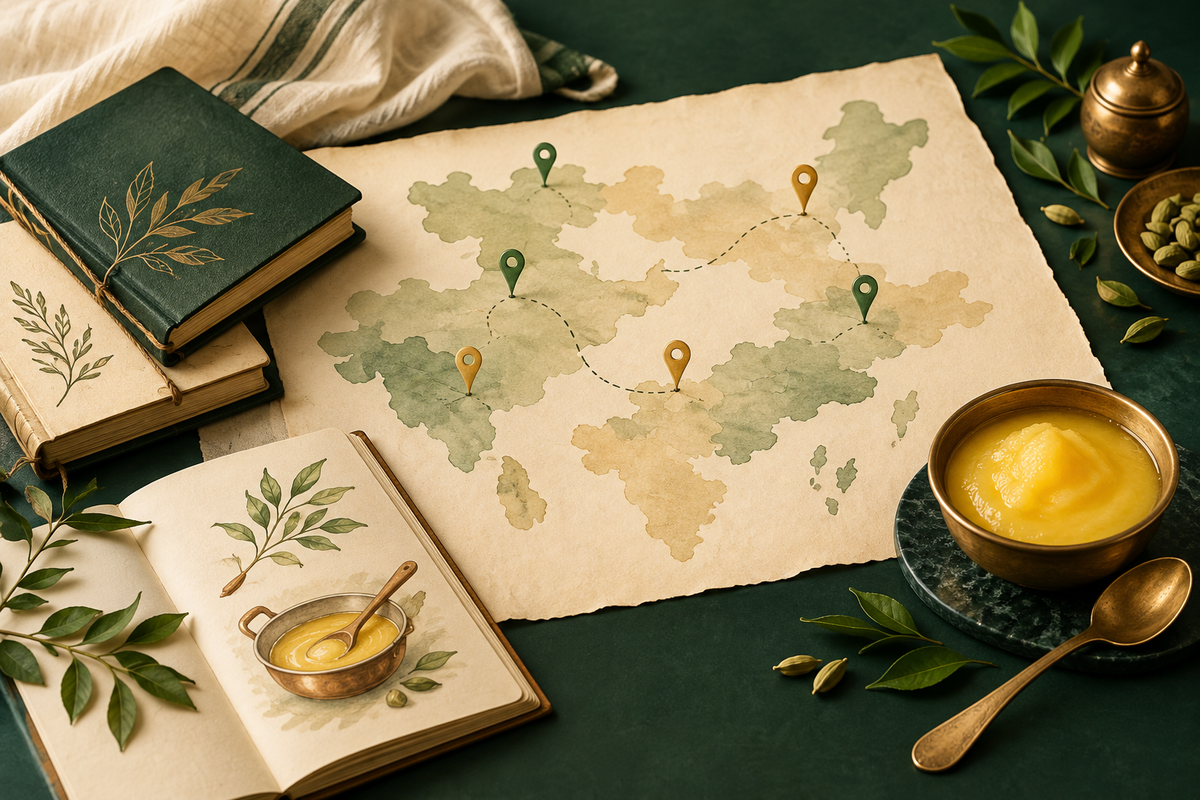
Create an attributed family recipe map without claiming one household represents a whole region.
By Faimly Farm · 22 October 2026 · Prepared with AI assistance. No firsthand testing or expert review is claimed.
A family ghee-recipe map should show who associates a dish with a place and when, rather than declaring one birthplace from memory alone. Separate the narrator's recollection, documentary evidence and today's adaptation.
Choose a map question
“Where was this dish cooked in our family?” is different from “Where was it invented?” The first can be answered with attributed family accounts. The second may need much wider historical research. Do not let the map title quietly change the question.
Choose a modest scope: one family, one dish or one period. A map of a few interviews cannot represent every household in a state. Avoid collecting or publishing precise private home locations when a broad place name serves the story.
Record a point without overstating it
- Write the dish name as the narrator uses it.
- Record the place and approximate period they associate with cooking it.
- Note whether they cooked, watched, read about or heard the story.
- Retain uncertainty such as “around the early 1980s” instead of inventing a year.
- Agree attribution and permission before sharing.
Use an illustrative entry
“Narrator A remembers making this sweet after moving to Town B; the earlier version is unknown.” This marks a family association, not an origin claim. If a notebook later supplies a date, add the document as another source rather than erasing the memory.
Use different labels for remembered place, documented place and modern cooking location. Explain the labels in a short key. Connecting two points can show a reported move; it should not imply a proven route of regional invention.
Keep the ingredient history honest
If the record says only ghee, preserve that term. Do not attach a current brand, A2 sourcing description or modern SKU to an older recipe without evidence. A present-day regular-ghee adaptation belongs in a dated note of its own.
Before sharing, invite participants to check their attributed words and identify sensitive details. The Oral History Association's practices support careful consent and preservation; the mapping method here is an original editorial worksheet, not a record of interviews conducted by Faimly Farm.
Questions
Must every point have an exact year?
No. Mark approximate and unknown dates.
Can two people place the dish differently?
Preserve both attributed accounts.
Does a family map establish a regional origin?
No; its scope is the evidence collected.
Source checked 22 October 2026: Oral History Association best practices.
Related practical guides
- Passing Down a Family Recipe: Recording Ghee Quantities
- When Family Ghee Recipes Disagree: Preserve Both Versions
- A Community Ghee Recipe Book: Agree Credit and Permission
Sources, catalogue and related records checked 22 October 2026. Banner: AI-generated editorial illustration, not a photograph of an actual batch, farm, test or packaging. Visit the Faimly Farm Journal.
Continue reading
View all stories
Save a Family Ghee Recipe Recording: Audio, Notes and Backups
Keep an oral recipe recording understandable and accessible beyond the phone that captured it.
Read the story
Planning a Family Ghee Cooking Demonstration: Roles and Records
Organise a small consent-based cooking demonstration that preserves the cook's words and distinguishes adaptations.
Read the story
Reading an Old Festival Menu: What It Can Tell You about Ghee
Annotate a printed menu without inventing recipes, quantities or universal regional customs.
Read the story
Join the conversation