

Why Ghee Belongs in Every Kitchen: Tradition, Nutrition, and the Bilona Difference

Share
Ghee has been a staple of Indian kitchens for thousands of years, valued for its rich flavour and its place in tradition. At Faimly Farm, every jar of ghee is made the traditional way, using the bilona method passed down through generations. Here's a closer look at why this golden, aromatic fat deserves a permanent place in your kitchen.
What Makes Ghee Different From Butter
Ghee is clarified butter, but the process goes further than simply melting butter down. During slow clarification, water and milk solids are removed, leaving behind pure butterfat. This is what gives ghee its long shelf life, high smoke point, and deep, nutty aroma. Unlike butter, ghee can be left at room temperature for weeks without spoiling, and it holds up beautifully under high-heat cooking like frying and tempering spices.
What Ghee Is Made Of
Ghee is composed mainly of butterfat. Because the milk solids are removed during clarification, it is very low in lactose and casein, which is why many people who are sensitive to other dairy find ghee easier to use. It has a characteristic golden colour and rich aroma that define traditional desi ghee.
A Place in Tradition
In Indian tradition, ghee has long held a cherished place at the table and in ritual. A spoonful added to warm rice, dal, or khichdi is a time-honoured way to enjoy it, and it features in festivals, temple food, and everyday cooking alike. These are cultural customs valued across generations.
Beyond the Kitchen
Ghee has long featured in traditional Indian household customs beyond cooking, and a warm spoonful mixed into milk is a familiar ritual in many homes. These are long-standing cultural practices rather than health claims — part of the heritage that surrounds ghee.
Why the Bilona Method Matters
Most commercial ghee is made directly from cream using industrial separators. The bilona method is slower and more deliberate: milk is first turned into curd, the curd is hand-churned into butter, and that butter is then simmered slowly over a low flame. This traditional process produces a deeper aroma and the grainy texture that many people associate with truly authentic desi ghee.
Bringing It Into Your Kitchen
A little ghee goes a long way. Try it stirred into hot rice or dal, used to temper cumin and mustard seeds at the start of a curry, brushed over warm rotis, or swapped in for butter or oil in your favourite baking recipes. Because of its high smoke point, it is also an excellent choice for sauteing vegetables or pan-frying.
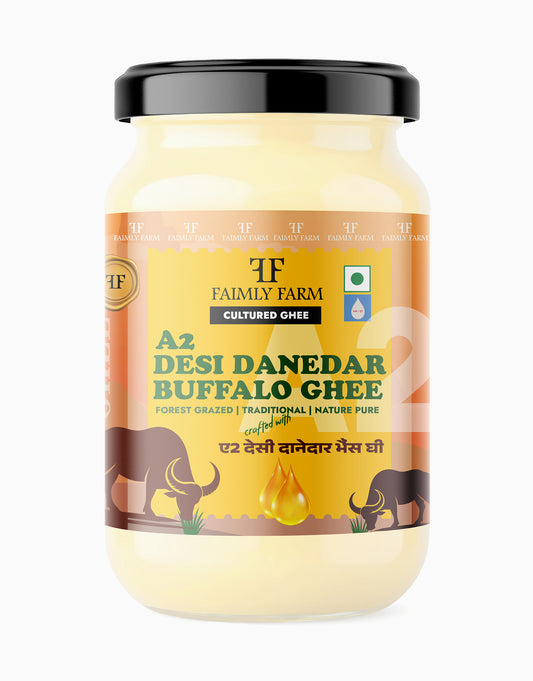
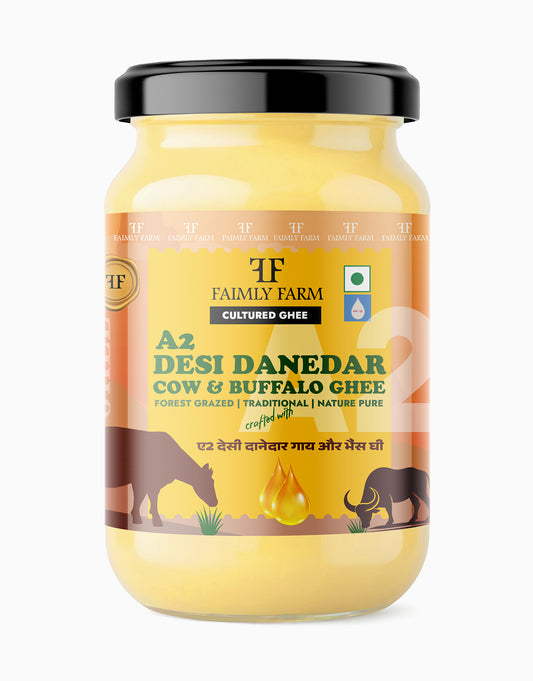
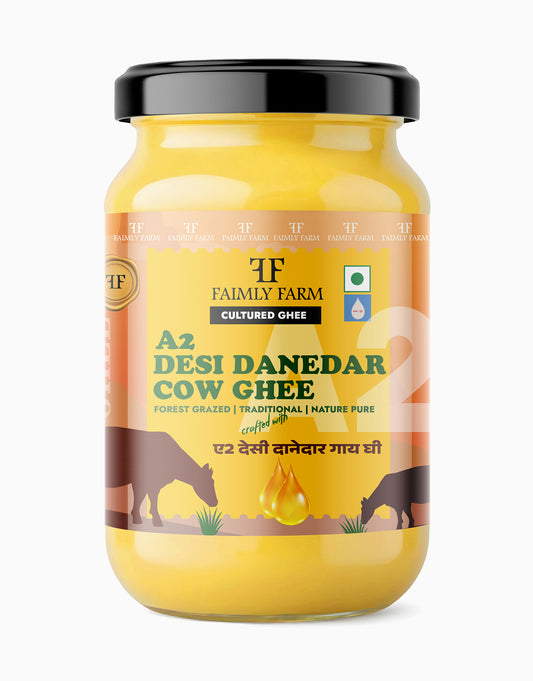
At Faimly Farm, we believe good ghee starts with good milk, patient hands, and time-honoured methods. Every batch is made in small quantities to keep that tradition intact, so that what reaches your kitchen tastes the way ghee was always meant to taste. Explore our A2 Ghee collection or try our A2 Bilona Cow Ghee.
Frequently Asked Questions
What makes ghee different from butter?
Ghee is clarified butter with the water and milk solids removed, giving it a long shelf life, high smoke point, and deep nutty aroma. It can be stored at room temperature and holds up to high-heat cooking.
Why is the bilona method special?
The bilona method cultures milk into curd, hand-churns it into butter, and slow-cooks it into ghee, producing a deeper aroma and the grainy texture associated with authentic desi ghee.
How do I use ghee in cooking?
Stir it into rice or dal, temper spices in it, brush it over rotis, or use it in place of butter or oil in baking. Its high smoke point suits frying and sauteing.
Does ghee contain lactose?
Ghee is very low in lactose and casein because the milk solids are removed during clarification.
Which ghee does Faimly Farm make?
A2 ghee from indigenous-cow milk, made the traditional bilona way in small lab-tested batches under our FSSAI licence.
Faimly Farm: indigenous A2 milk, traditional bilona batches, lab-tested purity under our FSSAI licence. Learn more about Faimly Farm or contact us.