

What Is A2 Ghee? A Complete Beginner's Guide

Share
By the Faimly Farm Team · Last updated June 17, 2026 · Reading time: about 7 minutes
Why Trust This Article
At Faimly Farm we make A2 ghee from the milk of indigenous cows, so we explain it from direct experience as well as established facts. Where a point about A2 is debated or depends on the individual, we say so plainly rather than overstating it.
"A2 ghee" is everywhere now — on premium jars, in wellness blogs, and across Indian e-commerce. But many shoppers buy it without really knowing what the "A2" means or why it costs more. This complete beginner's guide explains exactly what A2 ghee is, how it differs from regular ghee, and how to choose a genuine one.
The Problem: A Premium Label, Little Clarity
The term "A2" is used as a mark of quality, yet rarely explained. Shoppers are asked to pay more for it while being told little beyond "purer" and "traditional." Understanding what A2 actually refers to is the only way to judge whether a product — and its price — is genuine.
What Is A2 Ghee?
A2 ghee is clarified butter made from A2 milk — milk that contains the A2 type of beta-casein protein. This milk comes from indigenous (desi) cow breeds such as Gir, Sahiwal, and Red Sindhi, in contrast to the A1 beta-casein common in many crossbred and exotic cattle. In short: A2 ghee is defined by the type of milk protein in its source, not just by how the ghee is made.
A1 vs A2: The Core Difference
The difference comes down to a single variation in the beta-casein protein in milk. A1 beta-casein can release a peptide called BCM-7 during digestion, which some research associates with discomfort in sensitive individuals; A2 beta-casein does not behave the same way. Indigenous Indian cow breeds predominantly produce A2 milk, which is why A2 ghee is tied so closely to desi cows.
A2 Ghee vs Regular Ghee
| Factor | A2 Ghee | Regular Ghee |
|---|---|---|
| Milk source | A2 milk, indigenous breeds | Often mixed/crossbred milk |
| Beta-casein | A2 type | May contain A1 |
| Method | Often bilona (curd-first) | Often industrial |
| Aroma & texture | Rich, often grainy | Milder, smoother |
| Price | Higher | Lower |
Why People Choose A2 Ghee
- Source preference: milk from named indigenous breeds, often pasture-raised.
- Digestibility: many choosing A2 report it feels lighter, though experiences vary.
- Traditional method: A2 ghee is frequently made by the bilona (curd-first) process.
- Aroma and texture: often richer and grainier (danedar).
- Cultural fit: desi cow ghee carries traditional and ritual significance.
What A2 Ghee Offers Nutritionally
Like all pure ghee, A2 ghee provides a high smoke point (~250°C) suitable for high-heat Indian cooking, fat-soluble vitamins A, E, and K2, and butyric acid, a short-chain fatty acid studied for gut health. It is naturally low in lactose and casein because the milk solids are removed. It is also calorie-dense, so it is best enjoyed in moderation as part of a balanced diet — not as a medicine or weight-loss food.
Common Myths About A2 Ghee
Myth: All cow ghee is A2. Only ghee from A2 milk of indigenous breeds qualifies; much cow ghee comes from crossbred cattle.
Myth: A2 ghee cures diseases. It is a nourishing traditional food, not a medicine. Be cautious of sweeping health claims.
Myth: A2 and bilona mean the same thing. A2 refers to the milk protein/breed; bilona refers to the method. The best traditional ghee combines both.
How to Choose Genuine A2 Ghee
- Named indigenous breeds: look for Gir, Sahiwal, or Red Sindhi — not just "desi."
- Bilona method: the curd-first traditional process.
- Lab testing: batches tested for adulterants, with results the brand will share.
- FSSAI licence: a baseline food-safety requirement.
- Clean ingredients: only clarified A2 butterfat — no added oils or colours.
Quality and Purity Factors
The value of A2 ghee rests entirely on it being genuine. Some products labelled "A2" may be neither truly A2 nor bilona, or may be cut with cheaper oils. Testing, an FSSAI licence, and source transparency are what separate authentic A2 ghee from marketing.
The Faimly Farm Experience
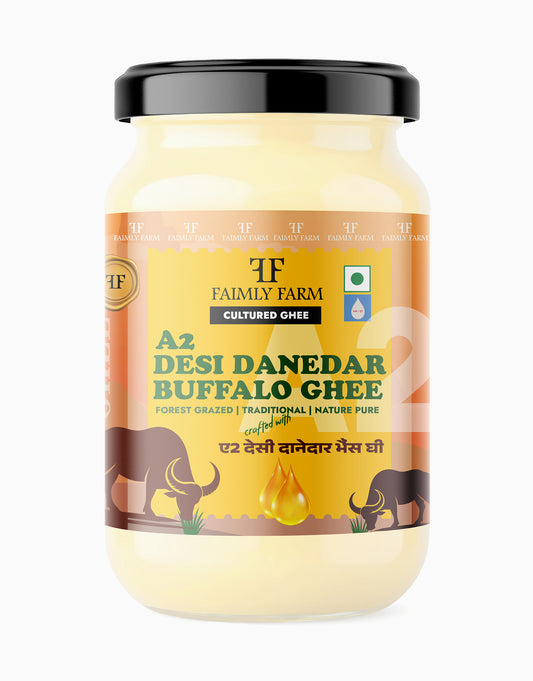
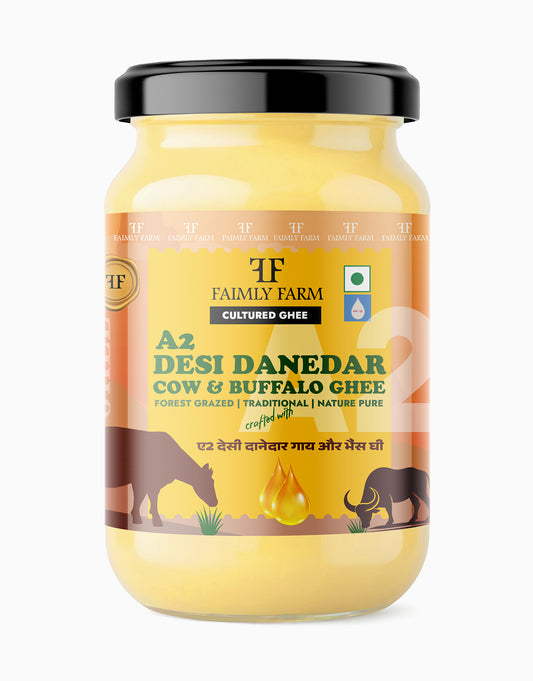
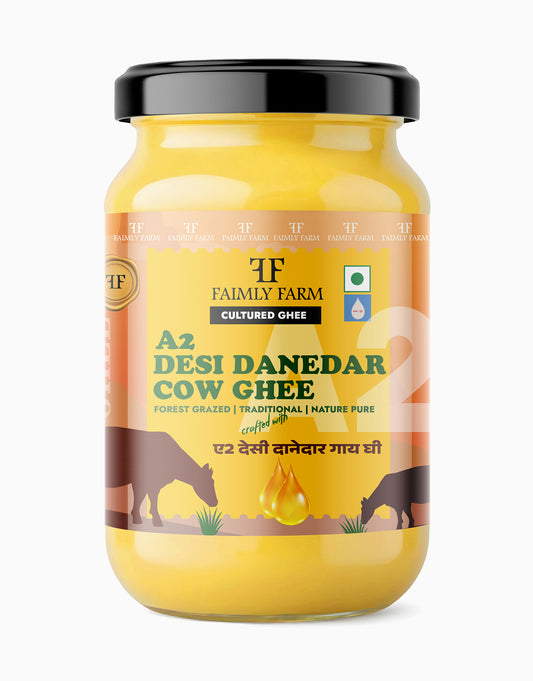
Our A2 ghee is made from the A2 milk of indigenous cows via the traditional bilona method, in small lab-tested batches under our FSSAI licence — no added oils or colours. For everyday use, our Nature's Pure A2 Cow Ghee is a great starting point, while the Desi Danedar A2 Cow Ghee showcases the classic grainy texture. Explore the full A2 Ghee collection.
Expert Insight
Across traditional producers and food-quality experts, the consensus is consistent: with A2 ghee, transparency about breed, method, and testing is the most reliable indicator of authenticity. The "A2" label is meaningful only when the source can be verified.
Why Choose Faimly Farm
Indigenous A2 milk, the bilona method, small batches, and documented testing under our FSSAI licence — every credential that makes "A2" genuine, verifiable rather than asserted. See our FAQ or contact us.
Key Takeaways
- A2 ghee is made from A2 milk of indigenous cow breeds — defined by the milk protein, not just the method.
- It differs from regular ghee in source, often method, aroma, and price.
- It offers the usual pure-ghee qualities: high smoke point, fat-soluble vitamins, butyric acid, low lactose.
- Genuine A2 ghee is verified by named breeds, bilona method, testing, and FSSAI.
Frequently Asked Questions
What is A2 ghee?
A2 ghee is clarified butter made from A2 milk, which contains the A2 type of beta-casein protein and comes from indigenous cow breeds like Gir, Sahiwal, and Red Sindhi.
How is A2 ghee different from normal ghee?
A2 ghee is made specifically from A2 milk of indigenous breeds and is often made by the bilona method, whereas regular ghee may use mixed or crossbred milk and industrial methods.
Is A2 ghee healthier than regular ghee?
Many prefer it for its source and digestibility, and like all pure ghee it offers fat-soluble vitamins and a high smoke point. Quantity and overall diet still matter most.
Which cows give A2 milk?
Indigenous (desi) Indian breeds such as Gir, Sahiwal, and Red Sindhi predominantly produce A2 milk.
Is A2 ghee good for lactose intolerance?
Ghee is very low in lactose because milk solids are removed, so many tolerate it well. Those with medical conditions should consult a doctor.
Why is A2 ghee more expensive?
Indigenous cows yield less milk, and A2 ghee is often made by the slower, lower-yield bilona method, with testing adding cost.
Is A2 ghee the same as bilona ghee?
No. A2 refers to the milk protein and breed; bilona refers to the curd-first method. The best traditional ghee combines both.
How do I know my A2 ghee is genuine?
Look for named indigenous breeds, the bilona method, lab testing, an FSSAI licence, and clean ingredients, and use simple home purity tests.
Conclusion
A2 ghee is, at its heart, ghee made from the A2 milk of indigenous cows — a return to the traditional desi-cow ghee that Indian kitchens have valued for generations. It is not magic, and the honest case for it does not need exaggeration: genuine A2 ghee offers a pure source, traditional craft, and the natural qualities of well-made ghee. Learn what "A2" really means, verify it, and you can choose with confidence.
Start your A2 ghee journey. Explore our A2 Ghee collection, try the everyday Nature's Pure A2 Cow Ghee, and read our related guides on A2 vs Regular Ghee, the bilona method, and how to choose pure A2 ghee. New customers can use code FIRST10 for 10% off their first order.
Faimly Farm: indigenous A2 milk, traditional bilona batches, lab-tested purity under our FSSAI licence. Learn more about Faimly Farm or contact us.