

Health Benefits of A2 Cow Ghee: An Honest Guide
An honest guide to the health benefits of A2 cow ghee — the A2 protein, indigenous-breed milk, evidence-based qualities, Ayurvedic view, myths, and an 8-question FAQ. No hype, just useful facts. From Faimly Farm.
By the Faimly Farm Team · Last updated June 17, 2026 · Reading time: about 7 minutes
Why Trust This Article
We make A2 cow ghee at Faimly Farm from the milk of indigenous breeds, so we describe its qualities from direct experience alongside established nutrition basics. Health topics deserve honesty, so where a benefit is traditional or individual rather than proven by large trials, we say so plainly instead of overstating it.
A2 cow ghee has become one of the most sought-after traditional foods in India, valued not just for flavour but for how it is said to nourish the body. But what is genuinely supported, and what is exaggeration? This guide focuses specifically on A2 cow ghee — what makes it different, its evidence-based qualities, and how to enjoy it sensibly.
The Problem: Big Claims, Little Nuance
A2 cow ghee is often marketed with sweeping health promises, from weight loss to curing ailments. Equally, sceptics dismiss it as just expensive fat. Both extremes mislead. The honest middle ground — what A2 cow ghee actually offers — is more useful for anyone deciding whether it belongs in their kitchen.
What Makes A2 Cow Ghee Different?
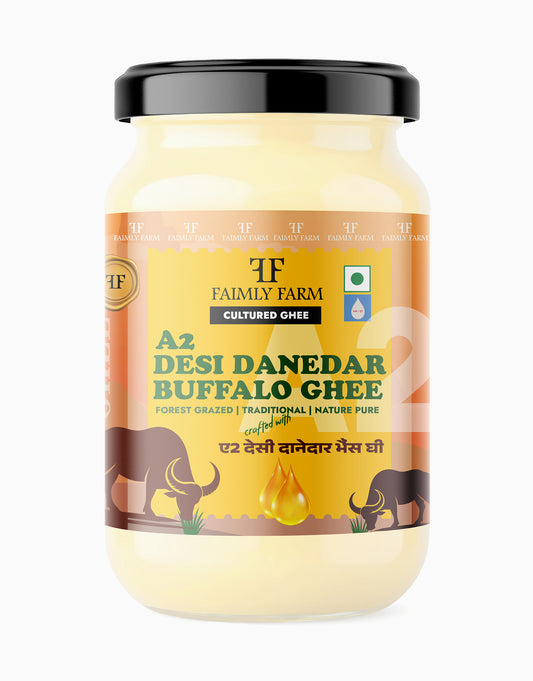
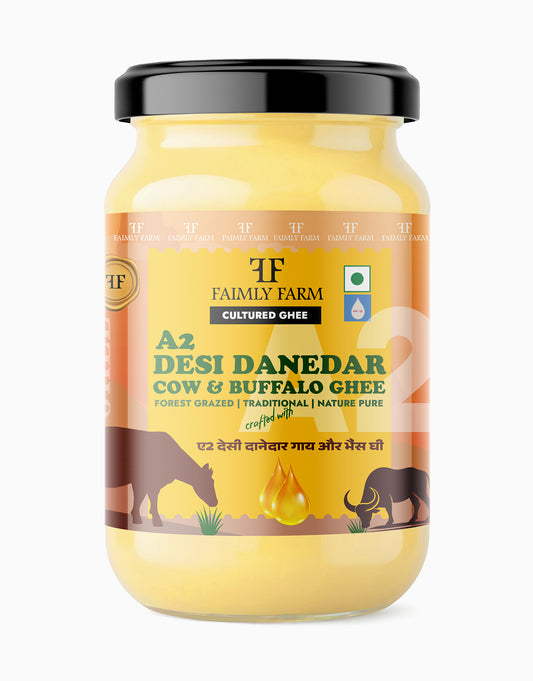
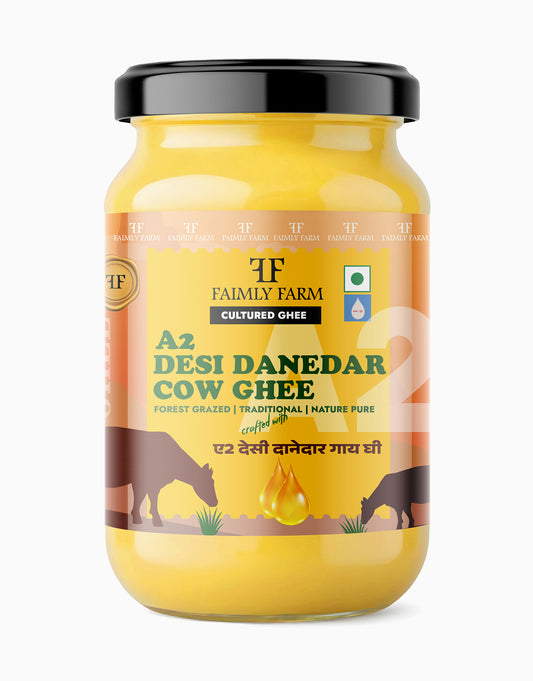
A2 cow ghee is clarified butter made from the A2 milk of indigenous cow breeds such as Gir, Sahiwal, and Red Sindhi. The defining feature is the A2 beta-casein protein in the source milk, in contrast to the A1 protein common in crossbred-cow milk. After clarification the casein is largely removed, but the A2 source remains central to why people choose it — along with cow ghee's characteristic light body, golden colour, and aroma.
Why the A2 Difference Matters
The A2 interest stems from digestion. A1 beta-casein can release a peptide called BCM-7 during digestion, which some research associates with discomfort in sensitive individuals; A2 beta-casein behaves differently. While ghee itself contains very little casein after clarification, many people choosing A2 cow ghee do so for the indigenous-milk source and report it feels lighter. Individual experiences vary, and this is best understood as a reasonable preference rather than a medical guarantee.
Evidence-Based Qualities of A2 Cow Ghee
- High smoke point (~250°C): stable for high-heat Indian cooking without breaking down.
- Fat-soluble vitamins: naturally provides vitamins A, E, and K2, absorbed alongside fat.
- Butyric acid: a short-chain fatty acid studied for its role in gut health.
- Low in lactose and casein: often tolerated by those sensitive to other dairy.
- Monounsaturated fat: contains oleic acid, the same fat found in olive oil, alongside saturated fat.
Traditional and Ayurvedic View
In Ayurveda, cow ghee (go ghrita) is especially prized — considered light, sattvic, and supportive of digestion (agni) and nutrient absorption. It is the traditional choice for daily nourishment, for carrying herbs deeper into the body, and for rituals. These are long-standing cultural uses rather than clinical claims, but they reflect centuries of practical experience with cow ghee specifically.
A2 Cow Ghee for Everyday Wellbeing: Practical Uses
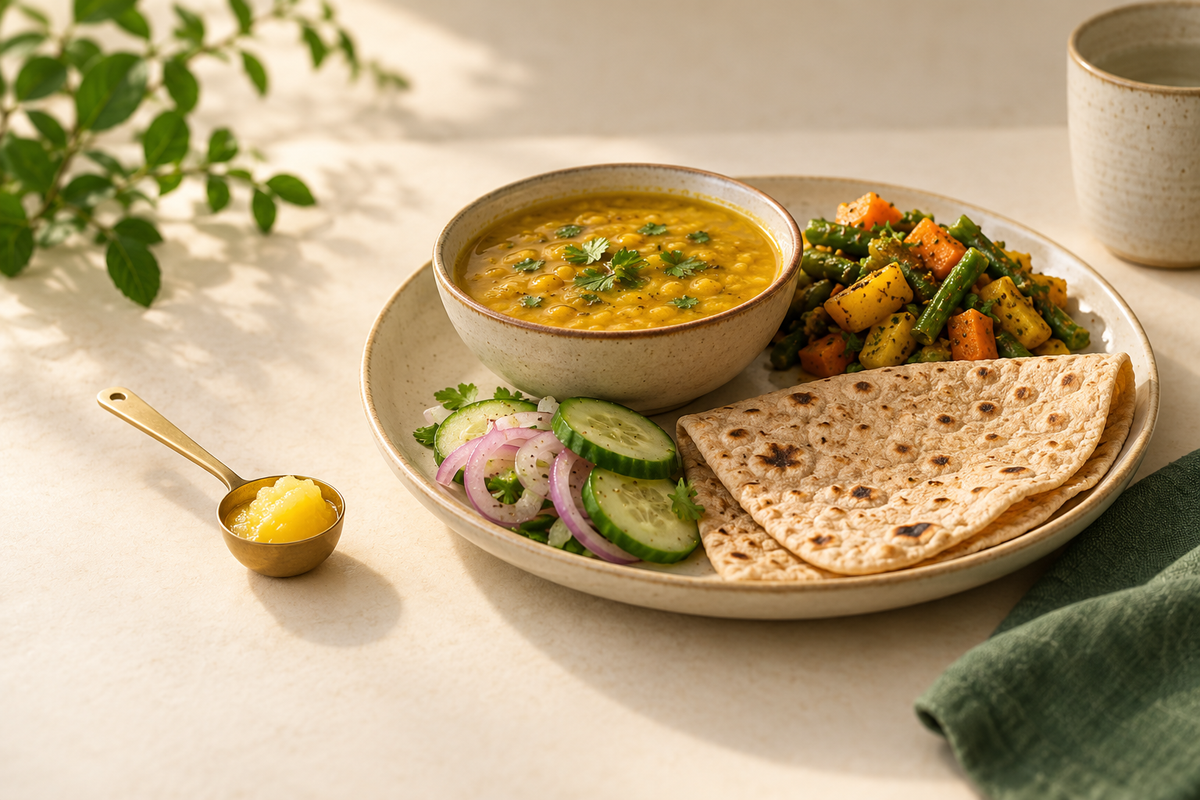
- A small spoon over warm dal or rice to aid absorption of fat-soluble nutrients.
- For tempering spices, where its aroma enhances everyday meals.
- A traditional warm spoonful in milk, as many households use it.
- As a daily cooking fat in sensible amounts, in place of less stable oils.
Common Myths and Misconceptions
Myth: A2 cow ghee causes weight loss. It is calorie-dense; it can fit a balanced diet in moderation but is not a weight-loss food in itself.
Myth: A2 cow ghee cures diseases. It is a nourishing traditional food, not a medicine. Treat sweeping cure claims with caution.
Myth: All cow ghee is A2. Only ghee from A2 milk of indigenous breeds is A2; much cow ghee comes from crossbred cattle.
Quality and Purity Factors
The qualities above assume genuine, pure A2 cow ghee. Adulterated ghee cut with hydrogenated oils introduces trans fats that work against its benefits. Look for named indigenous breeds, the bilona method, lab testing, an FSSAI licence, and clean ingredients — clarified A2 butterfat and nothing else.
The Faimly Farm Experience
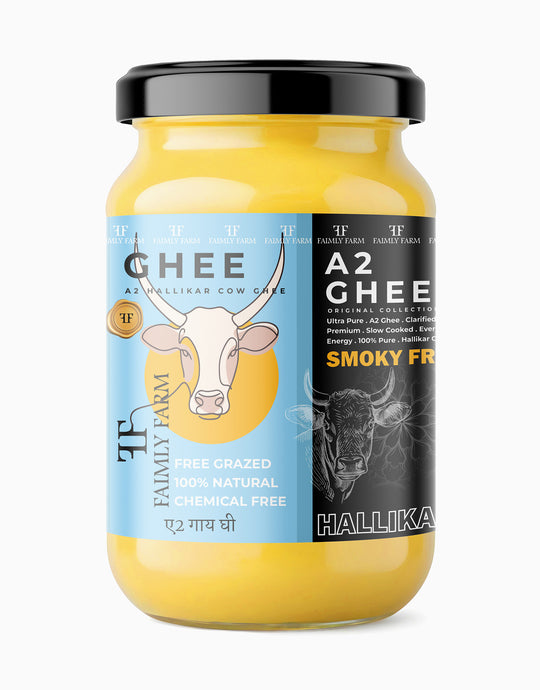
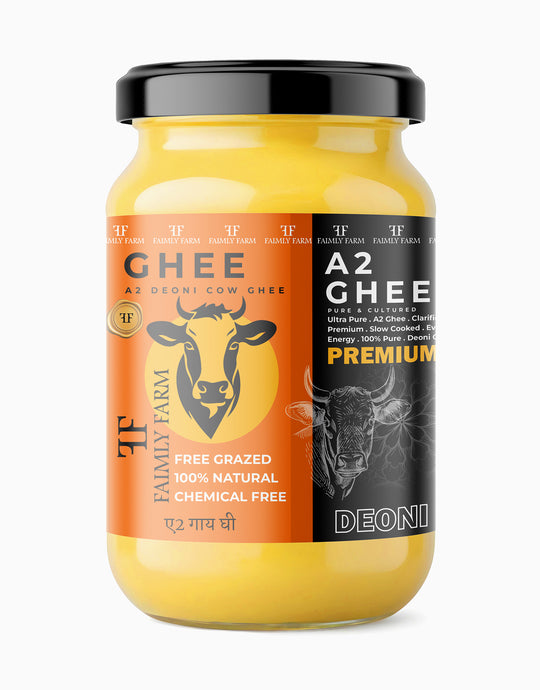
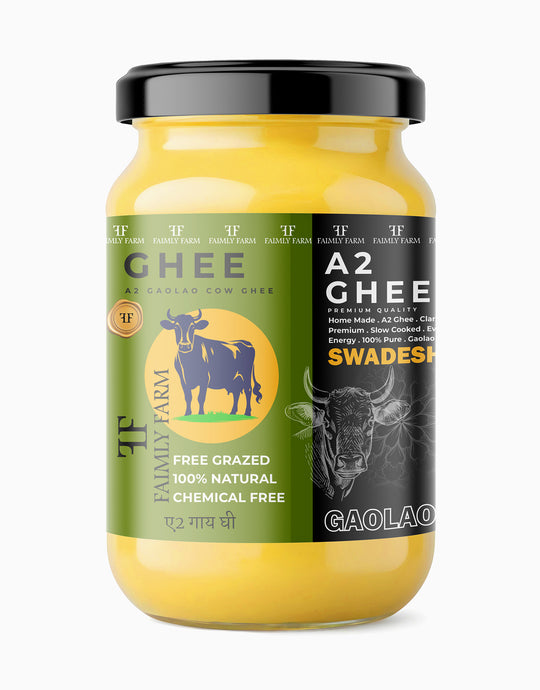
Our A2 cow ghee is made from indigenous-breed milk via the traditional bilona method, in small lab-tested batches under our FSSAI licence — no added oils or colours. That purity is what lets you enjoy cow ghee's natural qualities as intended. Explore our A2 Ghee collection or try our Natural A2 Cow Ghee Smoky Fresh.
Expert Insight
Nutrition specialists increasingly stress dietary patterns over single foods. In that light, pure A2 cow ghee used in moderation is reasonably viewed as a wholesome, traditional fat — valued for cooking stability, fat-soluble vitamins, and cultural fit, rather than as a cure-all. Moderation and quality remain the key themes.
Key Takeaways
- A2 cow ghee comes from A2 milk of indigenous breeds — not all cow ghee qualifies.
- It offers a high smoke point, fat-soluble vitamins, butyric acid, and low lactose/casein.
- It is a nourishing traditional food in moderation, not a medicine or weight-loss aid.
- Benefits depend on genuine purity — verify breed, method, testing, and FSSAI.
Frequently Asked Questions
What are the health benefits of A2 cow ghee?
It provides a high smoke point for stable cooking, fat-soluble vitamins A, E, and K2, butyric acid linked to gut health, and is low in lactose and casein. Enjoy it in moderation as part of a balanced diet.
Is A2 cow ghee good for digestion?
It is traditionally valued in Ayurveda for supporting digestion, and contains butyric acid associated with gut health. Many find it easy to digest, though experiences vary.
Is A2 cow ghee good for weight loss?
It is calorie-dense and not a weight-loss food by itself, but used in small amounts it can fit a balanced, controlled diet. Portion size matters most.
Can lactose-intolerant people eat A2 cow ghee?
Ghee is very low in lactose because milk solids are removed, so many tolerate it well. Those with medical conditions should consult a doctor.
Is A2 cow ghee better than regular cow ghee?
It uses A2 milk from indigenous breeds and is often made by the bilona method, which many prefer for source and aroma. Whether it is "better" depends on your priorities.
How much A2 cow ghee should I eat daily?
A small amount — a spoon or two in cooking — suits most balanced diets. Adjust to your overall diet and any medical advice.
Does A2 cow ghee help skin and hair?
It is traditionally used in self-care for its fatty-acid content, though these are cultural uses rather than clinically proven treatments.
How do I know my A2 cow ghee is genuine?
Look for named indigenous breeds, the bilona method, lab testing, an FSSAI licence, and clean ingredients, and use simple home purity tests.
Conclusion
A2 cow ghee is a genuinely nourishing traditional food — offering cooking stability, fat-soluble vitamins, butyric acid, and low lactose, all rooted in the A2 milk of indigenous cows. It is not a miracle cure, and the honest case for it does not need exaggeration. Used in moderation and chosen for real purity, A2 cow ghee can be a wholesome, flavourful part of an everyday Indian kitchen.
Experience pure A2 cow ghee. Explore our A2 Ghee collection, try the Natural A2 Cow Ghee Smoky Fresh, and read our related guides on the health benefits of ghee, A2 vs Regular Ghee, and A2 cow vs buffalo ghee. New customers can use code FIRST10 for 10% off their first order.
This article is for general information and is not medical advice. For personal health concerns, consult a qualified professional. Faimly Farm: indigenous A2 milk, traditional bilona batches, lab-tested purity under our FSSAI licence. Learn more about Faimly Farm or contact us.
Continue reading
View all stories
Cooking with Ghee: A Kitchen Ventilation Checklist
A practical routine for using your extractor and organising the cooking area, with EPA guidance and no product health promises.
Read the story
Sugar-Free A2 Ghee Claims: Read Energy and Fat Separately
Interpret an absence-of-sugar claim without inferring low energy or a clinical benefit.
Read the story
Packing a Lunch Made with Ghee: Keep Perishable Food at the Right Temperature
A practical plan for packing meals cooked with regular ghee: choose cold or hot holding, organise the lunch bag and check the journey to mealtime.
Read the storyExplore Faimly Farm ghee
Join the conversation