

A2 Ghee for Indian Sweets (Mithai): A Complete Guide

Share
By the Faimly Farm Team · Last updated June 17, 2026 · Reading time: about 7 minutes
Why Trust This Article
At Faimly Farm we make A2 ghee that families use for festive sweets every season, so this guide reflects how ghee actually behaves in mithai-making, alongside established cooking principles. Where something depends on the specific sweet or on personal taste, we say so rather than offering one rule for everything.
Ask anyone who makes traditional Indian sweets and they will tell you the same thing: the ghee makes the mithai. From the aroma of a fresh besan laddoo to the melt of a good mysore pak, pure A2 ghee is what gives sweets their richness, texture, and unmistakable festive character. This guide explains why A2 ghee matters for mithai, which sweets it suits, and how to use it well.
The Problem: Great Recipes, Let Down by the Ghee
Many home cooks follow a treasured family recipe yet feel the result falls short — and the culprit is often the ghee. Adulterated or flavourless ghee cannot deliver the aroma and mouthfeel that define good mithai. Since sweets use ghee generously, its quality shows more here than almost anywhere else in the kitchen.
Why A2 Ghee Matters for Mithai
- Aroma: pure A2 bilona ghee carries a deep, nutty fragrance that perfumes the whole sweet.
- Richness: its clean butterfat gives mithai the luxurious mouthfeel people associate with festivals.
- Roasting flavour: ghee is the medium that develops the toasty notes in besan, sooji, and flour-based sweets.
- Binding and texture: the right amount of ghee binds laddoos and sets barfis with the proper bite.
- Tradition: classic recipes were created around ghee, so it delivers the authentic result.
Best Indian Sweets to Make With A2 Ghee
| Sweet | Role of ghee | Cow or buffalo |
|---|---|---|
| Besan laddoo | Roasting besan, aroma, binding | Cow for aroma |
| Sooji (rava) halwa | Roasting flavour, richness | Cow |
| Mysore pak | Defining richness and melt | Cow or buffalo for body |
| Gajar halwa | Richness, finishing | Cow |
| Moong dal halwa | Slow roasting, depth | Cow or buffalo |
| Barfi | Richness, set and texture | Buffalo for body |
Cow vs Buffalo Ghee for Sweets
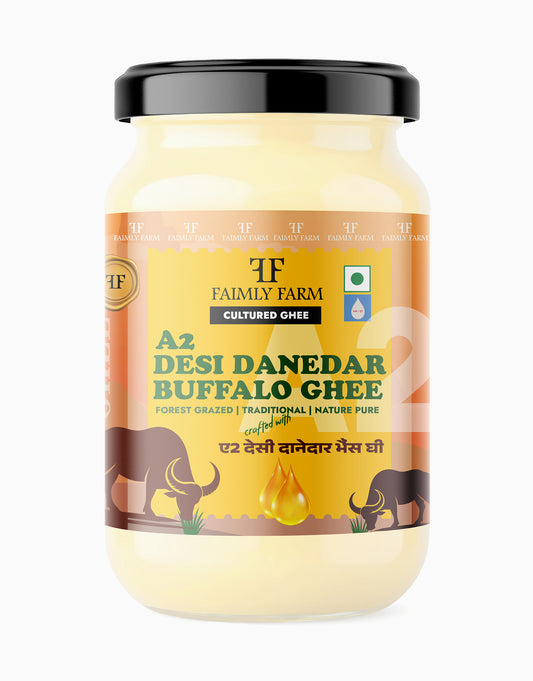
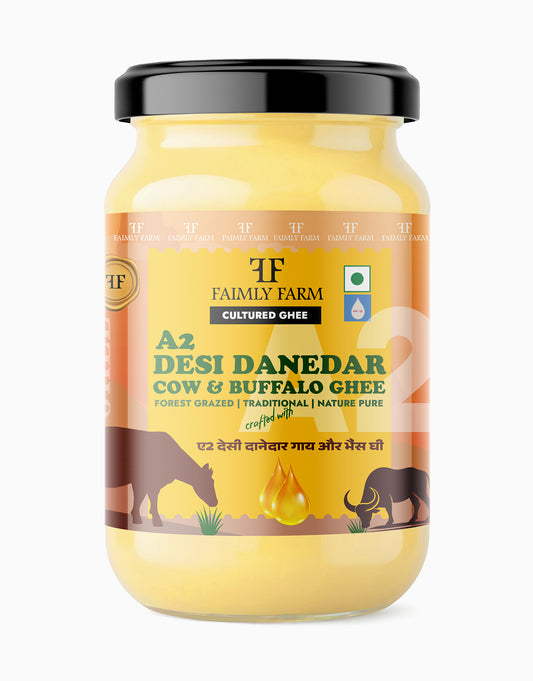
Both work, but they lend different qualities. A2 cow ghee is lighter and more aromatic, ideal where fragrance leads — besan laddoo, halwa, and most everyday mithai. A2 buffalo ghee is richer and denser, lending body and volume to sweets like barfi and certain mysore pak styles. Many halwais keep both and choose by the sweet.
How to Use A2 Ghee in Mithai: Practical Tips
- Roast on low and slow: let ghee gently toast besan or sooji; rushing burns the aroma you want.
- Use enough, but not too much: follow the recipe — too little and it is dry, too much and it is greasy.
- Add in stages where needed: some sweets benefit from ghee added gradually as the mixture cooks.
- Mind the heat: ghee has a high smoke point, but sweets scorch easily, so keep the flame controlled.
- Finish with a little fresh ghee: a spoon at the end lifts aroma in many halwas.
Common Mistakes
- Using adulterated ghee: the fastest way to dull, greasy mithai.
- Rushing the roast: high heat burns ghee and flour, giving a bitter note.
- Wrong ghee for the sweet: using a heavy ghee where aroma should lead, or vice versa.
- Skimping on quantity: mithai genuinely needs its ghee for texture and set.
Quality and Purity Factors
Because sweets use so much ghee, purity is non-negotiable. Adulterated ghee cut with hydrogenated oils both tastes worse and undermines texture. For mithai, choose A2 milk from named indigenous breeds, the bilona method, lab testing, and an FSSAI licence — clarified butterfat and nothing else.
The Faimly Farm Experience
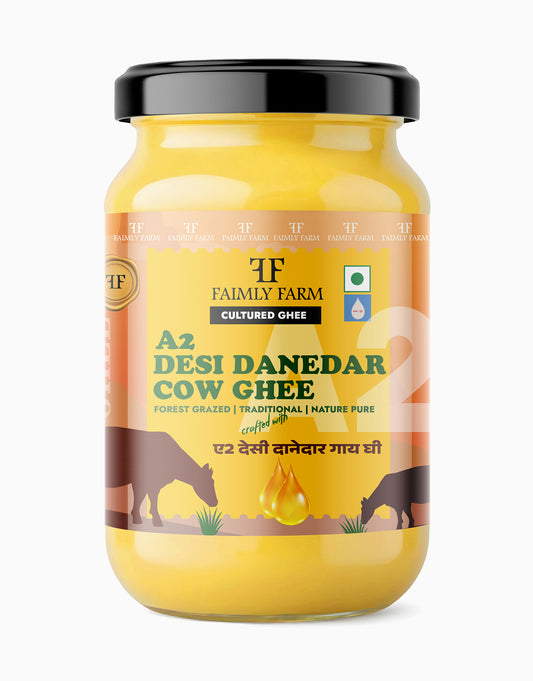
Families tell us our ghee changes how their festive sweets smell and set — the aroma of a fresh laddoo is unmistakable with pure bilona ghee. Our A2 ghee is made from indigenous-cow milk via the bilona method, in small lab-tested batches under our FSSAI licence. For aromatic mithai, try our Desi Danedar A2 Cow Ghee, or explore the full A2 Ghee collection.
Expert Insight
Traditional halwais are unanimous on one point: the quality of the ghee sets the ceiling for the sweet. No technique can rescue mithai made with poor ghee, while genuine aromatic ghee makes even a simple laddoo memorable. It is the single ingredient most worth getting right.
Key Takeaways
- Pure A2 ghee gives mithai its aroma, richness, roasting flavour, and proper texture.
- Cow ghee suits aromatic sweets; buffalo ghee lends body to denser ones.
- Roast low and slow, use the right quantity, and control the heat.
- Purity is essential — sweets use ghee generously, so quality shows.
Frequently Asked Questions
Which ghee is best for making Indian sweets?
Pure A2 bilona ghee. Cow ghee is best where aroma leads (laddoo, halwa); buffalo ghee lends body to denser sweets like barfi.
Is cow or buffalo ghee better for mithai?
Cow ghee for aroma and lighter sweets; buffalo ghee for richness and body. Many sweet-makers keep both and choose by the recipe.
Why do my sweets taste flat even with ghee?
Often the ghee is adulterated or low in aroma, or the roasting was rushed. Genuine bilona ghee roasted slowly makes a clear difference.
How much ghee should mithai use?
Follow the recipe. Sweets genuinely need their ghee for texture and set; too little makes them dry, too much makes them greasy.
Can I use A2 ghee for halwa and laddoo?
Yes, it is ideal. Its aroma and roasting quality define the flavour of besan laddoo, sooji halwa, and many classic sweets.
Does ghee quality really change the sweet?
Significantly. Because mithai uses ghee generously, its aroma, richness, and purity show more here than in most cooking.
What ghee do halwais traditionally use?
Traditional sweet-makers rely on pure ghee chosen for aroma and richness, often cow ghee for fragrance and buffalo ghee for body.
How do I know my ghee is pure enough for sweets?
Look for named indigenous breeds, the bilona method, lab testing, an FSSAI licence, and a clean nutty aroma.
Conclusion
When it comes to mithai, ghee is not just an ingredient — it is the soul of the sweet. Pure A2 bilona ghee brings the aroma, richness, and texture that turn a good recipe into a memorable one, while poor ghee quietly lets the whole thing down. Choose genuine, aromatic ghee, match cow or buffalo to the sweet, roast with patience, and your festive mithai will taste the way tradition intended.
Make mithai worth remembering. Explore our A2 Ghee collection, try the aromatic Desi Danedar A2 Cow Ghee, and read our related guides on ghee in Indian festivals and gifting ghee. New customers can use code FIRST10 for 10% off their first order.
Faimly Farm: indigenous A2 milk, traditional bilona batches, lab-tested purity under our FSSAI licence. Learn more about Faimly Farm or contact us.