

Buying Faimly Farm Ghee Online: An Order Checklist
Choose cow, buffalo or blend ghee, verify the selected pack and final checkout, save order details and inspect delivery with this Faimly Farm buying checklist.

By Faimly Farm · 21 October 2026 · Prepared with AI assistance; no personal purchase test or independent product certification is claimed.
To buy Faimly Farm ghee online, first choose the declared milk source, then select the pack on the live product page and confirm the final price, availability, delivery information and order details at checkout. Do not rely on an old screenshot, blog price or social-media offer: variants and checkout conditions can change.
This checklist is for a shopper who has already decided to browse Faimly Farm and wants to complete an order carefully. For comparing brands or interpreting purity claims, start with our broader A2 ghee buying guide.
Step 1: choose the milk-source category before the pack size
“Cow,” “buffalo,” and “cow-and-buffalo blend” describe the declared milk source. They do not by themselves prove a health advantage, purity, organic status or suitability for an allergy. Decide which category matches the recipient or household preference before comparing pack sizes.
| Shopper task | Relevant live Faimly Farm page | Why this link fits |
|---|---|---|
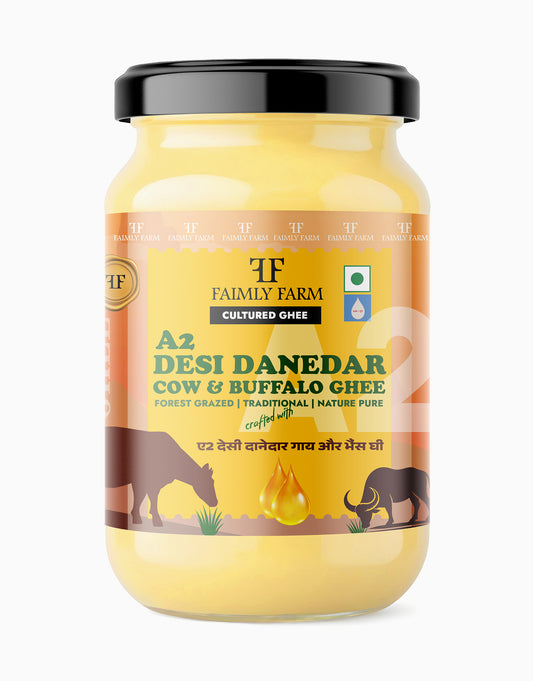
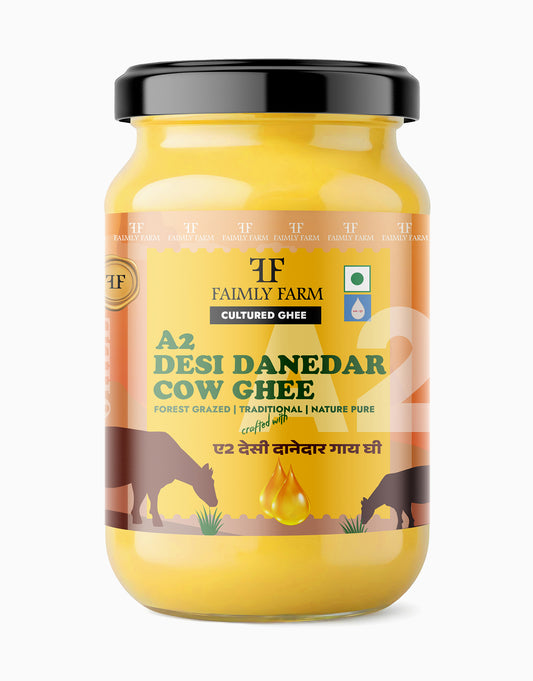
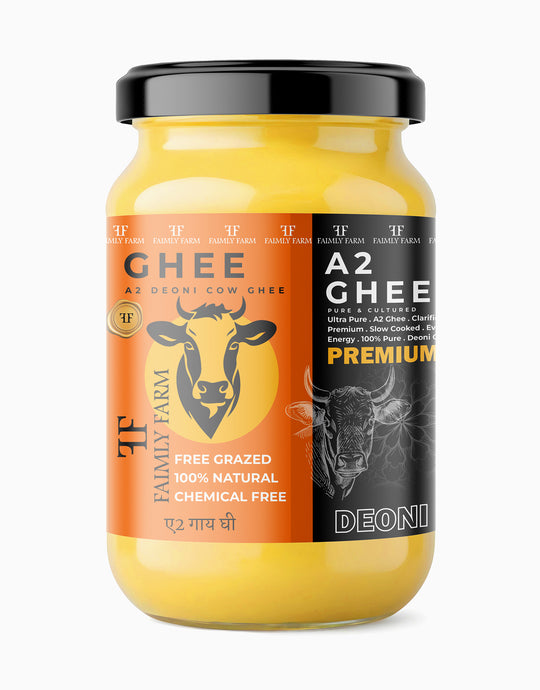
| Browse a cow-milk-source option | Desi Danedar A2 Cow Ghee | The live listing identifies the product as cow ghee; check the selected variant for current details. |
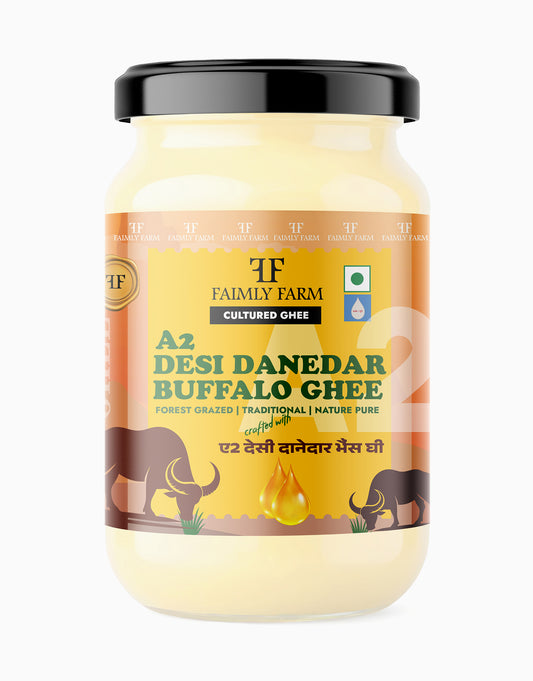
| Browse a buffalo-milk-source option | Desi Danedar A2 Buffalo Ghee | The live listing identifies the product as buffalo ghee; it is not presented here as medically superior. |
| Browse a mixed-source option | Desi Danedar A2 Cow & Buffalo Blend Ghee | The listing is relevant when the shopper intentionally wants a blend. Read our blend-ratio guide before assuming what percentage each milk source contributes. |
These links were checked against the live catalogue on 21 October 2026. They are navigational choices, not rankings. A product title and seller description are claims from the catalogue; they are not independent evidence for every process, sourcing or health statement.
Step 2: inspect the selected variant, not only the main product title
Open the product page and choose the intended size. Confirm the quantity unit carefully: millilitres and litres measure volume, while grams and kilograms measure mass. A 500 mL listing should not be treated as 500 g, and one litre should not be treated as one kilogram without a reliable stated conversion.
For a fair price comparison, calculate like-for-like units. Our ghee pack-size and unit-price guide shows how to compare rupees per 100 mL with rupees per 100 mL, or rupees per 100 g with rupees per 100 g. It also explains why the cheapest unit price is not automatically the most practical household choice.
Before adding to cart, record:
- the exact product name and selected pack size;
- the displayed price for that selected variant;
- whether the page currently allows the variant to be added to cart;
- any visible ingredient, storage or pack information you need to verify;
- the date you checked the page.
Step 3: separate product claims from supporting evidence
Words such as A2, bilona, traditional, organic, lab-tested and pure answer different questions. An A2 statement concerns the milk-source description; bilona describes a process route; organic and testing claims require their own documentation. One term does not validate all the others.
If a laboratory statement affects your decision, ask which product and batch the report covers, which laboratory issued it, when the sample was tested and which tests were performed. Our guide to reading a ghee laboratory report explains why a report for another sample cannot certify the jar in your cart.
FSSAI's Labelling and Display Regulations prescribe requirements for pre-packaged food information. When the order arrives, compare the actual label with the listing rather than assuming that a website headline contains every required detail.
Step 4: verify the checkout, not an old promotion
After choosing the product and quantity, review the cart and checkout. Confirm the delivery address, number of units, selected variants, discounts actually applied, delivery charge and final payable amount. A code shown in an old article or advertisement may have expired, may apply only to eligible products or may require conditions that are not met.
Do not publish or share screenshots containing your full address, phone number, payment details or one-time password. If you need help, keep the order number and a private copy of the confirmation, but redact personal information before posting publicly.
Step 5: save a compact order record
A useful record contains the order number, order date, product and variant, amount paid, payment reference, delivery address used and the confirmation sent by the store. This is more useful than a cropped promotional screenshot because it identifies what was actually ordered.
If payment appears to have been debited but no confirmation arrives, first check the payment and email/SMS records, then use the official contact route shown on the site. Describe the status factually; do not send an OTP, card PIN or account password to anyone.
Step 6: inspect the delivery before using the ghee
Check that the product name and pack size match the order. Where it is safe, inspect the container, seal, batch/date information and visible damage before use. A normal-looking colour or aroma does not resolve a broken seal, cracked jar or mismatch.
If the parcel leaks, the jar is cracked or the seal appears compromised, do not taste the ghee to investigate. Photograph the outer parcel and container where safe, retain the order information and contact the seller through the order channel. Follow our detailed damaged ghee delivery checklist.
A two-minute pre-payment checklist
- I selected cow, buffalo or blend intentionally.
- I checked the exact pack size and whether it is stated by volume or mass.
- I reviewed the selected variant's live price and availability.
- I did not treat colour, graininess, price or a marketing word as proof of purity.
- I checked the final cart total, delivery charge and applied discount.
- I saved the order confirmation without exposing private payment information.
Frequently asked questions
Where should I verify current Faimly Farm prices?
On the live product page after selecting the intended variant, and again in the cart or checkout. A blog should not be treated as a permanent price list.
Which Faimly Farm ghee should I buy?
Choose first by the declared milk-source category and your cooking or household preference, then compare pack size, current checkout cost and evidence for claims that matter to you. This article does not rank one product as universally best.
Does A2 mean the finished ghee is lactose-free or allergy-safe?
No. A2 describes a milk-protein source characteristic; it is not the same as a lactose-free claim and does not make a milk-derived food safe for someone with milk allergy.
Is the largest pack always the best value?
No. Compare like-for-like unit cost, but also consider how quickly the household uses ghee and the storage directions on the actual pack.
What should I do if the delivered jar differs from the order?
Keep the order confirmation and packaging, document the mismatch without tasting a suspect product, and contact the seller through the official order route.
Sources and scope
Source checked 21 October 2026: FSSAI Food Safety and Standards (Labelling and Display) Regulations, 2020, consolidated version dated 9 September 2025. Live Faimly Farm catalogue records for the three linked products were also checked on 21 October 2026. Product-page wording is seller information, not independent substantiation. This article does not promise a particular price, stock level, delivery time, offer, refund or certification.
Featured banner: AI-generated editorial illustration, not actual packaging, a checkout screenshot or a photograph of a tested product.
Continue reading
View all stories
Regional Names for Ghee: Ghrta, Nei and Tuup
A practical guide to Sanskrit ghrta, Tamil nei and Marathi tuup: translate recipe ingredients while keeping quantities, sourcing and process claims sepa...
Read the story
Cow and Buffalo Ghee Blends: What Does the Ratio Describe?
A cow-and-buffalo ghee blend is not automatically 50:50. Learn to distinguish milk, fat and finished-ghee ratios with a practical comparison worksheet.
Read the story
Filtering Homemade Ghee: Tools, Sediment and Careful Handling
Learn how to strain homemade ghee with a stable, dry setup, troubleshoot slow filtering and understand why filtration cannot prove purity or rescue dama...
Read the storyExplore Faimly Farm ghee
Join the conversation