



Ghee on a Cotton Apron: Read the Care Label Before Treating
Start with the garment's instructions, then treat a kitchen grease spot without assuming every fabric or stain needs the same method.
By Faimly Farm · 22 October 2026 · Prepared with AI assistance.
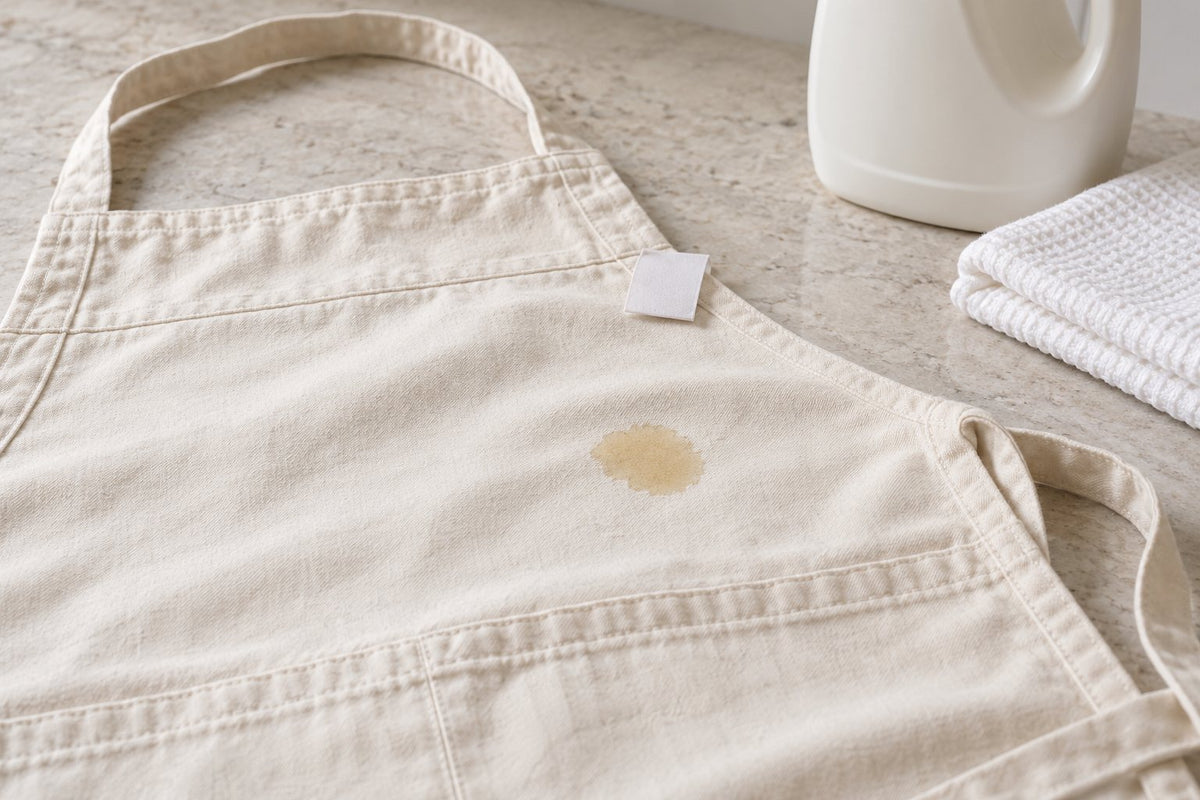
For a ghee spot on a washable cotton apron, first check the garment's care label, then use a suitable grease-stain treatment according to its directions. Do not begin with the hottest water available or put a still-stained apron straight into a tumble dryer. This guide is for a washable kitchen apron, not silk, wool, upholstery or a dry-clean-only garment.
Identify what needs cleaning
Was it plain regular cow ghee, or a spoonful containing turmeric, chilli or sauce? Write down what spilled if you need a cleaner's help. A stain from a coloured cooked dish may need attention beyond the greasy component; a method for fat alone is not a promise that every pigment will disappear.
For example, Danedar Cow Ghee is the regular edible product referred to here. Its product classification does not determine the apron care instructions. The fabric, finishes, dye and label remain the starting point.
A cautious sequence for a washable apron
- Read both labels. Check the apron for washing and drying restrictions, then read the stain treatment or detergent directions. If the care label is missing and the garment matters to you, seek professional advice before experimenting.
- Pretreat appropriately. Use a product whose directions cover greasy food stains and the fabric in question. Follow its dose, contact time and colourfastness precautions. Keep laundry products away from cooking ingredients and utensils.
- Wash within the garment's limits. Select a permitted cycle and temperature. “Hotter” is not permission to exceed a care label.
- Inspect before dryer heat. Look carefully for a remaining oily mark. Follow the treatment instructions for any repeat wash; do not assume a wet fabric's appearance proves the spot has gone.
This approach adapts the manufacturer guidance in Tide's butter-stain instructions and its stain-removal guide. Those sources cover greasy food stains and warn against drying before stain removal. They are not a FAIMLY FARM ghee-specific fabric test; success depends on the actual garment and stain.
When to stop the home attempt
Stop if the treatment causes colour transfer, texture change or another visible alteration. For decorative trim, embroidery or a mixed-material apron, the most restrictive part of the care instructions may govern the whole item. A professional cleaner can assess the garment; tell them what spilled and which products you have already applied.
Do not combine cleaning chemicals or borrow an unlabelled solvent from another task. A more aggressive treatment is not automatically a better one. Keep the apron separate from food preparation until it has been cleaned according to the relevant instructions.
Make the next spill easier to manage
Measure ghee before lifting it over the pan, set the spoon on a rest and leave a clear landing space for the jar. These are simple workflow choices, not a guarantee against spills. Our regular-ghee breadcrumb recipe offers a small measured cooking task to organise around.
Quick questions
Does this method apply to a silk kurta?
No. Use that garment's care instructions and specialist advice where appropriate.
Will one wash always remove ghee?
No. Age of the stain, fabric and previous treatment can change the result.
Browse Ghee & Beyond. Manufacturer guidance checked 22 October 2026; no fabric test is claimed.
Banner: AI-generated editorial illustration. No firsthand product, kitchen or equipment testing is claimed. Visit the Faimly Farm Journal.
Continue reading
View all stories
Used Ghee After Cooking: Keep It Out of the Drain
A household cleanup routine for unwanted cooking ghee, with local waste-rule checks.
Read the story
Savoury Bread Pudding with Ghee: Soak the Bread, Set the Centre
Make a small vegetable bread pudding and check the egg centre with a thermometer.
Read the story
Broccoli with Regular Ghee: Steam Briefly, Then Finish in the Pan
Cook even broccoli florets and finish with measured regular ghee without leaving water in the pan.
Read the storyExplore Faimly Farm ghee
Join the conversation