

When Family Ghee Recipes Disagree: Preserve Both Versions
Resolve conflicting household recipe memories without inventing one authoritative regional tradition.
By Faimly Farm · 22 October 2026 · Prepared with AI assistance; no firsthand product testing or expert review is claimed.
When relatives remember different ghee quantities or methods, preserve the accounts separately before trying to combine them. A family recipe can have several versions; agreement should not be invented for a neat printed page. This is a practical editing method for household food memories, not a claim about one region's definitive custom.
Name the disagreement precisely
“Grandmother made it differently” can hide several questions. Was the dish for a festival or an ordinary meal? Were both people describing the same number of servings? Was a spoon a particular household utensil? Did one person remember cooking and another remember serving?
Ask each narrator open questions without presenting the other person's answer as the correct one. Obtain permission for recording and agree how names and quotations may be used. The Oral History Association's best-practice resources provide the ethical background; the worksheet below is our editorial application to a kitchen project.
Use a comparison record
- Assign each account a name or agreed private code and recording date.
- Write the dish, occasion, approximate period and household setting.
- Preserve the original quantity words before adding an editor's conversion.
- Mark whether the account comes from watching, cooking, hearing a story or reading a notebook.
- Keep unresolved points visible and ask what each narrator wants published.
An illustrative entry
Account A recalls “two small katoris of ghee for a wedding batch.” Account B recalls “one katori for a Sunday meal.” Without batch size and vessel capacity, those statements cannot yet be compared. Record both. If the vessel survives, document its capacity separately; do not silently replace an old memory with a modern measurement.
A later cooking adaptation can be labelled “editor's current small-batch version.” That does not make it the original family recipe. Likewise, a successful trial would demonstrate that one adaptation worked in that kitchen, not establish historical agreement.
Choose a publication format that fits the evidence
Use parallel versions when both narrators want their accounts preserved. Use a timeline if the recipe changed over time. Use a short note when the difference cannot be resolved: “Two accounts describe different quantities; the original vessel and batch size are unknown.”
Avoid statements such as “all families in this community use this much ghee” from a few interviews. Household memories can enrich a local story without representing every household. A regular-ghee recipe also should not be relabelled A2 merely because the editor now buys an A2 product.
Quick questions
Must we select one authentic version?
No. You can preserve more than one attributed account.
Can I average the two ghee quantities?
Not as a historical finding. A new compromise recipe needs its own adaptation label.
Does an old notebook automatically settle the disagreement?
It is useful evidence, but check its date, context and whether it describes the same dish and occasion.
Source checked 22 October 2026: Oral History Association best practices. No actual family interviews are claimed in the illustrative example.
Continue with related guides
- Passing Down a Family Recipe: Recording Ghee Quantities — parent framework for this task.
- A Community Ghee Recipe Book: Agree Credit and Permission — related practical background.
- Translating a Handwritten Ghee Recipe: Keep the Original Meaning — related practical background.
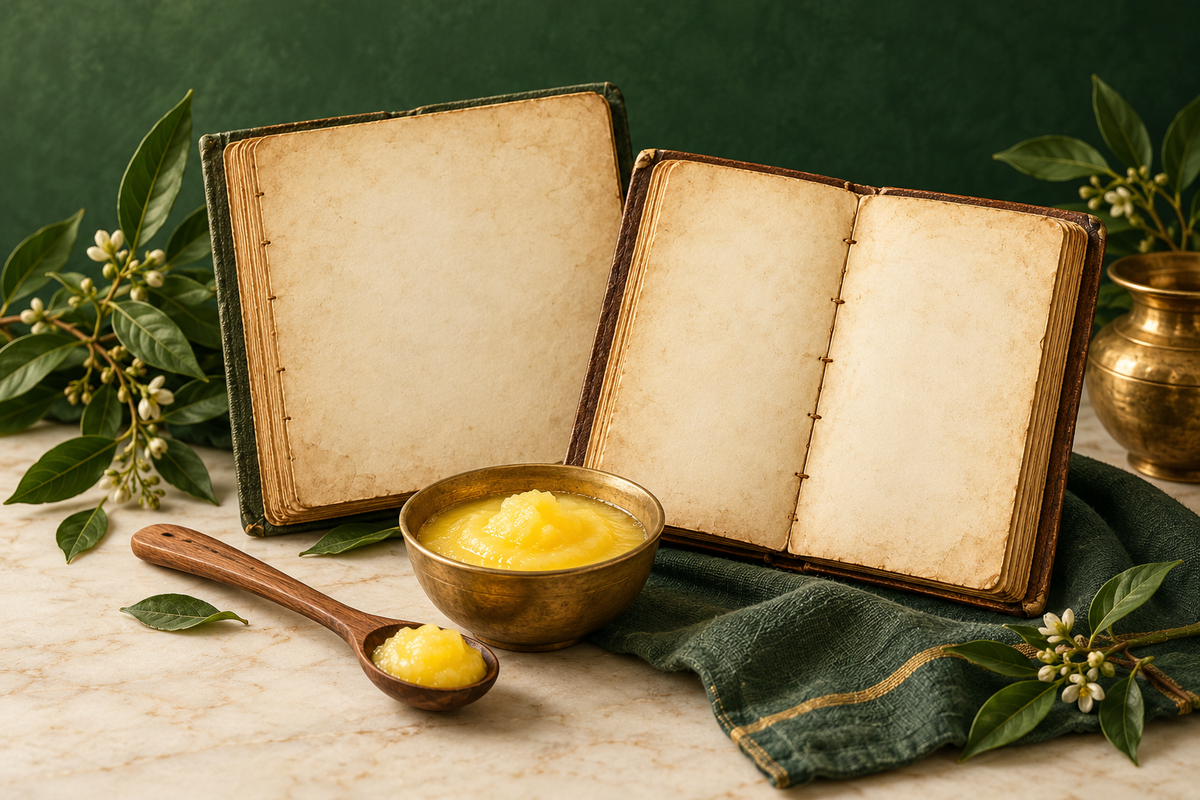
Catalogue and linked records checked 22 October 2026. Banner: AI-generated editorial illustration. Return to the Faimly Farm Journal.
Continue reading
View all stories
Save a Family Ghee Recipe Recording: Audio, Notes and Backups
Keep an oral recipe recording understandable and accessible beyond the phone that captured it.
Read the story
Planning a Family Ghee Cooking Demonstration: Roles and Records
Organise a small consent-based cooking demonstration that preserves the cook's words and distinguishes adaptations.
Read the story
Reading an Old Festival Menu: What It Can Tell You about Ghee
Annotate a printed menu without inventing recipes, quantities or universal regional customs.
Read the story
Join the conversation