

Scrambled Eggs with Ghee: Gentle Heat and Fully Set Curds
A two-egg recipe using measured ghee, gentle folding and controlled pan heat, with troubleshooting and clear egg-safety guidance.
By Faimly Farm · 19 October 2026
For scrambled eggs with ghee, coat a small pan lightly, use moderate-low heat and fold the eggs as they set. Cook until firm throughout with no runny egg remaining, then transfer promptly to a plate. More ghee will not correct a pan that is too hot.
This is a plain two-egg preparation for one person. It teaches heat control before adding onions, tomatoes or other ingredients that change the pan's moisture. Allow about 10 minutes for preparation and cooking; use doneness, not the clock, to decide when to serve.
Ingredients and equipment
- 2 large eggs
- 5 g ghee
- A small pinch of salt, adjusted to taste
- Black pepper, optional
- 1 teaspoon chopped fresh herbs, optional
Use a small, intact non-stick pan suitable for eggs, a flexible heat-safe spatula and a bowl. A very large pan spreads two eggs into a thin layer that needs faster attention. Have the serving plate ready before turning on the heat.
Step-by-step method
- Crack the eggs into the bowl and beat with the salt until yolk and white are evenly combined. Do not taste the raw mixture.
- Warm the pan over moderate-low heat. Add the measured ghee and tilt to coat the cooking surface. It needs to melt, not smoke. If the pan becomes too hot, remove it from the heat and let it settle before adding the eggs.
- Pour in the beaten eggs. Once a thin layer starts setting against the pan, sweep the spatula slowly across the bottom, folding the set egg inward and allowing uncooked mixture to contact the surface.
- Continue gentle sweeps and folds. Lower the heat if the underside browns before the rest sets. Do not scrape violently or leave the pan unattended while preparing toast.
- Cook until the eggs are firm throughout and no runny mixture remains. For a temperature check, gather the eggs so the thermometer can measure the food rather than touch the pan; the FDA gives 71.1°C/160°F for egg dishes.
- Transfer immediately to the waiting plate. Add optional pepper and herbs, and serve. Do not leave the cooked eggs sitting in the hot pan while finishing other food.
Control the pan rather than adding more fat
If you see a brown layer forming while liquid egg remains above it, reduce the heat. The aim here is a fully cooked scramble without a thick browned base. A heavier pan may retain heat after the flame is lowered; briefly moving it away from the heat gives you another way to slow cooking, but return it as needed to finish cooking the eggs thoroughly.
The size of the folds is a preference. Broad, slower sweeps make larger pieces; more frequent gentle stirring makes smaller ones. Neither style requires serving raw or runny egg. Record your pan size and heat setting if you want to repeat the result, rather than assuming another stove's dial numbers mean the same thing.
Three common problems
| Problem | Adjustment for the next pan |
|---|---|
| Browned bottom before the top sets | Start lower and fold across the whole bottom, including the edges. |
| Very dry pieces after cooking | Plate promptly once fully cooked instead of leaving the eggs on residual heat. |
| Greasy liquid around the eggs | Measure the ghee before cooking rather than adding extra spoonfuls automatically. |
Choosing ghee and adapting the recipe
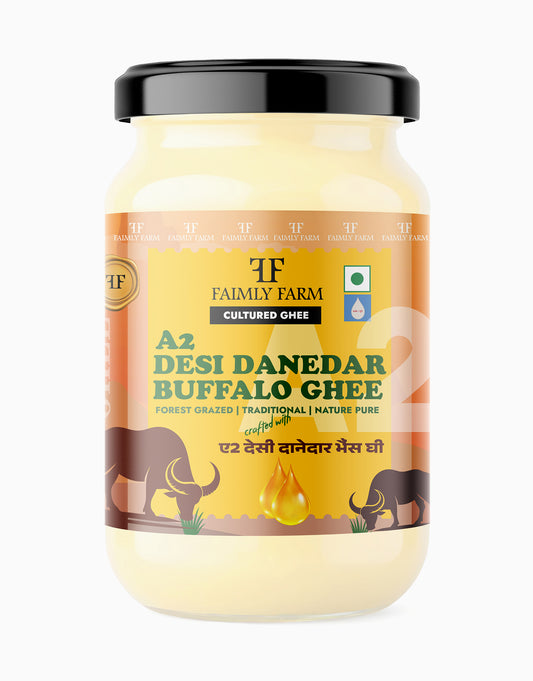
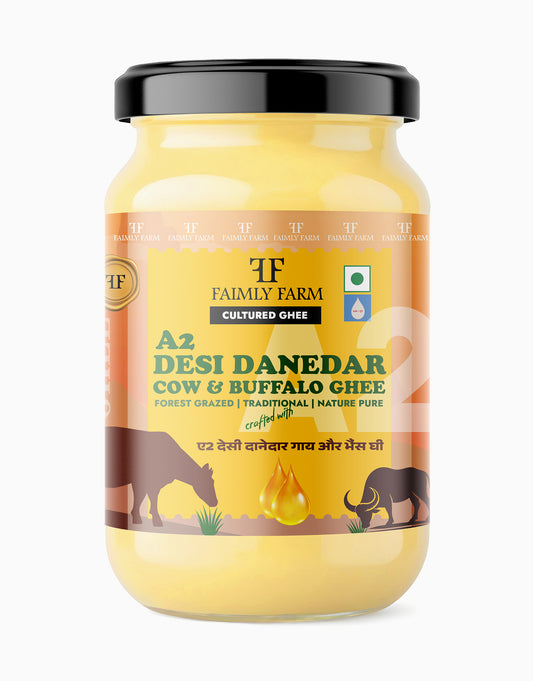
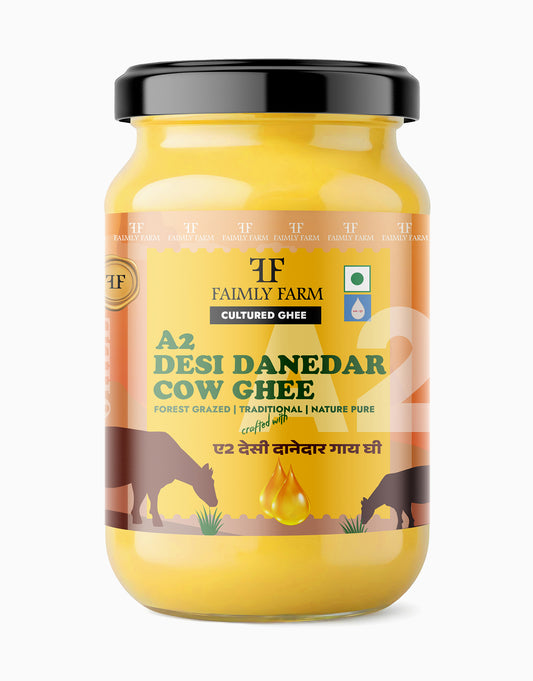
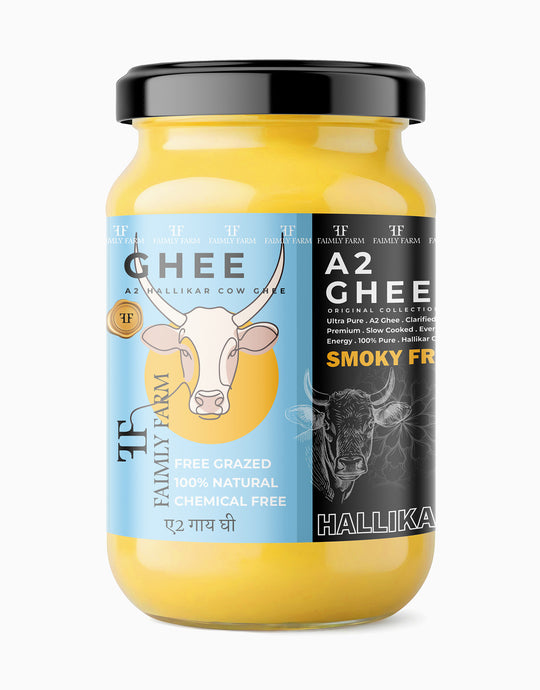
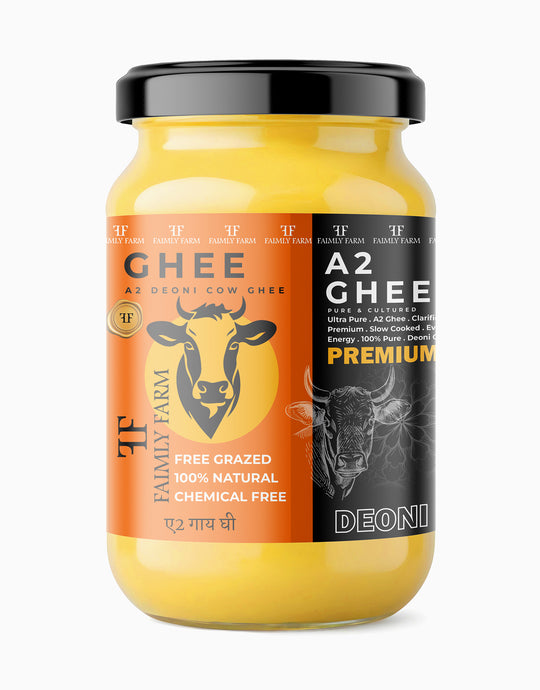
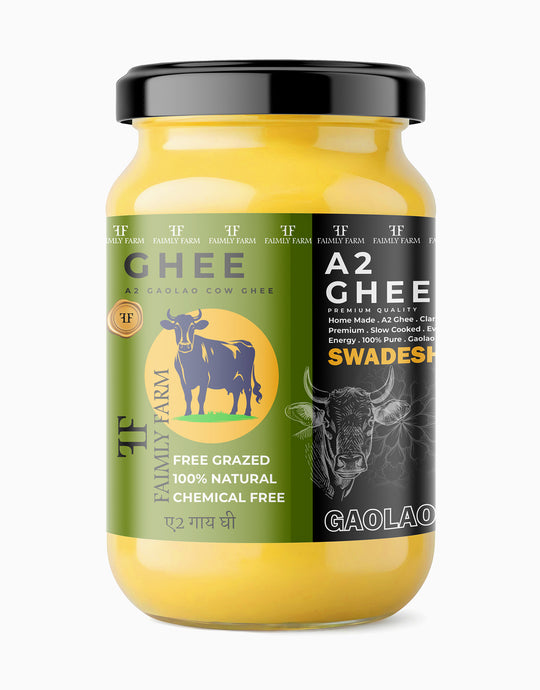
A ghee whose aroma you enjoy with eggs is a sensible choice. Faimly Farm Desi Danedar A2 Cow Ghee is one cow-ghee option to consider; check the current listing and pack details. This recipe does not claim that an A2 label gives better texture or a health advantage.
Milk is not required in this formula. If adding vegetables, cook them separately first and drain excess liquid, then fold them into the fully cooked eggs. Treat that as a variation, not an identical cooking time. Ghee is milk-derived, so omitting added milk does not make the dish dairy-free. The recipe contains egg and milk-derived ingredients.
Frequently asked questions
Can I scramble eggs in ghee?
Yes. Use it as the measured pan coating in this recipe. Its flavour differs from butter or a neutral cooking oil.
Why do scrambled eggs brown underneath?
For this method, browning before the top sets is a cue to lower the heat and move the mixture more evenly. Do not add extra ghee as the only response.
Do I need milk in scrambled eggs?
No. This two-egg formula uses no added milk or cream. Follow the specified ingredients first before changing several variables at once.
Can I double this recipe?
Four eggs and 10 g ghee are the arithmetic starting point, but pan size and cooking time need reassessment. Two separate batches may be easier to control. Do not simply double the timer.
Handling and related reading
Wash hands, equipment and work surfaces after contact with raw egg. Serve promptly. Refrigerate perishable leftovers within two hours, or within one hour above 32°C/90°F; reheat egg dishes to 74°C/165°F. These are food-safety precautions, not a promise that appearance alone establishes safety.
Use our ghee cooking guide to find other preparations. For repeatable quantities, read measuring ghee and scaling recipes. For a different egg-based breakfast, French toast with ghee explains why a browned surface can conceal an undercooked centre.
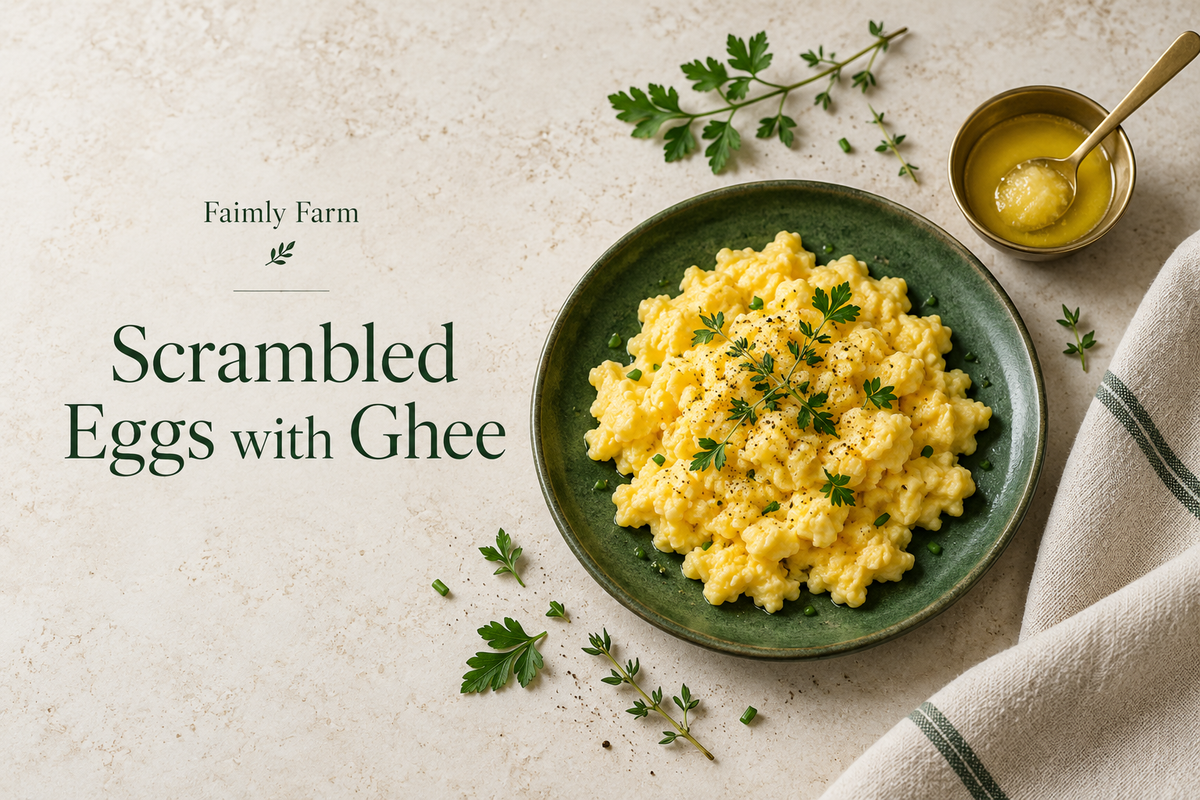
Food-safety source checked 19 October 2026: FDA: What You Need to Know About Egg Safety. Prepared with AI assistance; this recipe has not been independently kitchen-tested by Faimly Farm. Banner: AI-generated editorial illustration, not a photograph of a tested dish.
Continue reading
View all stories
Peas Pulao with Ghee: Keeping the Grains Separate
A small stovetop peas pulao with measured water, frozen-pea guidance and texture troubleshooting.
Read the story
Ghee Cost per Recipe: A Kitchen Worksheet for Shared Meals
Calculate the ghee cost of a recipe and each portion using matching units, a worked example and a simple worksheet. Separate costing from nutrition.
Read the story
French Toast with Ghee: Set the Egg Centre Before Browning Too Far
Cook French toast with ghee while controlling soak time and pan heat. Check the egg centre, avoid overbrowning and follow safe handling guidance.
Read the storyExplore Faimly Farm ghee
Join the conversation