

Roasted Baingan with Ghee: Brush the Wedges, Then Check the Centre

Share
By Faimly Farm · 17 October 2026
Roast baingan with ghee by brushing evenly cut wedges with a measured amount of melted ghee, then cooking until the thickest flesh is soft. Golden edges alone do not tell you whether the centre is ready.
Two side portions; about 40 minutes.
Ingredients
- 1 medium eggplant, about 350–400 g
- 15 g ghee, melted
- ½ teaspoon ground cumin
- ¼ teaspoon mild chilli powder, optional
- Salt to taste
- Lemon and coriander to finish
Method
- Heat the oven to 200°C conventional or 180°C fan. Use a shallow tray.
- Wash and dry the eggplant. Remove the stem and cut lengthways into wedges about 2–3 cm thick at their widest point.
- Mix melted ghee with cumin and optional chilli. Brush across all cut surfaces, dividing the measured amount over the whole batch.
- Arrange in one layer with space around the wedges. Season lightly.
- Roast for roughly 25–35 minutes, turning once. Begin checking earlier for small wedges; a knife should enter the thick flesh easily.
- Let stand briefly, then finish with lemon and coriander. Serve warm.
A dry-looking surface is not a request for unlimited fat
Raw eggplant can absorb the first coating quickly. Brush the whole batch before deciding anything is missing; pouring ghee directly on individual pieces can leave uneven amounts. Judge tenderness while it cooks. If edges brown before the centre softens, reduce the heat slightly and continue checking. If the wedges collapse, they may be very ripe, thinly cut or cooked beyond the texture you wanted. That softer batch can be served as a spoonable side instead of trying to make it firm again.
This is a wedge dish, distinct from roasting whole eggplants for chokha. The skin remains on to help the pieces hold together. Record the thickness rather than relying on the number of wedges, because eggplants vary considerably in diameter.
Frequently asked questions
Must I peel the eggplant?
Not for these wedges. Trim damaged areas and keep the sound skin to support the flesh.
Why is the centre spongy or firm?
It likely needs more cooking. Test the widest part, not a thin browned tip.
Can I double the recipe?
Use enough tray space to retain a single layer. Two crowded layers will cook differently.
Leftovers: refrigerate within two hours; use within 48 hours or freeze. Reheat once, until steaming hot. Source checked 17 October 2026: Food Standards Agency: Cooking Your Food.
More ways to cook with ghee
For a broader reference, see The Complete Guide to Cooking with A2 Ghee. Continue with Ghee-Roasted Pumpkin: Even Cubes and Tender Centres and Ghee-Roasted Cauliflower: Floret Size and Tray Space.
Choosing ghee for this recipe
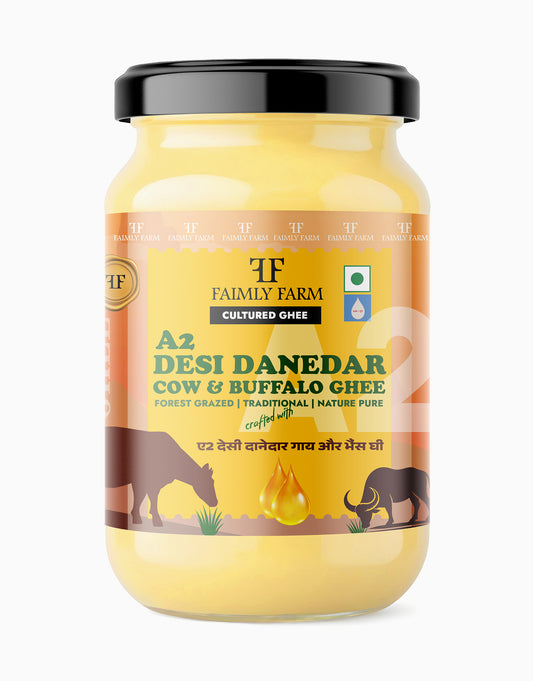
For readers who prefer a cow-and-buffalo blend for savoury dishes, explore Faimly Farm Desi Danedar A2 Cow & Buffalo Blend Ghee. Brush the measured ghee across the baingan surfaces and check the centres for tenderness; avoid repeatedly adding fat simply because the raw vegetable absorbs the first coating.
Check the selected pack's ingredients, storage directions and current availability. Ghee is milk-derived; an A2 description does not make this recipe dairy-free.
Continue with Stuffed Capsicum with Ghee: Cook the Potato Filling Before Baking for a vegetable tray dish that requires a cooked filling before it enters the oven.
Prepared with AI assistance. This recipe has not been independently kitchen-tested by Faimly Farm; use the cooking cues and adjust for your ingredients and equipment. Featured banner: AI-generated editorial illustration, not a photograph of a tested recipe.