

Cucumber Raita with an A2 Cow Ghee Tempering
A spoonable cucumber raita with thick curd, gently toasted cumin and A2 cow ghee, plus practical draining and cold-storage guidance.
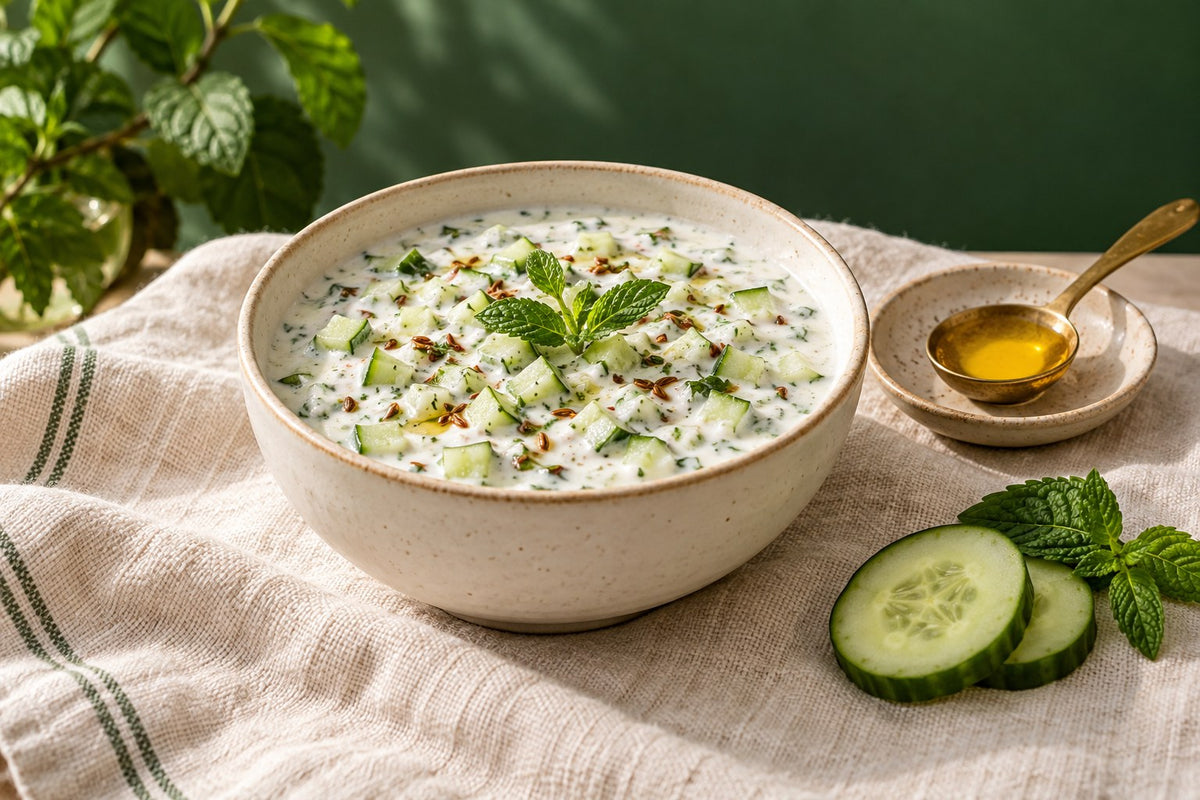
For a cucumber raita with a gentle A2 cow ghee tempering, start with thick chilled curd, drain excess water from the cucumber and let the cumin tempering stop sizzling before folding it in. Add the salt close to serving so you can judge the final consistency.
This four-portion side dish is designed to sit beside rice, dal or a simple vegetable meal. The cucumber brings crunch, the curd provides the base, and a small amount of ghee carries the toasted cumin. The aim is a spoonable raita, with cucumber distributed through it rather than a watery layer at the bottom. Allow about 15 minutes. This is an original proposed recipe and has not been kitchen-tested.
Ingredients for four side servings
- 300 g chilled plain thick curd or plain unsweetened yoghurt
- 200 g cucumber, weighed before trimming; coarsely grated or finely diced after preparation
- 2 teaspoons A2 cow ghee; use a 5 mL measuring teaspoon
- ½ teaspoon cumin seeds
- ¼ teaspoon fine salt, then adjust if needed
- ⅛ teaspoon ground black pepper
- 1 tablespoon fresh coriander or mint, optional; finely chop most and reserve a few small leaves for garnish if desired
You will need a grater or a sharp knife and chopping board, a clean sieve, a mixing bowl and a small heavy pan. Choose plain curd without added sugar or fruit. If your usual curd is thin, drain it in a sieve in the refrigerator before starting; weigh out 300 g after draining. Extra draining time is not included in the recipe's 15-minute estimate.
Choose the A2 ingredient deliberately
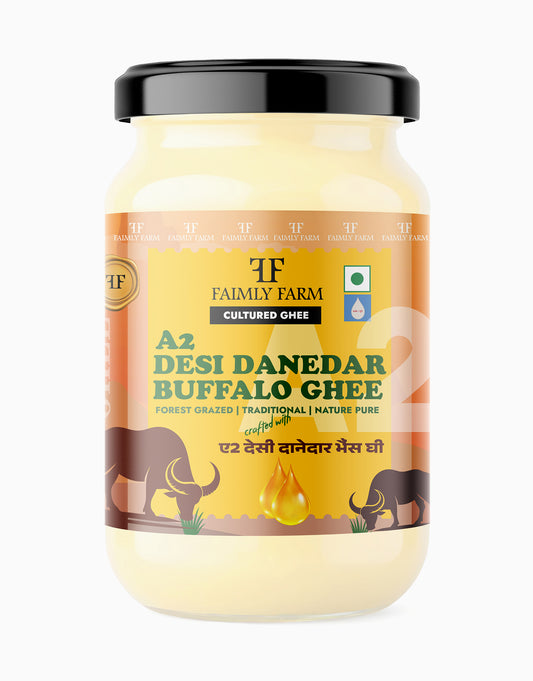
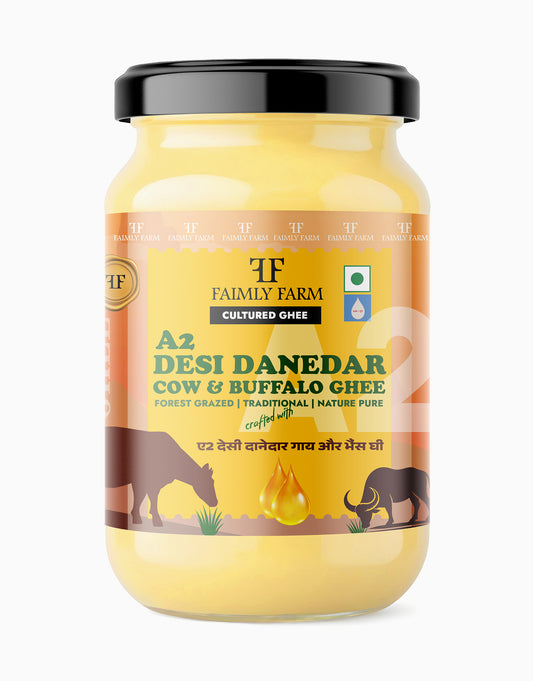
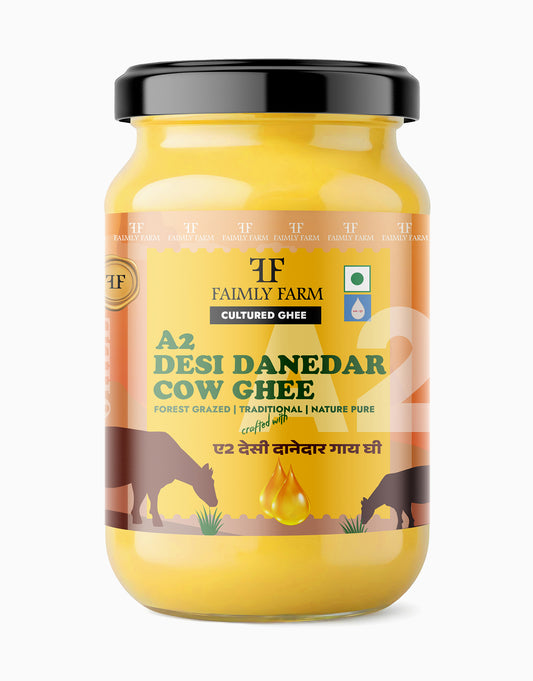
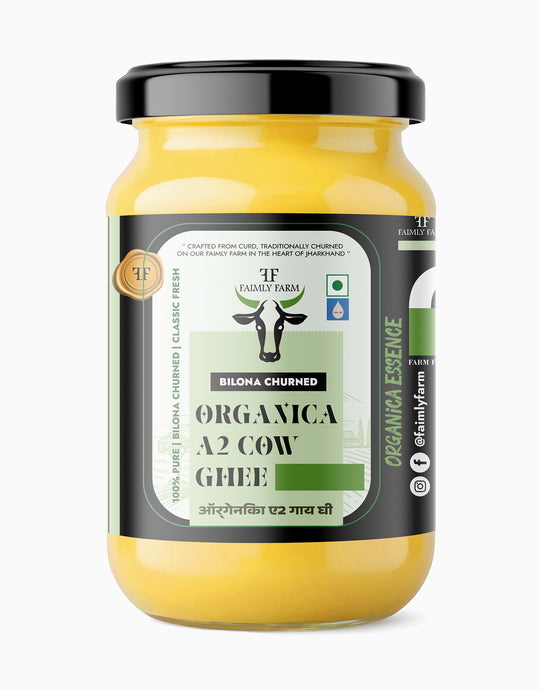
Faimly Farm Organica A2 Cow Ghee Bilona Churned is the A2 cow-ghee option linked to this recipe. Check the current product and pack details when buying. This recipe makes no claim that the A2 designation changes the raita's consistency or gives a health advantage. Cucumber preparation, curd thickness and temperature determine the result. Both the curd and ghee are milk-derived ingredients.
Method
- Wash and prepare the cucumber. Rinse the cucumber under plain running water before peeling or cutting; scrub its firm surface with a clean produce brush if needed, then dry. Trim the ends. Peel if you prefer, and remove a loose, watery seed centre with a spoon. Coarsely grate the cucumber or cut it into fine, even dice.
- Remove free water. Put the prepared cucumber in a clean sieve. For grated cucumber, press gently with the back of a spoon or squeeze with clean hands until it no longer drips freely, without compressing it into a dry ball. For fine dice, let any liquid drain and pat the pieces with a clean cloth or paper towel if still wet. Discard the drained liquid.
- Make the cold base. Whisk the curd briefly until smooth. Fold in the cucumber and black pepper, keeping the salt and optional herbs aside. Return the bowl to the refrigerator while you make the tempering.
- Toast the cumin gently. Melt the measured ghee in the small pan over low to medium-low heat. Add the cumin seeds and stir for roughly 20–40 seconds, until fragrant and slightly darker. Do not wait for black seeds or smoking fat. Remove the pan from the heat.
- Combine without rushing. Let the tempering stop sizzling and cool until warm rather than fiercely hot. Stir a spoonful of raita into the warm tempering, then fold that mixture into the remaining raita. Stir in the salt and chopped coriander or mint, if using. Taste once, adjust lightly, garnish with any reserved herb leaves and serve promptly.
The FDA's produce-cleaning guidance supports washing cucumber before cutting or peeling and using plain running water rather than soap. The cooking quantities and sequence above are an editorial recipe proposal, not a source's tested formula.
Adjust texture before adding more ingredients
If the raita is watery: first check whether the curd was thin or the cucumber was insufficiently drained. Fold in a spoonful of thicker curd if available. Extra ghee cannot absorb excess cucumber water. For the next batch, drain the cucumber more thoroughly and use thicker curd.
If the cumin tastes bitter: make a fresh tempering in a clean pan with lower heat. Do not hide scorched spices under more salt. If the ghee forms small flecks after meeting cold curd, let a small serving stand briefly while you finish the meal and stir; the flecks are a texture issue, not evidence that the recipe needs more fat.
Serving and cold storage
Serve a small bowl alongside jeera rice with A2 cow ghee, or choose another meal from Recipes & Rasoi. Keep the remaining raita covered in the refrigerator at 4°C or below. Make a modest batch for the same meal rather than treating the tempering as a preservation method.
Follow the FDA's perishable-food guidance: discard refrigerated foods left at room temperature for more than two hours, or one hour when the air is above about 32°C. Ghee does not remove the need to keep this curd-based dish cold.
More from the journal
For a different way to record kitchen traditions, use our family mathani heritage worksheet. If you are sending A2 ghee as a gift, our courier packing checklist covers the practical checks before dispatch.
Questions before you cook
Should I grate or finely dice the cucumber?
Either works for this proposed method. Grated cucumber spreads through the curd, while fine dice give more distinct crunchy pieces. Remove a watery seed centre and drain either cut as described above; do not add water to make the diced version resemble the grated one.
Should I pour very hot tempering straight into the curd?
For this method, let it stop sizzling and become warm first, then mix it gradually. This gives you better control over the cold base and avoids handling a bowl while hot fat is actively spluttering.
Can I make the base ahead?
You can prepare and refrigerate the ingredients separately, then combine them close to the meal. Salt and mix near serving, and follow the curd's storage instructions and use-by guidance.
Prepared with AI assistance for Faimly Farm. This proposed recipe has not been kitchen-tested; timings are estimates and should be checked against the described cues. Food-safety sources checked 21 October 2026. Banner: AI-generated editorial illustration showing the finely diced cucumber and mint option, not a photograph of a tested batch.
Continue reading
View all stories
Pan-Seared Paneer with Regular Cow Ghee and Cumin
A small paneer side with golden faces, measured regular cow ghee and a cumin-lemon finish.
Read the story
Roasted Red Radishes with A2 Cow Ghee and Cumin
A two-serving roasted-radish side with measured A2 cow ghee, cumin and a lemon finish.
Read the story
Savoury Tart Dough with A2 Ghee: A Small Shortcrust Trial
Make a small savoury tart shell, controlling water and avoiding a universal butter replacement ratio.
Read the storyExplore Faimly Farm ghee
Join the conversation