

Recording a Family Mathani’s Story: A Kitchen Heritage Worksheet
A practical worksheet for photographing a family mathani, recording memories with permission, and keeping observation, recollection and verified facts separate.
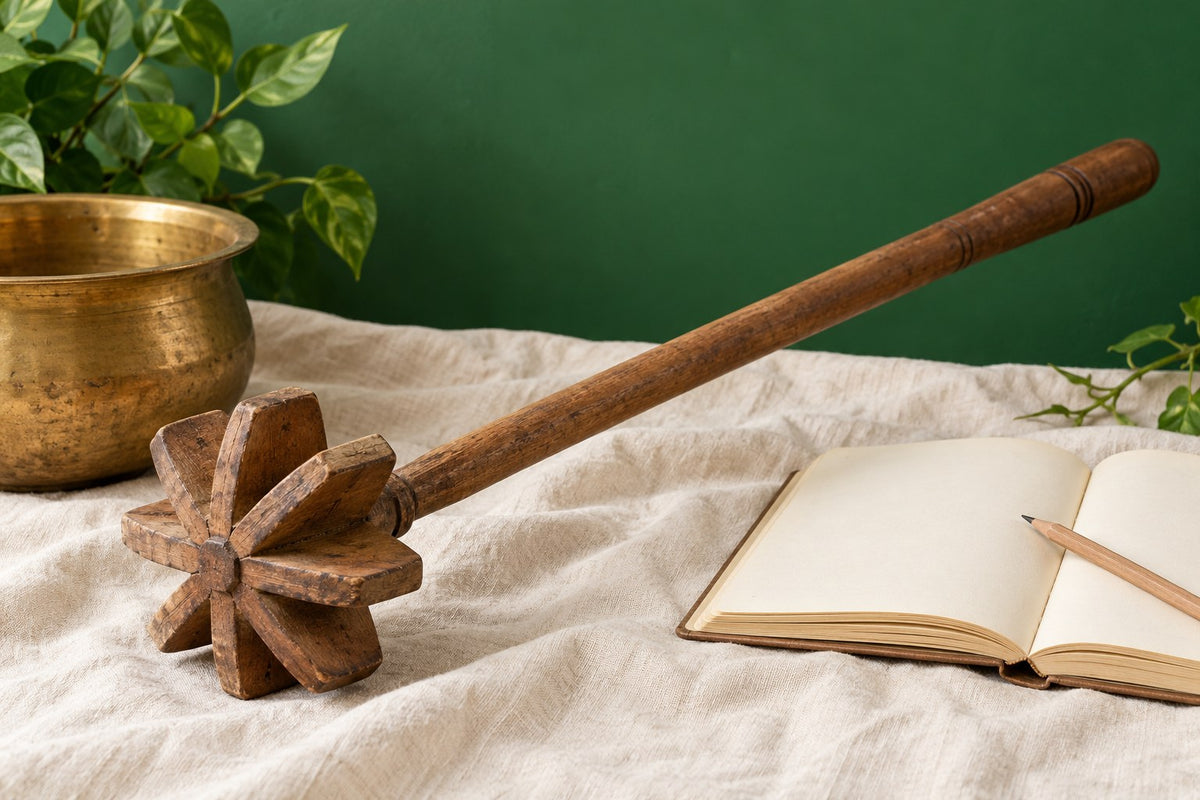
To record a family mathani’s story, make three connected records: photographs of the object, an interview recorded with permission, and a worksheet that distinguishes what you can see from what someone remembers. An honest gap is more useful than an attractive guess.
This worksheet concerns a mathani, a hand-operated churner associated with preparing butter. If the household uses another name, preserve that name. Our mathani, makkhan and bilona glossary provides a starting point for the vocabulary; the person you interview supplies their own experience.
Agree on the interview before recording
Explain why you are collecting the story, whether you will record sound or video, who will receive it, and whether any part might appear online. Ask permission to record and separately discuss permission to share. Offer a chance to review the recording before release.
The Oral History Association’s best practices emphasise informed consent and, where possible, narrator review. A private family conversation is not automatic permission for a public blog post.
- Write down the person’s preferred name and the interview date.
- Record their choices: private archive, named relatives, or public sharing.
- Ask whether any names, topics or photographs should remain private.
- Agree how they can request a correction or raise a concern.
Fill in this object worksheet
Assign a simple identifier, such as “Kitchen-01”, so photographs and recordings stay connected. Measure and photograph the object as it is; do not polish away marks for the picture or dismantle a fragile piece.
| Field | What to enter |
|---|---|
| Object identifier | Your reference code; use it in every related filename. |
| Household name | The word used by the speaker, its language, and their pronunciation if helpful. |
| Visible description | Length, shape, colour, apparent material and visible marks. Write “appears to be wood” if uncertain. |
| Associated equipment | Names or photographs of the vessel and other pieces, if present. |
| Present location | A private storage note; omit the address from public copies. |
| People associated with it | Names, relationships and permission to identify them. |
| Dates and ownership | Who supplied each date or account; distinguish estimates from records. |
| Evidence files | Photograph, recording and document filenames with dates. |
| Open questions | Anything the family wants to investigate later. |
Ask about actions before asking for conclusions
Open questions leave room for an unexpected answer. Avoid suggesting that an object is ancient, valuable or part of a particular process before the speaker describes it.
- “What did you call this, and who used that name?”
- “Can you describe a time when you saw it being used?”
- “What went into the vessel, and what happened next?”
- “What movements, sounds or changes showed that the churning was progressing?”
- “Who taught you, and which parts did you personally do?”
- “Did the method or equipment change over time?”
- “Which details are you uncertain about, or know only from someone else?”
Let the speaker finish. If they demonstrate a movement, describe that movement aloud for an audio recording. An old object need not be put back into food preparation to explain how it worked.
Keep observation, memory and evidence separate
The Oral History Association’s core principles recognise that recollections are filtered through changing personal and social contexts. Preserve the speaker’s account without presenting every remembered detail as independently established history.
Use three labels in your notes:
- Observed: something visible in the object or recording.
- Recalled: an attributed memory, including the speaker’s uncertainty.
- Documented: a detail supported by an identified photograph, letter or other record.
For example, “Grandmother estimates it was used during her school years” is a hypothetical way to record an estimate. It should not become a precise purchase year unless further evidence supports that date. If two people remember differently, retain both accounts and their sources.
Do not add modern A2 claims to an old story
A remembered bilona process does not establish the milk’s A2 status. Record what the speaker actually knows about the milk, animals and method, leaving unsupported details unspecified. Our guide to bilona, A2 and organic label claims explains why these descriptions need separate attention.
For a present-day product reference, Faimly Farm lists Organica A2 Cow Ghee Bilona Churned as made by churning curd into butter before simmering it into ghee. That is the brand’s description of a current product, not evidence about your family’s object or milk.
Make the record easy to revisit
Keep the original recording, a second backup, the worksheet and the permission record together. Add a transcript or short index with timestamps. Mark uncertain spellings instead of silently correcting them. Create a separate sharing copy that removes anything the speaker asked to keep private.
Frequently asked questions
What if nobody remembers the mathani’s age?
Write “date unknown”. Record when it was first remembered, with the speaker’s name and wording; that is different from a manufacturing date.
Can I share the interview on social media?
Only within the permission agreed with the speaker. Check again if a private family recording will gain a new audience.
Should I also record the family recipe?
Yes, as a linked record. Use our family recipe recording guide for quantities and cooking steps. Keep the object’s history and the recipe identifiable separately.
By Faimly Farm. Prepared with AI assistance using the sources linked above. This worksheet contains no reported family interview.
Continue reading
View all stories
Save a Family Ghee Recipe Recording: Audio, Notes and Backups
Keep an oral recipe recording understandable and accessible beyond the phone that captured it.
Read the story
Planning a Family Ghee Cooking Demonstration: Roles and Records
Organise a small consent-based cooking demonstration that preserves the cook's words and distinguishes adaptations.
Read the story
Reading an Old Festival Menu: What It Can Tell You about Ghee
Annotate a printed menu without inventing recipes, quantities or universal regional customs.
Read the storyExplore Faimly Farm ghee

Join the conversation