

Record a Family Tadka: Spice Order, Heat and the Finish
A worksheet for preserving the order and cooking cues behind a family's ghee tadka.
By Faimly Farm · 22 October 2026 · Prepared with AI assistance.
Record a tadka as a sequence of actions, not just a list of spices. “Add the tempering” leaves the next cook guessing about which ingredient goes in first, when the heat changes and whether the pan is still on the hob at the finish. A useful family note captures those decisions in the cook's own words.
Begin with one dish and one version
Choose a named dish and a specific batch size. A tadka for a bowl of dal is not automatically the same method used for a cold accompaniment. Ask what the cook calls the technique, whether that name has a particular family meaning and whether the method changes for ordinary meals or a larger gathering. Do not present one household's sequence as a rule for an entire region.
Explain whether you want written notes, a recording or a shared recipe, and obtain permission first. The Oral History Association's ethics guidance calls for informed consent before an interview. The worksheet below is our practical application to a cooking method; no family interview has been conducted for this article.
Use a sequence sheet
| Record | Question to ask |
|---|---|
| Starting pan | Which pan, approximate diameter and hob setting are used? |
| Ghee | How much is measured, and is it added to a cold or warmed pan? |
| First addition | Which spice goes in first, and what signals the next step? |
| Later additions | Are whole spices, ground spices and other ingredients added separately? |
| Heat changes | When is the heat lowered or switched off? |
| Transfer | What is the receiving dish, and is the tempering stirred through or left on top? |
| Finish | How soon is it served, and what would prompt a change next time? |
Keep observations separate from guesses
Write a cue such as “the cook lowered the heat before adding the ground spice” only if that happened or was clearly described. If you missed the moment, mark it as a question. Avoid converting “briefly” into an invented number of seconds. Ask for the intended colour or aroma in ordinary words, while keeping the cook free to concentrate on the pan.
Record what was measured before the heat was on and add notes afterwards. The person cooking should not have to hold a phone, dictate continuously or wait with a hot pan for a photograph. USFA advises staying with the pan and switching off the burner if the fat smokes; see its cooking-safety guidance.
Make a modern adaptation a separate entry
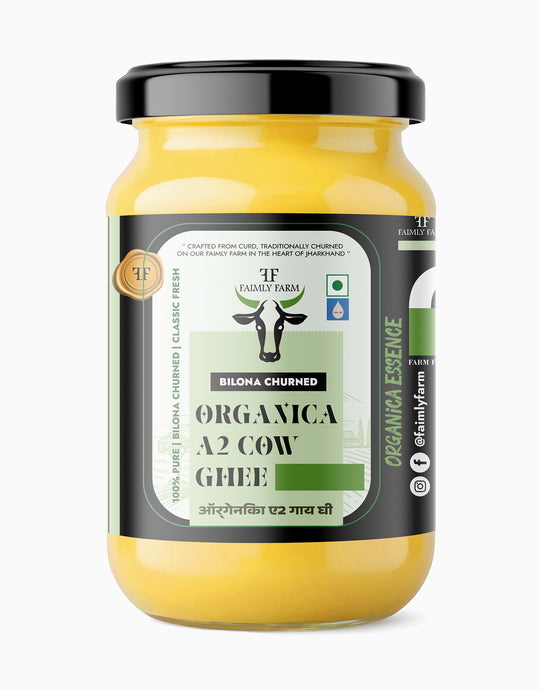
If an older account says “ghee,” preserve that wording. For a present-day A2 adaptation, you can record the exact edible ingredient, such as Organica A2 Cow Ghee Bilona Churned, in a dated cooking note. That current choice does not establish which milk or product was used historically.
When trying the recorded version, note the pan and hob you actually use. Change one uncertain detail at a time and record the result rather than silently updating the original account. This sheet documents a process; it does not supply a universal spice order or a tested recipe.
Quick questions
Must all spices go in together?
Record the sequence for the particular dish. An ingredient list alone cannot answer that question.
What if the cook cannot give an exact time?
Keep the descriptive cue and mark the timing as unknown. A later measured trial belongs in the adaptation notes.
Pair this sheet with recording family ghee quantities and browse Tradition & Culture. Sources checked 22 October 2026.
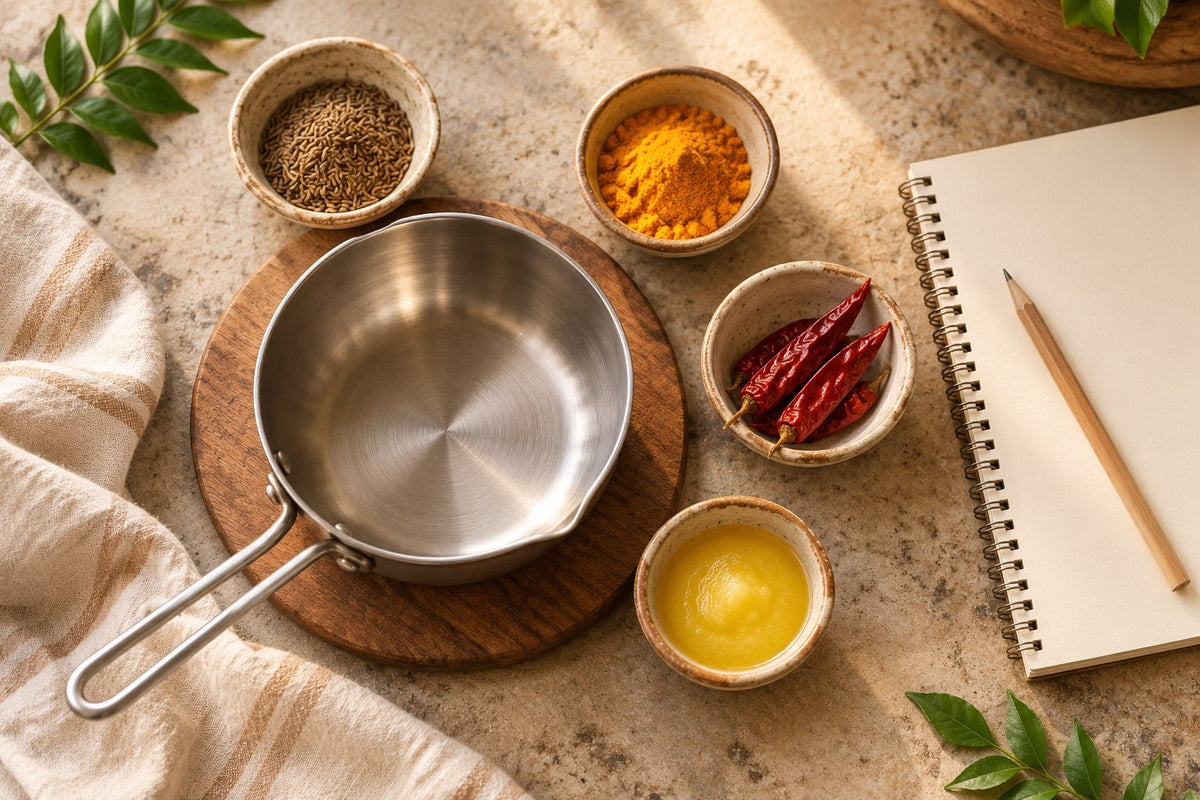
Article prepared with AI assistance. Banner: AI-generated editorial illustration, not a photograph of a kitchen test, product pack or family archive. No firsthand testing is claimed. Visit the Faimly Farm Journal.
Continue reading
View all stories
Made, Packed and Marketed By: Read the Roles on an A2 Ghee Label
Read named operator roles and ask about missing links without claiming an audit or certification.
Read the story
A Cow Breed Register and a Ghee Jar Answer Different Questions
Use official breed records for breed identity while keeping jar-level source evidence separate.
Read the story
Visiting a Ghee Farm: A2 Sourcing Questions Before and After
Prepare and record a farm visit while distinguishing observations, permission and batch evidence.
Read the storyExplore Faimly Farm ghee
Join the conversation