

Ghee Tasting Notes: A Simple Home Comparison without Purity Claims

Share
By Faimly Farm · 17 October 2026
A useful home ghee comparison keeps the food, quantity and serving temperature similar, records your own impressions before you see the product names, and separates preference from proof. It can help you choose a flavour you enjoy; it cannot establish purity, milk genetics, certification or health benefits.
Family descriptions such as “the aroma we remember” or “the ghee we use for this sweet” are valuable memories. Record them as that family's experience. They are not a standard that every region or household must follow, and this guide does not report a Faimly Farm tasting trial.
Choose the question before the samples
Ask one practical question: which of two products do I prefer on plain roti, or which aroma do I enjoy in a measured rice finish? Avoid comparing one sample in a spicy curry with another on plain bread. You would be judging the dish as well as the ghee.
Use a small amount from each correctly stored, in-date product and follow its handling instructions. Do not taste a suspect, damaged or contaminated product to decide whether it is safe. A tasting exercise is not suitable for someone avoiding milk because of an allergy; ghee is milk-derived.
Prepare a fair household comparison
- Have another person assign simple codes, such as A and B, and keep the names aside until notes are complete. This is an informal household exercise, not a blinded laboratory study.
- Use identical small dishes and separate clean, dry utensils. Keep each sample's container and batch details available for the record.
- Serve the same small measured quantity on equal portions of the same plain food. Keep both samples at a similar comfortable serving temperature; do not compare a hot sample with a cold one.
- Write an initial impression without reading marketing copy. Use ordinary words you recognise rather than searching for an impressive tasting vocabulary.
- Try the samples in the opposite order on another occasion if the preference matters to your purchase. Record changes rather than forcing a consistent winner.
Copy this short scorecard
| Field | What to record |
|---|---|
| Sample code | A or B; reveal product and batch after notes |
| Conditions | Food, quantity, temperature description and date |
| Aroma | Your own descriptive words; faint or pronounced |
| On the food | Flavour you noticed and whether you enjoyed it |
| Preference | A, B, no preference or uncertain |
| Next use | The dish you would like to try, not a health conclusion |
“More pronounced aroma, but I prefer the other sample on plain rice” is a useful result. “Stronger smell means more pure” is not. Do not convert a preference score into an unsupported ranking of brands or breeds.
Keep the evidence in a separate column
Write label information separately from sensory notes. A product name belongs in the identity column; a batch document belongs in an evidence column. Start with Bilona, A2 and Organic Ghee: What Each Label Means to keep sourcing, method and certification questions distinct. For evidence beyond taste, read Ghee Purity Reports: How to Read a Laboratory Test.
The Food Standards Agency explains that harmful bacteria cannot reliably be detected by a sniff test for foods with a use-by date. Follow the date and storage instructions on your own pack; an appealing smell does not override safety concerns. Source checked 17 October 2026: FSA home food fact checker.
Turn preferences into a family cooking record
After choosing an option for a particular dish, record the quantity and cooking stage. Follow Passing Down a Family Recipe: Recording Ghee Quantities so the next cook can repeat the method without mistaking one person's preference for a universal rule.
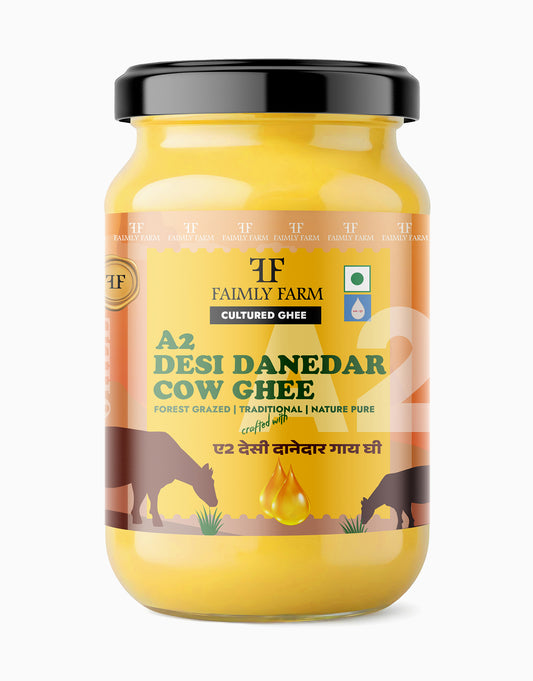
If your comparison is between a cultured-labelled cow-ghee option and another cow-ghee range, see Faimly Farm Cultured A2 Cow Ghee Fresh and Premium and Faimly Farm Desi Danedar A2 Cow Ghee. Check the current pack details before choosing. These are catalogue options for your own comparison, not products ranked or independently taste-tested in this article.
Frequently asked questions
Can taste prove that ghee is pure?
No. Sensory impressions cannot establish absence of adulteration or verify the milk source.
Should I compare one warm sample with one cold sample?
No. Keep the serving conditions similar so the comparison addresses your intended question.
Does everyone need to prefer the same ghee?
No. Record individual preferences and the food used. A household can choose different options for different dishes without declaring one universally best.
Prepared with AI assistance. Worked examples and worksheets are editorial tools, not claims of independent testing. Featured banner: AI-generated editorial illustration.