


Cheese and Chive Scones with Regular Cow Ghee
Six small savoury scones made with cool firm ghee, with dough cues and a clearly disclosed untested recipe proposal.

By Faimly Farm · 23 October 2026 · Prepared with AI assistance.
Use cool, firm ghee, bring the dough together with minimal handling, and cut six evenly sized wedges. This small savoury bake is designed around ghee from the start rather than presented as a universal butter conversion.
This original recipe proposal has not been kitchen-tested. Expect to adjust the final spoonful of milk for your flour, and use the baking cues as well as the estimated time.
Recipe at a glance
- Yield: 6 small scones.
- Preparation: 15 minutes, plus any time needed to firm the ghee.
- Baking: about 18–22 minutes.
- Total: about 42 minutes when the ghee is already firm.
- Oven: 200°C conventional or 180°C fan.
- Equipment: baking tray, baking parchment, mixing bowl, scales and a knife.
Ingredients
- 200 g plain all-purpose wheat flour, plus up to 1 teaspoon for shaping.
- 8 g baking powder.
- 2 g fine salt.
- 50 g Danedar Cow Ghee, cool and firm.
- 50 g mature cheddar, grated.
- 1 tablespoon finely chopped fresh chives.
- 120 mL cold milk, divided as directed, plus up to 1 extra tablespoon only if needed.
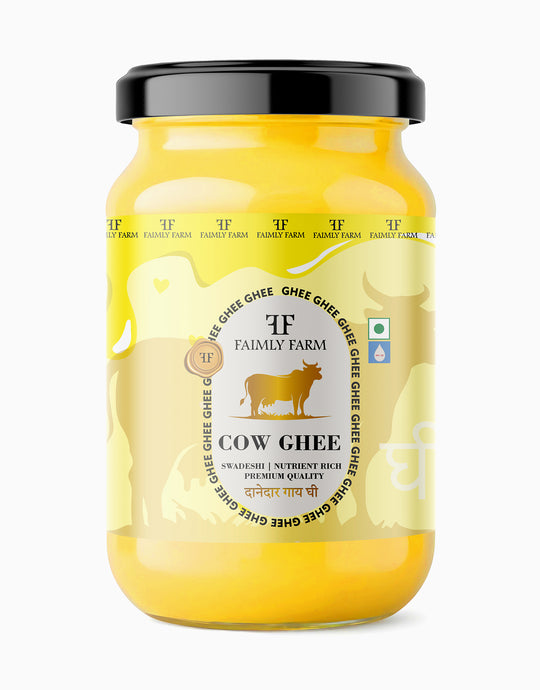
Use 15 mL tablespoons and 5 mL teaspoons. Choose Danedar Cow Ghee from the regular range. This recipe contains wheat and dairy; it is not a dairy-free bake.
Method
- Prepare the tray and fat. Heat the oven to 200°C conventional or 180°C fan and line a tray with suitable baking parchment. The ghee should be firm enough to break into small pieces, not pourable. If necessary, chill it first and allow extra preparation time.
- Combine the dry ingredients. Mix the flour, baking powder and salt thoroughly. Add the firm ghee in small pieces and rub it lightly into the flour with fingertips until the mixture contains coarse crumbs and small fat pieces. Stir in the cheddar and chives.
- Bring the dough together. Reserve 10 mL of the milk for brushing. Add the remaining 110 mL to the bowl and mix gently with a knife until a rough dough forms. If dry flour remains and the dough will not hold together, add extra milk 1 teaspoon at a time, up to 1 tablespoon. Stop once it holds together; do not knead it smooth.
- Shape and cut. Turn onto a lightly floured surface, using no more than the extra teaspoon of flour. Pat into a round about 15 cm across and 2 cm thick. Cut into 6 wedges. Move them to the tray with about 3 cm between them and brush the tops lightly with the reserved milk.
- Bake and rest. Bake for about 18–22 minutes, until risen, golden at the edges and set in the centre. If a split scone has a wet, doughy centre, return the batch to the oven and check again after a few minutes. Transfer to a rack and rest for 5 minutes before serving.
Read the dough before adding more milk
A rough surface is expected; it is not a reason to keep kneading. Dry loose flour that will not join the dough calls for a small measured addition of milk. A greasy, very soft mixture may mean the ghee warmed too much; chill the dough briefly before shaping rather than adding handfuls of flour.
Do not taste the raw dough. The FDA's raw-flour guidance explains that ordinary flour can carry harmful bacteria, even in dough made without eggs.
Substitutions and serving
Finely chopped spring-onion greens can replace the chives. Choose a similar firm grated cheese; wet fresh cheese changes the dough and is not a direct replacement in this proposal. Self-raising flour also changes the leavening, so use the specified plain flour and measured baking powder.
Serve with soup or as a small savoury snack. For a different flour-and-ghee method, see making a small ghee roux.
Quick questions
Can I use melted ghee?
This method is written for firm ghee. A melted-fat dough would be a different trial.
Why are the timings approximate?
Ovens and dough thickness vary. The centre must be baked through; browning alone is not the intended stopping cue.
Browse Recipes & Rasoi.
Article prepared with AI assistance. Banner: AI-generated editorial illustration, not a photograph of a product pack, kitchen test, family event or historical artefact. No firsthand testing is claimed. Visit the Faimly Farm Journal.
Continue reading
View all stories
Warm Lemon Dressing with Regular Cow Ghee: Whisk and Serve
A four-portion warm dressing for cooked vegetables, whisked shortly before serving rather than stored as a bottled sauce.
Read the story
Golden Onions with A2 Cow Ghee: A Small Stovetop Base
A small onion base for the meal you are preparing, using gentle heat and colour cues rather than a fixed browning promise.
Read the story
Sautéed Zucchini with Regular Cow Ghee and Cumin
A two-serving zucchini side with a measured ghee coating, two-batch cooking and a lemon finish.
Read the storyExplore Faimly Farm ghee
Join the conversation