

Beetroot Poriyal with Ghee: Tender Cubes Before the Coconut Finish

Share
By Faimly Farm · 17 October 2026
For beetroot poriyal with ghee, cut small even cubes, cook them until tender with a little water, then add coconut near the end. The firm beetroot needs more cooking attention than the delicate finishing ingredients.
Two side portions; approximately 30–35 minutes.
Ingredients
- 250 g beetroot, peeled and cut into 7–10 mm cubes
- 10 g ghee
- ½ teaspoon mustard seeds
- 6 curry leaves, washed and dried
- 3 tablespoons water to start, more only as needed
- 2 tablespoons freshly grated coconut
- Salt to taste
Method
- Wash beetroot before peeling and cutting. Use a stable board; keep the cubes reasonably uniform.
- Warm ghee in a saucepan over moderate-low heat. Add mustard seeds and let them begin popping, then carefully add dry curry leaves.
- Add beetroot and turn to coat. Reduce heat and carefully add the measured water, avoiding splashes.
- Cover and cook gently, stirring periodically. Check from about 15 minutes onward; larger or older beetroot may need longer.
- If the pan dries while cubes are firm, add another tablespoon of water. Once tender, uncover briefly to remove excess liquid.
- Stir in coconut and salt, heat briefly and serve. Avoid cooking the coconut until it becomes brown and dry.
Use a knife test, not colour, to judge tenderness
Beetroot is vividly coloured from the beginning, so colour change is not a useful doneness signal. Test several cubes with a small knife or taste a safely cooled piece. If some are tender and others hard, uneven cutting is the likely issue. Keep a tablespoon beside the pan for controlled water additions instead of repeatedly pouring from a large jug.
This is a practical ghee variation of a coconut-finished vegetable side, not a claim that every household prepares poriyal in the same way. Beetroot can stain boards and cloths; clean spills promptly. Serve with rice and dal or another main dish. No blood-building, detox or therapeutic benefit is claimed for this recipe.
Frequently asked questions
Can I use cooked beetroot?
Yes, if plain and safely stored, but shorten the cooking stage to heating through and use much less or no added water. Pickled beetroot gives a different flavour.
Why add coconut near the end?
It needs only a brief finish here, while raw beetroot needs time to soften.
Can I grate the beetroot?
Grated beetroot cooks differently and usually faster. Check early and reduce the water rather than using the cube timing unchanged.
Leftovers: refrigerate within two hours; use within 48 hours or freeze. Reheat once, until steaming hot. Source checked 17 October 2026: Food Standards Agency: Cooking Your Food.
More ways to cook with ghee
For a broader reference, see The Complete Guide to Cooking with A2 Ghee. Continue with Ghee-Tempered Carrot Poriyal: A Quick Side Dish and Green Beans with Ghee and Lemon: Cook First, Finish Lightly.
Choosing ghee for this recipe
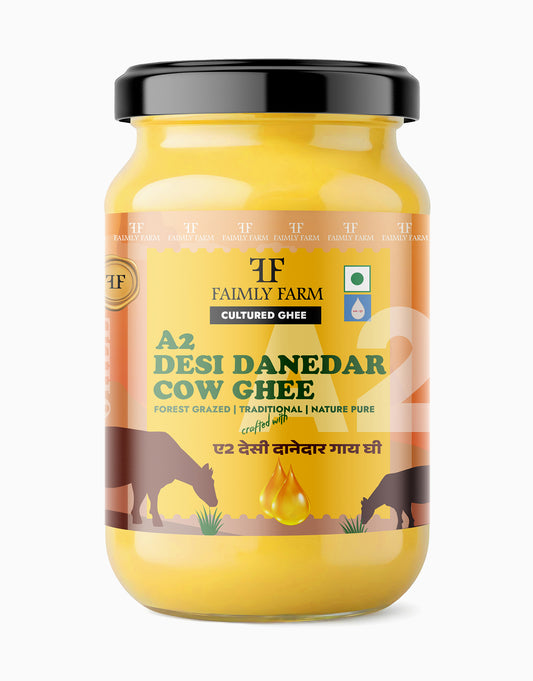
For the beetroot tempering, Faimly Farm Desi Danedar A2 Cow Ghee is a cow-ghee option from Faimly Farm. Measure the small amount before heating the spices; tenderness comes from cooking the beetroot, rather than increasing the fat.
Check the selected pack's ingredients, storage directions and current availability. Ghee is milk-derived; an A2 description does not make this recipe dairy-free.
Compare this covered vegetable method with Bhindi with Ghee: Dry the Pods Before Slicing, where drying the surface is the starting point.
Prepared with AI assistance. This recipe has not been independently kitchen-tested by Faimly Farm; use the cooking cues and adjust for your ingredients and equipment. Featured banner: AI-generated editorial illustration, not a photograph of a tested recipe.