

Packing a Lunch Made with Ghee: Keep Perishable Food at the Right Temperature
A practical plan for packing meals cooked with regular ghee: choose cold or hot holding, organise the lunch bag and check the journey to mealtime.
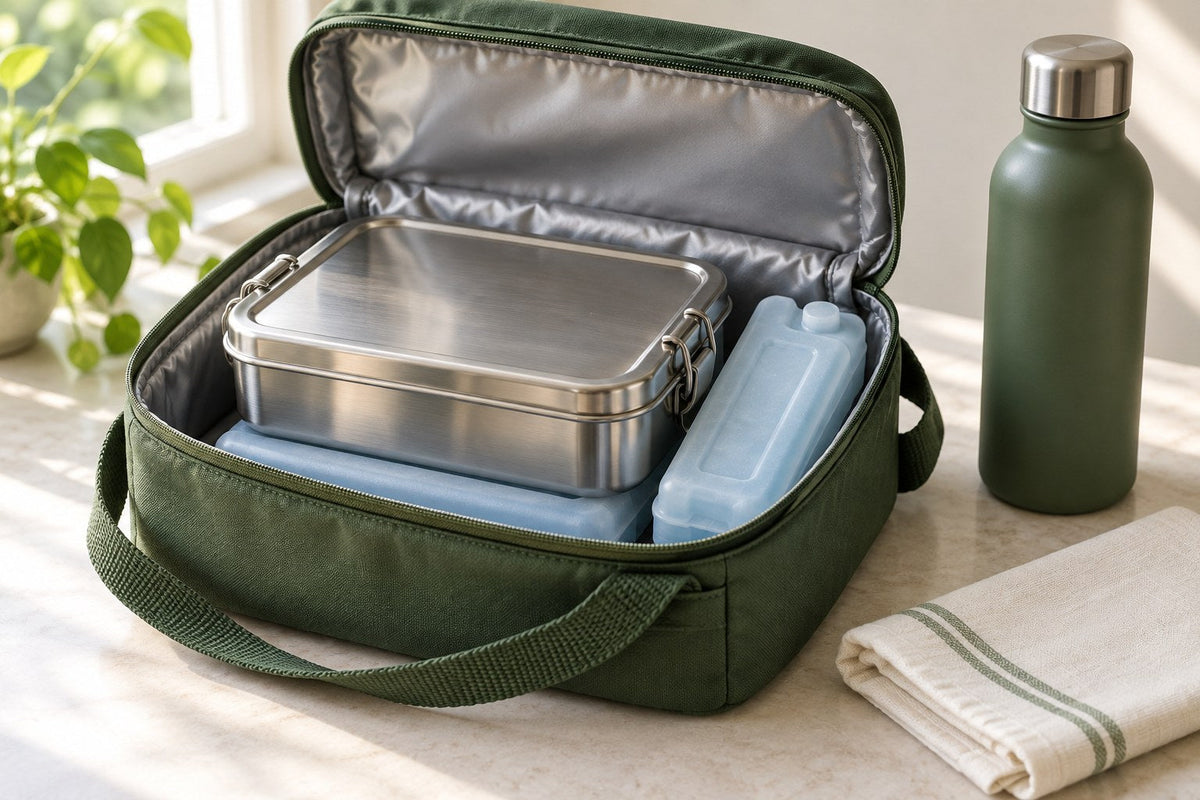
A lunch cooked with regular ghee still needs the temperature controls appropriate to the finished dish. A spoon of ghee in dal, rice or vegetables is not a reason to leave a perishable meal unrefrigerated. Plan how the food will stay cold or hot from packing until eating, including the commute and any delay before lunch.
This guide uses household food-safety guidance from the US Department of Agriculture and US Food and Drug Administration. It applies those principles to a familiar Indian lunch routine; it does not certify a particular lunchbox or establish a shelf life for your recipe.
Choose the holding method before choosing the container
Decide whether the meal will be transported cold and reheated, or packed hot and kept hot. A container that prevents a gravy leak does not necessarily maintain a safe temperature. Check its intended use, cleaning instructions and heat-retention guidance.
| Lunch arrangement | Practical plan |
|---|---|
| Office refrigerator and microwave available | Transport the chilled meal with cold sources, refrigerate on arrival, then reheat properly at lunchtime. |
| No refrigerator, but an insulated lunch bag available | Pack chilled food with sufficient frozen cold sources and keep the bag closed. Check that the food remains cold through the actual journey. |
| A suitable insulated hot-food container | Prepare the container as its manufacturer permits, add thoroughly heated food and keep it closed until eating. |
| No reliable cold or hot holding | Change the menu or lunch arrangement. Do not rely on the addition of ghee to make a perishable meal suitable. |
The USDA lunch-packing guide recommends an insulated bag with at least two cold sources, positioned above and below perishables. Its hot-holding target is at least 140°F (60°C). For cold food, use 40°F (about 4°C) or below. A food thermometer provides a more useful check than whether the container feels cool or warm outside.
Build an evening-to-lunch routine
- Write down tomorrow’s eating time. Include the journey, classroom or desk storage and the possibility of a late break. “Packed at 8” is incomplete without knowing when lunch is served.
- Prepare the cold sources in advance. Keep the bag, clean containers and frozen packs ready together. Decide where the food will go immediately after arrival.
- Portion cooked food for chilling. Divide a large batch into shallow containers rather than leaving it in a deep cooking pot. The FDA’s safe-food-handling guidance recommends this for quicker cooling and calls for prompt refrigeration.
- Pack only when ready to leave. Keep the meal refrigerated until packing. Keep a chilled accompaniment, such as curd, in the cold part of the arrangement rather than beside a hot-food container.
- Give the eater a simple instruction. For example: “Put this in the refrigerator when you arrive, then reheat at lunch.” Tell a child’s caregiver which container requires refrigeration.
For a hot meal, USDA describes preheating an appropriate insulated container with boiling water, emptying it, adding hot food and closing the lid until lunch. Follow the container maker’s instructions and handle hot water carefully. Merely warming an ordinary tiffin is not equivalent to verified hot holding.
Understand the time limits
FDA advises refrigerating perishables within two hours of cooking or purchase, reduced to one hour when the surrounding temperature is above 90°F (about 32°C). These are limits for food outside temperature control, not extra hours to add after an already prolonged journey. Do not assume refrigeration or reheating makes an improperly held meal safe again.
FoodSafety.gov’s leftovers guidance says to discard perishables left out beyond those limits and to reheat leftovers to 165°F (74°C). When using a microwave, cover and rotate or stir as appropriate, allow the recommended standing time and check several parts of the food with a thermometer.
Keep a small packing record
Try this note for the first few journeys: meal, cooking date, packing time, planned eating time, holding method and storage available at the destination. The purpose is to expose an awkward gap, such as a lunch left on a desk before a refrigerator is opened. Adjust the routine when the commute, season or eating time changes.
Pack a realistic portion so there is less food to bring home. A sealed lid or an untouched serving does not establish that the contents stayed at the right temperature. If the storage history is uncertain, do not use smell or a small taste to decide whether to eat it.
Where regular ghee fits
For cooking, the regular range includes Shuddh Desi Cow Ghee. Select the amount for your recipe, then manage the finished meal according to its ingredients and storage needs. This article does not claim that a particular ghee improves a lunchbox’s holding performance.
For the jar itself, see our ghee storage guide. If cooking for someone with a milk allergy, read the separate shared-kitchen allergy guide before selecting ingredients.
Questions before packing
Does a leakproof steel tiffin keep lunch hot enough?
Leak resistance and temperature retention are different properties. Check the product’s instructions and the food’s temperature over your intended holding period; do not infer performance from the material alone.
Can I keep curd beside hot dal in the same lunch bag?
Plan separate temperature control for each. A chilled item needs to stay cold; a hot item needs suitable hot holding. Choose an arrangement that does not undermine either requirement.
Can I save an unopened lunch for dinner?
Only a reliable storage history can support that decision. Being unopened does not override the time and temperature limits for perishable food.
Find more practical household guides in Health & Wellness and the Faimly Farm Journal.
Published by Faimly Farm with AI assistance. Sources checked on 21 October 2026. This is general food-handling information, not a product storage-life test or a personalised nutrition recommendation.
Continue reading
View all stories
Ghee Research: A Measured Marker versus a Health Outcome
Distinguish a measured biological marker from a demonstrated benefit without giving treatment advice.
Read the story
An A2 Milk Study Is Not a Finished-Ghee Trial: Check the Match
Audit whether the food, population, amount and outcome in a study match a finished-ghee claim.
Read the story
A2 Ghee Health Headlines: Relative versus Absolute Numbers
Read a percentage in a food-health headline without turning a hypothetical calculation into a product benefit.
Read the story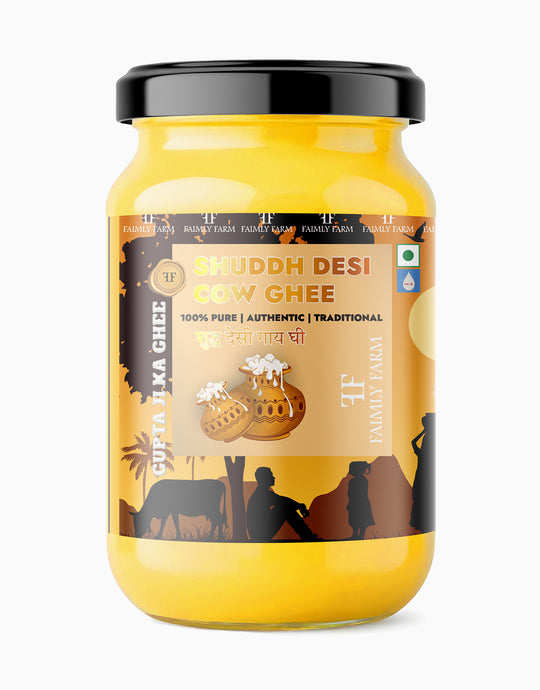
Join the conversation